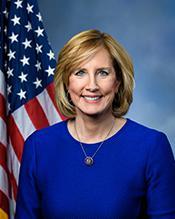
U.S. Representative for New York’s 24th district
Republican
119th Congress, two-year term
Missed 0.7% of roll calls. Chamber median 1.9%.
The full voting recordCounts roll calls where most Democrats and most Republicans voted differently, leaving out procedural votes.
How we countFrom FEC filings, Voteview roll calls and Congress.gov.
Republican. In Congress since 2017, 4 terms in total.
Following saves Tenney to your list, which Chamber & Street keeps on its server, linked to a cookie on this browser and not to your name or email. Email alerts will come with constituent verification.
Bills and resolutions Tenney signed on to as a cosponsor. An original cosponsor signed on the day the bill was introduced. Source: govinfo bill status files, last updated Nov 6, 2026.
Protecting American Students Act
Sponsor Vern Buchanan (R). Original cosponsor. 8 cosponsors. H.R. 1905 on Congress.gov
Introduced
Delphi Retirees Pension Restoration Act
Sponsor Victoria Spartz (R). Original cosponsor. 20 cosponsors. H.R. 1895 on Congress.gov(opens in a new tab)
Introduced
Delphi Retirees Pension Restoration Act
This bill restores the full vested monthly benefits for eligible participants of certain pension plans that were sponsored by Delphi Corporation and terminated as a result of General Motors' bankruptcy in 2009.
The Pension Benefit Guaranty Corporation (PBGC) must recalculate and adjust each plan participant's monthly benefits payment. The PBGC must also apply the recalculation to previously-made monthly payments and make a lump-sum payment for any additional benefits based on the recalculation.
Monthly benefits under the bill must be paid using specified PBGC funds, and the bill specifies how the lump-sum payments are treated for tax purposes.
Censuring Representative Al Green of Texas.
Sponsor Dan Newhouse (R). Original cosponsor. 34 cosponsors. H.Res. 189 on Congress.gov(opens in a new tab)
Passed the House
This resolution censures Representative Al Green.
Performing Artist Tax Parity Act of 2025
Sponsor Vern Buchanan (R). Joined Mar 5, 2025. 26 cosponsors. H.R. 721 on Congress.gov(opens in a new tab)
Introduced
Performing Artist Tax Parity Act of 2025
This bill increases the income limit and makes other modifications to the above-the-line tax deduction for business expenses of qualified performing artists. (Above-the-line deductions are subtracted from gross income to calculate adjusted gross income.)
Under current law, a qualified performing artist (who may deduct certain business expenses from gross income) is defined as an individual who (1) performs services in the performing arts as an employee for at least two employers during the tax year and receives at least $200 from each employer (minimum payment), (2) has business deductions attributable to such services exceeding 10% of the gross income received from such services, and (3) has adjusted gross income of $16,000 or less.
The bill modifies the definition of a qualified performing artist (for purposes of the business expense deduction) to eliminate the $16,000 adjusted gross income limitation and increase the minimum payment amount to $500 (adjusted for inflation beginning in 2026).
However, under the bill, the tax deduction for business expenses of qualified performing artists phases out for individuals with gross income exceeding $100,000 (or $200,000 for joint filers) such that the tax deduction completely phases out for individuals with gross income exceeding $120,000 (or $240,000 for joint filers). (The phase-out threshold is adjusted for inflation beginning in 2026.)
Finally, the bill provides that commissions paid to a manager or agent by a qualified performing artist are deductible business expenses.
Saving Gig Economy Taxpayers Act
Sponsor Carol Miller (R). Original cosponsor. 31 cosponsors. H.R. 1882 on Congress.gov(opens in a new tab)
Introduced
Stop Tax Penalties on American Hostages Act of 2025
Sponsor J. Hill (R). Original cosponsor. 14 cosponsors. H.R. 1868 on Congress.gov(opens in a new tab)
Introduced
Stop Tax Penalties on American Hostages Act of 2025
This bill extends certain federal tax deadlines for U.S. nationals who are unlawfully or wrongfully detained abroad or held hostage abroad and their spouses. The bill also allows for an abatement and refund of additional taxes, interest, and penalties assessed to such individuals for failing to meet a federal tax deadline during a period of detention.
Specifically, under the bill, the time period during which a U.S. national is unlawfully or wrongfully detained abroad or held hostage abroad is disregarded in determining certain federal tax deadlines, including deadlines for
• filing a return for and paying federal income, estate, gift, employment, or excise taxes;
• a tax credit or refund claim; and
• the determination, assessment, and collection of additional taxes, interest, or penalties.
The bill requires the Department of State and the Department of Justice to annually provide the Internal Revenue Service (IRS) with lists to identify U.S. nationals who qualify for an extension.
The bill also requires the IRS to (1) abate and refund additional taxes, interest, and penalties assessed for any tax year ending during a period of detention for which an extension of a federal tax deadline is permitted; and (2) establish a program allowing U.S. nationals unlawfully or wrongfully detained abroad or taken hostage abroad (or their spouse or dependent) to claim a refund of additional taxes, interest, and penalties assessed for any tax year ending during a period of detention from 2021 to the bill’s enactment date.
Jobs and Opportunities for Medicaid Act
Sponsor Dan Crenshaw (R). Joined Mar 5, 2025. 3 cosponsors. H.R. 1059 on Congress.gov(opens in a new tab)
Introduced
Jobs and Opportunities for Medicaid Act
This bill establishes work requirements under Medicaid for able-bodied adults.
Specifically, the bill requires individuals who are between the ages of 18 and 65 and who are not otherwise unable to work due to a medical condition, family situation, or other listed reason to work or volunteer at least 20 hours per week, based on a monthly average, in order to qualify for Medicaid.
FLASH Act
Sponsor Juan Ciscomani (R). Original cosponsor. 23 cosponsors. H.R. 1820 on Congress.gov(opens in a new tab)
Introduced
TREATS Act
Sponsor Donald Norcross (D). Joined Mar 4, 2025. 31 cosponsors. H.R. 1627 on Congress.gov(opens in a new tab)
Introduced
Telehealth Response for E-prescribing Addiction Therapy Services Act or the TREATS Act
This bill permanently allows health care practitioners to prescribe certain controlled substances for treating substance use disorders via telehealth without evaluating the patient in person.
Generally, a health care practitioner may not prescribe a controlled substance via telehealth unless they first conduct an in-person medical evaluation. Federal regulations currently provide a temporary exception to this requirement, allowing practitioners to prescribe schedule II-V controlled substances for legitimate medical purposes (such as treating substance use disorders) via telehealth without an in-person evaluation. However, this temporary regulatory flexibility expires on December 31, 2025.
The bill permanently allows practitioners to prescribe schedule III-V controlled substances for the treatment of a substance use disorder via telehealth without conducting an in-person evaluation. In such instances, a practitioner may conduct a telehealth evaluation using audio-only or audio and video equipment.
AM Radio for Every Vehicle Act of 2025
Sponsor Gus Bilirakis (R). Joined Mar 3, 2025. 317 cosponsors. H.R. 979 on Congress.gov(opens in a new tab)
Passed the House
AM Radio for Every Vehicle Act of 2025
This bill requires the Department of Transportation (DOT) to issue a rule requiring AM radio capabilities to be standard in all new passenger vehicles. (AM radio is often used to deliver emergency alerts and news and entertainment programming; some newer vehicles do not include AM equipment.)
Specifically, this bill applies to passenger vehicles (1) manufactured in the United States for sale in the United States, imported into the United States, or shipped in interstate commerce; and (2) manufactured after the rule's effective date. The rule must require all such vehicles to have devices that can receive signals and play content transmitted by AM stations or digital audio AM stations installed as standard equipment and made easily accessible to drivers.
Prior to the rule's effective date, manufacturers that do not include devices that can access AM radio as standard equipment (1) must inform purchasers of this fact through clear and conspicuous labeling, and (2) may not charge an additional or separate fee for AM radio access.
DOT may assess civil penalties for any violation of the rule. The Department of Justice may also bring a civil action to enjoin a violation.
The rule, including DOT’s authority to enforce it, must expire 10 years after the bill’s enactment.
Further, the Government Accountability Office must study and report on the dissemination of emergency alerts to the public, including by conducting an assessment of AM radio relative to other Integrated Public Alert and Warning System communication technologies.
250 Years of Service and Sacrifice Commemorative Coin Act
Sponsor Nicole Malliotakis (R). Joined Mar 3, 2025. 14 cosponsors. H.R. 951 on Congress.gov(opens in a new tab)
Introduced
250 Years of Service and Sacrifice Commemorative Coin Act
This bill directs the Department of the Treasury to mint and issue coins in recognition of the United States’ semiquincentennial.
All surcharges received by Treasury from the sale of such coins must be paid to the Stephen Siller Tunnel to Towers Foundation.
Chronic Disease Flexible Coverage Act
Sponsor Vern Buchanan (R). Joined Mar 3, 2025. 2 cosponsors. H.R. 919 on Congress.gov(opens in a new tab)
Passed the House
Chronic Disease Flexible Coverage Act
This bill provides statutory authority for guidance from the Internal Revenue Service (IRS) that expands the types of preventive care that may be offered under a high deductible health plan (HDHP) without requiring a deductible or with a deductible below the minimum threshold.
Under current law, to be considered health savings account-eligible, an HDHP must have a deductible above a certain minimum threshold amount, which is adjusted annually. However, an HDHP may cover certain types of preventive care without requiring a deductible or with a deductible below the minimum threshold.
The IRS issued guidance expanding the types of preventive care that may be covered by an HDHP without requiring a deductible or with a deductible below the minimum threshold to include
• angiotensin converting enzyme inhibitors for individuals with congestive heart failure, diabetes, or coronary artery disease;
• anti-resorptive therapy for individuals with osteoporosis or osteopenia;
• beta-blockers for individuals with congestive heart failure or coronary artery disease;
• blood pressure monitors for individuals with hypertension;
• inhaled corticosteroids and peak flow meters for individuals with asthma;
• insulin and other glucose lowering agents, retinopathy screening, glucometers, and hemoglobin A1c testing for individuals with diabetes;
• international normalized ratio testing for individuals with liver disease or bleeding disorders;
• low-density lipoprotein testing for individuals with heart disease;
• statins for individuals with heart disease or diabetes; and
• selective serotonin reuptake inhibitors for individuals with depression.
The bill provides statutory authority for the IRS's guidance.
Federal Firearms Licensee Protection Act of 2025
Sponsor John Rutherford (R). Original cosponsor. 145 cosponsors. H.R. 1773 on Congress.gov(opens in a new tab)
Introduced
Federal Firearms Licensee Protection Act of 2025
This bill modifies criminal penalties for an offense involving the theft of a firearm from a licensed importer, manufacturer, or dealer, or from their business premises.
Specifically, the bill does the following:
• increases from 10 to 20 years the maximum prison term, and
• creates a 3- or 5-year mandatory minimum prison term for an offense that occurs during the commission of a burglary or robbery.
An attempt to commit an offense is subject to the same penalties as a substantive offense.
To nullify the final rule issued by the Environmental Protection Agency relating to "New Source Performance Standards for Greenhouse Gas Emissions From New, Modified, and Reconstructed Fossil Fuel-Fired Electric Generating Units; Emission Guidelines for Greenhouse Gas Emissions From Existing Fossil Fuel-Fired Electric Generating Units; and Repeal of the Affordable Clean Energy Rule".
Sponsor Troy Balderson (R). Joined Mar 3, 2025. 37 cosponsors. H.R. 1651 on Congress.gov(opens in a new tab)
Introduced
GUARD VA Benefits Act
Sponsor Chris Pappas (D). Original cosponsor. 137 cosponsors. H.R. 1732 on Congress.gov(opens in a new tab)
Introduced
Governing Unaccredited Representatives Defrauding VA Benefits Act or the GUARD VA Benefits Act
This bill imposes fines on individuals for soliciting, contracting for, charging, or receiving any unauthorized fee or compensation with respect to the preparation, presentation, or prosecution of any claim for Department of Veterans Affairs benefits. The attempted commission of such offenses is also punishable by fine.
Farm to Fly Act of 2025
Sponsor Max Miller (R). Original cosponsor. 17 cosponsors. H.R. 1719 on Congress.gov(opens in a new tab)
Introduced
Farm to Fly Act of 2025
This bill directs the Department of Agriculture (USDA) to integrate the advancement of sustainable aviation fuels into its programs.
Specifically, this bill includes sustainable aviation fuel as an advanced biofuel for the purposes of several USDA bioenergy programs that primarily provide support and incentives for renewable energy projects.
For purposes of these programs, the bill defines sustainable aviation fuel as liquid fuel, the portion of which is not kerosene, which (1) meets specific international standards, (2) is not derived from coprocessing specific materials (e.g., triglycerides) with a non-biomass feedstock, (3) is not derived from palm fatty acid distillates or petroleum, and (4) is certified as having a lifecycle greenhouse gas emissions reduction percentage of at least 50% compared with petroleum-based jet fuel (based on specific standards and agreements).
In addition, the bill specifically includes fostering and advancing sustainable aviation fuels as part of the Biorefinery, Renewable Chemical, and Biobased Product Manufacturing Assistance Program.
Further, USDA must carry out a comprehensive and integrated pursuit of all USDA mission areas for the advancement of sustainable aviation fuels, including through
• the identification of opportunities to maximize the development and commercialization of the fuels,
• supporting rural economic development through improved sustainability for aviation, and
• advancing public-private partnerships.
PLO and PA Terror Payments Accountability Act of 2025
Sponsor Michael Lawler (R). Original cosponsor. 6 cosponsors. H.R. 1710 on Congress.gov(opens in a new tab)
Introduced
To designate the facility of the United States Postal Service located at 1200 William Street, Room 200, in Buffalo, New York, as the "William J. Donovan Post Office Building".
Sponsor Timothy Kennedy (D). Original cosponsor. 26 cosponsors. H.R. 1706 on Congress.gov(opens in a new tab)
Passed the House
This bill designates the facility of the United States Postal Service located at 1200 William Street, Room 200, in Buffalo, New York, as the "William J. Donovan Post Office Building".
Supporting Innovation in Agriculture Act of 2025
Sponsor Mike Kelly (R). Original cosponsor. 22 cosponsors. H.R. 1705 on Congress.gov(opens in a new tab)
Introduced
PAST Act of 2025
Sponsor Brian Fitzpatrick (R). Original cosponsor. 207 cosponsors. H.R. 1684 on Congress.gov(opens in a new tab)
Introduced
Prevent All Soring Tactics Act of 2025 or the PAST Act of 2025
This bill increases protections for horses at shows, exhibitions, sales, or auctions (horse events) to prevent the practice of soring horses. Generally, the soring of horses includes certain actions taken on horses' limbs to produce higher gaits that may cause pain, distress, inflammation, or lameness.
Specifically, the bill expands existing soring prohibitions under the Horse Protection Act, including by banning the use of certain action devices (e.g., nonprotective boots) on specified horse breeds.
The bill also requires soring inspectors at horse events to be assigned by the Animal and Plant Health Inspection Service (APHIS) of the Department of Agriculture rather than appointed by the management of horse events. APHIS must also license, train, and oversee inspectors to detect and diagnose soring at such events.
Additionally, the bill increases penalties for violations of the act. It also directs APHIS to disqualify horses found to be sore from being shown or exhibited for specified periods. Further, APHIS may permanently disqualify violators from participating in horse events after the third or any subsequent violation.
By way of background, APHIS issued a rule in 2024 to increase efforts to protect horses from soring practices. However, in 2025, a court vacated parts of the rule as exceeding APHIS' statutory authority (e.g., prohibiting the use of certain action devices) while deeming other parts acceptable (e.g., establishing APHIS-designated inspectors). APHIS subsequently delayed the effective date of the rule to December 31, 2026.
Maintaining Investments in New Innovation Act
Sponsor Donald Davis (D). Original cosponsor. 51 cosponsors. H.R. 1672 on Congress.gov(opens in a new tab)
Introduced
Maintaining Investments in New Innovation Act
This bill requires drug products with genetically targeted technology to have had market approval for at least 11 years in order to qualify for the Medicare Drug Price Negotiation Program. (The program requires the Centers for Medicare & Medicaid Services to negotiate the prices of certain prescription drugs under Medicare beginning in 2026. Among other requirements, drugs must have had market approval for at least 7 years (for drug products) or 11 years (for biologics) to qualify for negotiation.)
End FEMA Benefits for Illegal Immigrants Act
Sponsor Michael Cloud (R). Original cosponsor. 10 cosponsors. H.R. 1668 on Congress.gov(opens in a new tab)
Introduced
End FEMA Benefits for Illegal Immigrants Act
This bill prohibits the Federal Emergency Management Agency (FEMA) from carrying out the Shelter and Services Program (SSP) and rescinds unobligated funds transferred to FEMA for this purpose for FY2023-FY2024.
The SSP provides grants to public and nonprofit entities for temporarily providing shelter and other services (e.g., food, transportation) to noncitizen migrants released from Department of Homeland Security custody and awaiting immigration court proceedings, as well as for increasing grant recipients’ capacity to temporarily shelter such individuals (e.g., modifying existing facilities).
SAFE Act of 2025
Sponsor Vern Buchanan (R). Original cosponsor. 238 cosponsors. H.R. 1661 on Congress.gov(opens in a new tab)
Introduced
Save America's Forgotten Equines Act of 2025 or the SAFE Act of 2025
This bill permanently prohibits the slaughter of equines (e.g., horses and mules) for human consumption. (Current law prohibits the slaughter of dogs and cats for human consumption. This bill extends the prohibition to equines.)
Specifically, this bill prohibits a person from knowingly (1) slaughtering an equine for human consumption; or (2) shipping, transporting, possessing, purchasing, selling, or donating an equine to be slaughtered for human consumption or equine parts for human consumption.
The bill subjects a violator to a fine.
The bill applies to conduct in or affecting interstate or foreign commerce or within the special maritime and territorial jurisdiction of the United States. However, it does not apply to an activity carried out by an Indian for a religious ceremony.
As background, in recent years, the appropriations acts have prohibited the Department of Agriculture (USDA) from using federal funds to inspect horses before they are slaughtered for human consumption. Therefore, there are currently no USDA-inspected horse slaughter facilities in the United States.
Charlotte Woodward Organ Transplant Discrimination Prevention Act
Sponsor Kat Cammack (R). Joined Feb 27, 2025. 28 cosponsors. H.R. 1520 on Congress.gov(opens in a new tab)
Passed the House
Charlotte Woodward Organ Transplant Discrimination Prevention Act
This bill expressly prohibits health care providers and other entities involved in matching donated organs with recipients from denying or restricting an individual's access to organ transplants solely on the basis of the individual's disability, except in limited circumstances.
Specifically, these entities may consider an individual's disability when making decisions about transplants only if a physician finds, based on an individualized evaluation, that the individual's physical or mental disability is medically significant to the provision of the transplant. A disability shall not be considered medically significant if the individual has an adequate support system in place to comply with transplant-related medical requirements.
These entities must also make reasonable changes to their policies to make transplants and related care more available to individuals with disabilities.
Aggrieved individuals may bring claims of discrimination to the Office of Civil Rights of the Department of Health and Human Services. The bill provides for expedited resolutions of these claims.
In addition, the board of directors of the Organ Procurement and Transplantation Network may not issue policies that prohibit or hinder access to an organ transplant based solely on the individual's disability. This network is a public-private partnership linking professionals involved in the U.S. organ donation and transplantation system.
Bonus Tax Relief for America’s Seniors Act
Sponsor Nicole Malliotakis (R). Joined Feb 27, 2025. 7 cosponsors. H.R. 1130 on Congress.gov(opens in a new tab)
Introduced
Bonus Tax Relief for America’s Seniors Act
This bill increases to $5,000 (adjusted for inflation) the amount of the additional standard deduction allowed for individual taxpayers who are 65 years old or older.
Under the bill, the additional standard deduction amount of $5,000 applies to each individual taxpayer who is 65 years or older, regardless of filing status. Thus, married spouses who are both 65 years old or older and who file a joint income tax return may claim an additional standard deduction amount of $10,000 (adjusted for inflation).
As background, the basic standard deduction amount may be increased for taxpayers who attain the age of 65 before the end of the tax year (generally referred to as the additional standard deduction). Under current law, for 2025, the additional standard deduction amount is (1) $1,600 for individuals who are 65 years old or older, or (2) $2,000 if the individual is also unmarried and not a surviving spouse.