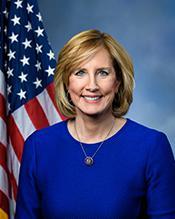
U.S. Representative for New York’s 24th district
Republican
119th Congress, two-year term
Missed 0.7% of roll calls. Chamber median 1.9%.
The full voting recordCounts roll calls where most Democrats and most Republicans voted differently, leaving out procedural votes.
How we countFrom FEC filings, Voteview roll calls and Congress.gov.
Republican. In Congress since 2017, 4 terms in total.
Following saves Tenney to your list, which Chamber & Street keeps on its server, linked to a cookie on this browser and not to your name or email. Email alerts will come with constituent verification.
Bills and resolutions Tenney signed on to as a cosponsor. An original cosponsor signed on the day the bill was introduced. Source: govinfo bill status files, last updated Nov 6, 2026.
Expressing support for the designation of March 18, 2025, as "National Agriculture Day" and celebrating the importance of agriculture as one of the most impactful industries in the United States.
Sponsor Mark Alford (R). Original cosponsor. 44 cosponsors. H.Res. 227 on Congress.gov
Introduced
This resolution supports the designation of National Agriculture Day.
Restore VA Accountability Act of 2025
Sponsor Mike Bost (R). Joined Mar 18, 2025. 30 cosponsors. H.R. 472 on Congress.gov(opens in a new tab)
Introduced
Restore Department of Veterans Affairs Accountability Act of 2025 or the Restore VA Accountability Act of 2025
This bill modifies personnel action procedures regarding certain employees and executives of the Department of Veterans Affairs (VA).
The bill authorizes the VA to remove from civil service, demote, or suspend VA employees that are supervisors or managers if the VA determines by substantial evidence that the performance or misconduct of such individual warrants such action. This authority does not apply to certain appointees or individuals in their probationary or trial period.
Supervisors or managers who are subject to a removal, demotion, or suspension under this bill are entitled to (1) advance notice of the action and supporting evidence, (2) representation by an attorney or representative, and (3) grieve the action in accordance with an internal grievance process.
The bill also provides protections from removal, demotion, or suspension for supervisor or managers who are whistleblowers or are seeking corrective action for an alleged prohibited personnel practice such as discrimination.
The bill also modifies the procedures to remove, demote, or suspend VA employees or senior executives based on performance or misconduct, specifically by requiring the VA to determine by substantial evidence that the performance or misconduct of the individual warrants such removal, demotion, or suspension. Such procedures must apply retroactively, beginning on the date of enactment of the Department of Veterans Affairs Accountability and Whistleblower Protection Act of 2017 (June 23, 2017).
Let Pregnancy Centers Serve Act of 2025
Sponsor Christopher Smith (R). Original cosponsor. 17 cosponsors. H.R. 2226 on Congress.gov(opens in a new tab)
Introduced
Innovative FEED Act of 2025
Sponsor Nicholas Langworthy (R). Original cosponsor. 53 cosponsors. H.R. 2203 on Congress.gov(opens in a new tab)
Introduced
Innovative Feed Enhancement and Economic Development Act of 2025 or the Innovative FEED Act of 2025
This bill provides for the regulation of zootechnical animal food substances as food additives.
The bill defines zootechnical animal food substance as a substance that is added to the food or drinking water of animals and that affects only the animal's gastrointestinal tract, with the intended purpose of affecting the byproducts of the animal's digestion, reducing foodborne pathogens, or altering the animal's gastrointestinal biome.
The definition does not include substances that are used to treat or prevent diseases in animals, hormones, or active ingredients of animal drugs. Labels for zootechnical animal food substances must include a disclaimer that the substance may not be used to treat or prevent diseases in animals.
To amend the Internal Revenue Code of 1986 to restore the taxable REIT subsidiary asset test.
Sponsor Mike Kelly (R). Original cosponsor. 20 cosponsors. H.R. 2198 on Congress.gov(opens in a new tab)
Introduced
Air America Act of 2025
Sponsor Glenn Grothman (R). Original cosponsor. 178 cosponsors. H.R. 2192 on Congress.gov(opens in a new tab)
Introduced
Firearm Due Process Protection Act of 2025
Sponsor Tom Emmer (R). Original cosponsor. 24 cosponsors. H.R. 2184 on Congress.gov(opens in a new tab)
Introduced
Firearm Due Process Protection Act of 2025
This bill expands the grounds for pursuing judicial remedies related to the denial of certain firearm transfers. Additionally, the bill establishes procedural rules applicable to actions for judicial remedies.
Current law authorizes judicial remedies for an individual who is erroneously denied a firearm (e.g., an individual is denied a firearm but the individual is eligible to receive or possess a firearm). This bill authorizes remedies for an individual who experiences an extended delay (i.e., a delay of more than 60 days) on a firearm transfer.
Additionally, the bill requires an expedited hearing on an action for judicial remedies and places the burden of proof on the respondent (i.e., the government) to show that the individual was ineligible to receive or possess a firearm.
No Bailout for Sanctuary Cities Act
Sponsor Nick LaLota (R). Joined Mar 14, 2025. 21 cosponsors. H.R. 32 on Congress.gov(opens in a new tab)
Introduced
No Bailout for Sanctuary Cities Act
This bill makes a state or political subdivision of a state ineligible for any federal funds that the jurisdiction intends to use to benefit non-U.S. nationals (i.e., aliens under federal law) who are unlawfully present if the jurisdiction withholds information about citizenship or immigration status or does not cooperate with immigration detainers.
Specifically, such funds are denied to any jurisdiction that has a law, policy, or practice that prohibits or restricts any government entity from
• maintaining, sending, or receiving information regarding the citizenship or immigration status of any individual;
• exchanging information regarding an individual's citizenship or immigration status with a federal, state, or local government entity;
• complying with a valid immigration detainer from the Department of Homeland Security (DHS); or
• notifying DHS about an individual's release from custody.
The funding restriction does not apply to a law, policy, or practice that only applies to an individual who comes forward as a victim of or a witness to a criminal offense.
DHS must annually provide to specified congressional committees a list of jurisdictions that have failed to comply with a DHS detainer or have failed to notify DHS of an individual’s release.
The funding restriction begins 60 days after the bill's enactment or on the first day of the fiscal year following the bill's enactment, whichever is earlier.
Maintaining and Enhancing Hydroelectricity and River Restoration Act
Sponsor Adrian Smith (R). Original cosponsor. 19 cosponsors. H.R. 2160 on Congress.gov(opens in a new tab)
Introduced
Maintaining and Enhancing Hydroelectricity and River Restoration Act
This bill establishes a new investment tax credit in the amount of 30% of the basis of any hydropower improvement property.
The bill defines hydropower improvement property as property that
• adds or improves fish passage at a qualified dam;
• maintains or improves the quality of the water retained or released by a qualified dam;
• promotes downstream sediment transport and habitat maintenance;
• upgrades, repairs, or reconstructs a qualified dam to meet safety and security standards;
• improves public uses of, and access to, public waterways impacted by a qualified dam;
• removes an obsolete river obstruction; or
• places into service an approved remote dam.
Further, written approval for hydropower improvement property must be obtained from the Federal Energy Regulatory Commission or state or local officials prior to January 1, 2032.
The bill also allows an election to claim the investment tax credit for qualified progress expenses for some types of hydropower improvement property in advance of such property being placed into service. Any investment tax credit amount claimed for qualified progress expenses reduces the amount of the investment tax credit that may be claimed once the hydropower improvement property is placed into service.
The bill authorizes certain entities, including tax-exempt and governmental entities, to treat the investment tax credit for hydropower improvement property as a payment of tax and receive a refund of any overpayment (also known as elective pay).
Finally, the investment tax credit for hydropower improvement property may be transferred (i.e., sold).
Recycling Infrastructure and Accessibility Act of 2025
Sponsor Mariannette Miller-Meeks (R). Original cosponsor. 31 cosponsors. H.R. 2145 on Congress.gov(opens in a new tab)
Passed committee
Major Richard Star Act
Sponsor Gus Bilirakis (R). Original cosponsor. 340 cosponsors. H.R. 2102 on Congress.gov(opens in a new tab)
Introduced
Major Richard Star Act
This bill allows a veteran with a combat-related disability to receive retirement pay, without reduction, concurrently with their disability compensation. This includes veterans with a combat-related disability and fewer than 20 years of creditable service. (Currently, veterans who receive combat-related special compensation and retirement pay are subject to an offset in retirement pay for concurrent receipt of such benefits.)
Deliver for Democracy Act
Sponsor Robert Aderholt (R). Original cosponsor. 17 cosponsors. H.R. 2098 on Congress.gov(opens in a new tab)
Introduced
Protecting the Right to Keep and Bear Arms Act of 2025
Sponsor Michael Cloud (R). Original cosponsor. 36 cosponsors. H.R. 2039 on Congress.gov(opens in a new tab)
Introduced
Protecting the Right to Keep and Bear Arms Act of 2025
This bill prohibits (1) the President or the Department of Health and Human Services from declaring emergencies or disasters for the purpose of imposing gun control; and (2) a federal officer or employee, or person operating under color of federal law or receiving federal funds, from banning the possession, manufacture, sale, or transfer of weapons to which the Second Amendment of the Constitution applies, ammunition, or firearm accessories while acting in support of relief from a major disaster or emergency.
Pay Our Coast Guard Parity Act of 2025
Sponsor Hillary Scholten (D). Joined Mar 11, 2025. 67 cosponsors. H.R. 1542 on Congress.gov(opens in a new tab)
Introduced
Pay Our Coast Guard Parity Act of 2025
This bill provides continuing appropriations to the Coast Guard for pay and benefits when there is a Coast Guard-specific funding lapse.
Under the bill, a Coast Guard-specific funding lapse occurs when (1) a bill providing appropriations for the Coast Guard for a fiscal year has not been enacted before the beginning of that fiscal year, and no joint resolution providing continuing appropriations for the Coast Guard is in effect; and (2) a bill providing appropriations for the Department of Defense (DOD) for the fiscal year has been enacted before the beginning of the fiscal year, or a joint resolution providing continuing appropriation for DOD is in effect.
If a Coast Guard-specific funding lapse occurs, the bill provides appropriations to the Coast Guard for
• pay and allowances for military members of the Coast Guard who perform active service or inactive-duty training;
• pay and benefits for certain civilian employees and contract employees;
• the payment of a death gratuity;
• payments for travel related to funerals, the dignified transfer of remains, and unit memorial services; and
• the temporary continuation of the basic allowance for housing for dependents of members of the Coast Guard dying on active duty.
The bill generally provides the appropriations to the Coast Guard until the earlier of
• the enactment of specified Coast Guard appropriations legislation,
• the termination of the availability of appropriations for DOD, or
• two weeks after the beginning of the Coast Guard-specific funding lapse.
Mikaela Naylon Give Kids a Chance Act
Sponsor Michael McCaul (R). Joined Mar 11, 2025. 313 cosponsors. H.R. 1262 on Congress.gov(opens in a new tab)
Passed the House
Give Kids a Chance Act of 2025
This bill expands the Food and Drug Administration’s (FDA’s) authority with respect to research on rare pediatric diseases, including by permitting the FDA to take enforcement action against drug sponsors that fail to satisfy pediatric study requirements and by reauthorizing programs that support pediatric research.
Specifically, the bill
• modifies requirements relating to molecularly targeted pediatric cancer investigations to permit research on new drugs in combination with active ingredients that have already been approved, provided certain conditions are met;
• permits the FDA to take enforcement action against drug sponsors that fail to comply with pediatric study requirements, if such sponsors demonstrated a lack of due diligence in satisfying the requirement;
• renews the FDA’s authority to award priority review vouchers to sponsors of new products intended to treat rare pediatric diseases through September 30, 2029; and
• reauthorizes through FY2027 certain funding for the National Institutes of Health to support priority pediatric research.
The bill also provides statutory authority for the FDA’s interpretation of the orphan drug exclusivity period. The bill specifies, consistent with FDA regulations, that the seven-year market exclusivity period for drugs for rare diseases or conditions (i.e., orphan drugs) prohibits the approval of the same drug for the same approved use or indication with respect to the disease or condition. (In Catalyst Pharmaceuticals, Inc. v. Becerra, a court rejected the FDA’s interpretation and held that orphan drug exclusivity extends to all uses or indications for the disease or condition.)
Recognizing the importance of stepped-up basis under section 1014 of the Internal Revenue Code of 1986 in preserving family-owned farms and small businesses.
Sponsor Tracey Mann (R). Original cosponsor. 29 cosponsors. H.Res. 206 on Congress.gov(opens in a new tab)
Introduced
This resolution supports preserving the stepped-up basis of certain inherited assets (such as land, equipment, or buildings), opposes any efforts to impose new taxes on family farms or small businesses, and recognizes the importance of generational transfers of farm and family-owned businesses.
As background, the basis for federal tax purposes of certain inherited assets is reset (or stepped up) from the original cost basis to the fair market value of the asset on the date of the previous owner’s death. Thus, any gain or loss on the subsequent sale of an inherited asset generally is calculated based on the asset’s stepped-up basis (and not the original cost basis).
Iran Sanctions Relief Review Act of 2025
Sponsor Keith Self (R). Original cosponsor. 8 cosponsors. H.R. 2012 on Congress.gov(opens in a new tab)
Introduced
Iran Sanctions Relief Review Act of 2025
This bill restricts the President's authority to unilaterally undertake certain actions with respect to Iran and increases congressional oversight of those actions.
Specifically, the President must report to Congress before terminating or waiving sanctions related to Iran or taking a licensing action that significantly alters U.S. foreign policy with respect to Iran.
Each report must (1) describe the proposed action and its rationale, and (2) indicate whether or not the action is intended to significantly alter foreign policy concerning Iran. If the intention is to alter that policy, the report must provide additional information including the policy objectives for which the affected sanctions were initially imposed and the anticipated effects of the action on U.S. national security interests.
After the President submits a report, the bill provides Congress with a 30-day period to review it; this period is extended to 60 days for reports submitted between July 10 and September 7. During this period, Congress may enact a joint resolution approving or disapproving the action.
During the review period, the President may not take the action unless Congress passes a joint resolution of approval; if Congress enacts a joint resolution of disapproval, the bill prohibits the President from taking the action.
The bill also outlines procedures for the introduction and consideration of these types of joint resolutions.
25th Anniversary of 9/11 Commemorative Coin Act
Sponsor Daniel Goldman (D). Original cosponsor. 302 cosponsors. H.R. 1993 on Congress.gov(opens in a new tab)
Passed the House
25th Anniversary of 9/11 Commemorative Coin Act
This bill directs the Department of the Treasury to mint and issue coins to commemorate the 25th anniversary of the September 11, 2001, terrorist attacks on the United States and the establishment of the National September 11 Memorial and Museum at the World Trade Center.
The sale of all coins issued under this bill must include a surcharge to be paid to the National September 11 Memorial and Museum at the World Trade Center to support operations and maintenance. However, if the issuance of this commemorative coin exceeds certain annual limits, no surcharge may be included.
American Innovation and R&D Competitiveness Act of 2025
Sponsor Ron Estes (R). Original cosponsor. 81 cosponsors. H.R. 1990 on Congress.gov(opens in a new tab)
Introduced
Pay Our Troops Act of 2025
Sponsor Jennifer Kiggans (R). Joined Mar 10, 2025. 34 cosponsors. H.R. 1932 on Congress.gov(opens in a new tab)
Introduced
Pay Our Troops Act of 2025
This bill provides continuing appropriations for military pay for any period during which interim or full-year appropriations for FY2025 are not in effect (i.e., a government shutdown).
Specifically, the bill provides FY2025 continuing appropriations for the pay and allowances of (1) members of the Armed Forces, including reserve components, who perform active service during the period; and (2) civilian personnel and contractors of the Department of Defense (and the Department of Homeland Security in the case of the Coast Guard) who are providing support to such members of the Armed Forces.
If a government shutdown occurs, the bill provides the continuing appropriations until the earlier of (1) the enactment into law of specified appropriations legislation, or (2) January 1, 2026.
Small Business Investor Tax Parity Act of 2025
Sponsor Jodey Arrington (R). Joined Mar 6, 2025. 4 cosponsors. H.R. 652 on Congress.gov(opens in a new tab)
Introduced
Deporting Fraudsters Act of 2026
Sponsor David Taylor (R). Original cosponsor. 34 cosponsors. H.R. 1958 on Congress.gov(opens in a new tab)
Passed the House
Deporting Fraudsters Act of 2026
This bill makes certain acts related to public benefits fraud grounds for (1) barring a non-U.S. national (alien under federal law) from admission into the United States, or (2) deporting the individual. The bill also makes such an individual ineligible for immigration enforcement relief, including relief for an individual in danger of subjection to torture.
Specifically, this bill applies to individuals who have been convicted of, admit to having committed, or admit to acts which constitute certain offenses. Offenses covered by this bill include (1) fraud involving Supplemental Nutrition Assistance Program (SNAP) benefits, (2) fraud involving Social Security benefits, (3) fraud involving programs that receive federal funds, and (4) the production of fraudulent identification documents.
Securing Access to Care for Seniors in Critical Condition Act of 2025
Sponsor Kevin Hern (R). Original cosponsor. 9 cosponsors. H.R. 1924 on Congress.gov(opens in a new tab)
Introduced
Securing Access to Care for Seniors in Critical Condition Act of 2025
This bill exempts discharges from long-term care hospitals (LTCHs) from the Medicare site-neutral payment rate if the discharge meets specified high acuity criteria and occurs on or after October 1, 2026. (The site-neutral rate is the lower of Medicare’s acute care hospital payment rate under the inpatient prospective payment system or 100% of the cost of the stay. LTCH stays that do not qualify for the specialized LTCH payment rate under Medicare are instead paid at the site-neutral rate.)
Anti-CBDC Surveillance State Act
Sponsor Tom Emmer (R). Original cosponsor. 135 cosponsors. H.R. 1919 on Congress.gov(opens in a new tab)
Passed the House
Anti-CBDC Surveillance State Act
This bill prohibits a Federal Reserve bank from offering products or services directly to an individual, maintaining an account on behalf of an individual, or issuing a central bank digital currency (i.e., a digital dollar). Further, the Board of Governors of the Federal Reserve System is prohibited from using a central bank digital currency to implement monetary policy or from testing, studying, creating, or implementing a central bank digital currency, with exceptions as provided by the bill.
Pay Our Border Patrol and Customs Agents Act of 2025
Sponsor Monica De La Cruz (R). Original cosponsor. 20 cosponsors. H.R. 1916 on Congress.gov(opens in a new tab)
Introduced
Pay Our Border Patrol and Customs Agents Act of 2025
This bill provides FY2025 appropriations for the salaries and expenses of certain U.S. Customs and Border Protection (CBP) employees who are required to work during a lapse in appropriations (i.e., government shutdown) in FY2025.
Specifically, the bill provides appropriations to CBP for the salaries and expenses of agents of the U.S. Border Patrol and officers of the Office of Field Operations who are excepted from furlough (i.e., required to work) during a lapse in discretionary appropriations in FY2025.