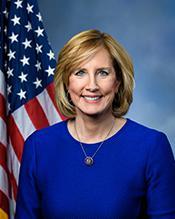
U.S. Representative for New York’s 24th district
Republican
119th Congress, two-year term
Missed 0.7% of roll calls. Chamber median 1.9%.
The full voting recordCounts roll calls where most Democrats and most Republicans voted differently, leaving out procedural votes.
How we countFrom FEC filings, Voteview roll calls and Congress.gov.
Republican. In Congress since 2017, 4 terms in total.
Following saves Tenney to your list, which Chamber & Street keeps on its server, linked to a cookie on this browser and not to your name or email. Email alerts will come with constituent verification.
Bills and resolutions Tenney signed on to as a cosponsor. An original cosponsor signed on the day the bill was introduced. Source: govinfo bill status files, last updated Nov 6, 2026.
Choice Arrangement
Sponsor Kevin Hern (R). Original cosponsor. 11 cosponsors. H.R. 5463 on Congress.gov
Introduced
Providing for congressional disapproval under chapter 8 of title 5, United States Code, of the rule submitted by the United States Fish and Wildlife Service relating to "Barred Owl Management Strategy".
Sponsor Troy Nehls (R). Joined Sep 18, 2025. 42 cosponsors. H.J.Res. 111 on Congress.gov(opens in a new tab)
Introduced
Fusion Advanced Manufacturing Parity Act
Sponsor Carol Miller (R). Original cosponsor. 13 cosponsors. H.R. 5441 on Congress.gov(opens in a new tab)
Introduced
Honoring the life and legacy of Charles Charlie James Kirk.
Sponsor Mike Johnson (R). Original cosponsor. 196 cosponsors. H.Res. 719 on Congress.gov(opens in a new tab)
Passed the House
This resolution (1) condemns the assassination of Charles "Charlie" James Kirk and all forms of political violence; and (2) honors the life, leadership, and legacy of Charlie Kirk.
Pay Our Troops Act of 2026
Sponsor Jennifer Kiggans (R). Original cosponsor. 210 cosponsors. H.R. 5401 on Congress.gov(opens in a new tab)
Introduced
Pay Our Troops Act of 2026
This bill provides continuing appropriations for military pay for any period during which interim or full-year appropriations for FY2026 are not in effect (i.e., a government shutdown).
Specifically, the bill provides FY2026 continuing appropriations for the pay and allowances of (1) members of the Armed Forces, including reserve components, who perform active service during the period; and (2) civilian personnel and contractors of the Department of Defense (and the Department of Homeland Security in the case of the Coast Guard) who are providing support to such members of the Armed Forces.
If a government shutdown occurs, the bill provides the continuing appropriations until the earlier of (1) the enactment into law of specified appropriations legislation, or (2) January 1, 2027.
Pay Our Homeland Defenders Act of 2026
Sponsor Bill Huizenga (R). Original cosponsor. 24 cosponsors. H.R. 5398 on Congress.gov(opens in a new tab)
Introduced
Pay Our Homeland Defenders Act of 2026
This bill provides continuing appropriations for the salaries of certain Department of Homeland Security (DHS) employees during any period in which interim or full-year appropriations for FY2026 or FY2027 are not in effect (i.e., a government shutdown).
If there is a government shutdown in FY2026 or FY2027, the bill provides continuing appropriations to provide pay and allowances to
• DHS law enforcement personnel;
• DHS employees or contractors who are necessary to carry out this bill, including employees or contractors involved in the administrative, payroll, distribution, accounting, and commercial accounts functions; and
• members, civilian personnel, and contractors of the U.S. Coast Guard.
The bill provides the appropriations until the earlier of (1) the enactment of specified appropriations legislation, or (2) January 1, 2027.
Ensuring Patient Access to Critical Breakthrough Products Act
Sponsor Blake Moore (R). Joined Sep 16, 2025. 68 cosponsors. H.R. 5343 on Congress.gov(opens in a new tab)
Passed committee
Ensuring Patient Access to Critical Breakthrough Products Act
This bill provides for Medicare coverage of medical devices that are approved under the Food and Drug Administration (FDA) Breakthrough Devices Program. (Under the program, manufacturers work with the FDA to expedite the review and approval of certain medical devices that provide for more effective treatment or diagnosis of life-threatening or irreversibly debilitating human diseases or conditions.)
The bill allows designated medical breakthrough devices to be temporarily covered under Medicare during a four-year transitional period. Manufacturers must apply to the Centers for Medicare & Medicaid Services (CMS) to receive this designation. Qualifying devices must (1) have received priority review from the FDA, (2) received premarket approval (if applicable) based on clinical data that includes data from Medicare beneficiaries, (3) already generally qualify for Medicare coverage, and (4) not present an undue risk of harm that outweighs potential clinical benefits for Medicare beneficiaries.
The CMS must approve or deny applications within six months of receipt and must provide an explanation in the case of a denial. In addition, the CMS must make permanent coverage decisions before the end of the transitional period upon a timely request to do so, as specified.
The bill provides funds through FY2030 for the CMS to implement the bill.
Condemning in the strongest possible terms the September 10, 2025, assassination of Charlie Kirk.
Sponsor Mary Miller (R). Joined Sep 15, 2025. 73 cosponsors. H.Res. 702 on Congress.gov(opens in a new tab)
Introduced
Condemning the assassination of Charlie Kirk and honoring his life and legacy.
Sponsor Mike Kennedy (R). Joined Sep 15, 2025. 48 cosponsors. H.Res. 700 on Congress.gov(opens in a new tab)
Introduced
This resolution condemns the assassination of Charlie Kirk, extends condolences and sympathies to his family, and honors his commitment to civil discussion and debate.
Honoring Charlie Kirk following his assassination on September 10, 2025, in Orem, Utah.
Sponsor Cory Mills (R). Original cosponsor. 61 cosponsors. H.Res. 695 on Congress.gov(opens in a new tab)
Introduced
Expressing the sense of the House of Representatives that all 50 States should include the events of the September 11th terrorist attacks in the curriculum of elementary and secondary schools so that people in the United States may never forget that fateful day.
Sponsor Andrew Garbarino (R). Original cosponsor. 6 cosponsors. H.Res. 692 on Congress.gov(opens in a new tab)
Introduced
Chiropractic Medicare Coverage Modernization Act of 2025
Sponsor W. Steube (R). Joined Sep 10, 2025. 174 cosponsors. H.R. 539 on Congress.gov(opens in a new tab)
Introduced
Chiropractic Medicare Coverage Modernization Act of 2025
This bill expands Medicare coverage of chiropractic services to include all services provided by chiropractors, rather than only subluxation corrections through manual manipulation of the spine.
Pay Our Border Patrol and Customs Agents Act
Sponsor Monica De La Cruz (R). Original cosponsor. 32 cosponsors. H.R. 5260 on Congress.gov(opens in a new tab)
Introduced
Pay Our Border Patrol and Customs Agents Act
This bill provides FY2026 appropriations for the salaries and expenses of certain U.S. Customs and Border Protection (CBP) employees who are required to work during a lapse in appropriations (i.e., government shutdown) in FY2026.
Specifically, the bill provides appropriations to CBP for the salaries and expenses of agents of the U.S. Border Patrol and officers of the Office of Field Operations who are excepted from furlough (i.e., required to work) during a lapse in discretionary appropriations in FY2026.
Apples to Apples Comparison Act of 2025
Sponsor Aaron Bean (R). Joined Sep 10, 2025. 25 cosponsors. H.R. 4093 on Congress.gov(opens in a new tab)
Passed committee
Apples to Apples Comparison Act of 2025
This bill requires additional reporting and disclosures regarding Medicare enrollment and expenditures.
Specifically, the bill requires the Centers for Medicare & Medicaid Services to annually report on and publish information on its website regarding expenditures for Medicare hospital services and medical services, the Medicare prescription drug benefit, and Medicare Advantage (MA), including for those who are enrolled in one program but not others or have supplemental insurance. This information must be broken down by county and metropolitan statistical area for each month over the prior 10-year period and for each month over the next 5-year period.
In addition, the Medicare Payment Advisory Commission must annually analyze and report on expenditures for Medicare beneficiaries who have an MA plan compared to those who do not have an MA plan. The Boards of Trustees for Medicare must annually report on expenditures for (1) Medicare beneficiaries who have either hospital services or medical services but not both, and (2) Medicare beneficiaries who have both hospital and medical services but do not have an MA plan.
Greyhound Protection Act of 2025
Sponsor Salud Carbajal (D). Joined Sep 9, 2025. 30 cosponsors. H.R. 5017 on Congress.gov(opens in a new tab)
Introduced
Bubble Tax Modernization Act of 2025
Sponsor Andrea Salinas (D). Joined Sep 8, 2025. 10 cosponsors. H.R. 4613 on Congress.gov(opens in a new tab)
Introduced
Clergy Act
Sponsor Vince Fong (R). Joined Sep 8, 2025. 21 cosponsors. H.R. 227 on Congress.gov(opens in a new tab)
Became law
Clergy Act
This act establishes a two-year window for members of the clergy who have opted out of Social Security and Medicare taxes (and are thus ineligible for benefits under those programs) to opt back in.
Under current law, certain ministers, members of religious orders, and Christian Science practitioners who object to participation in public insurance programs on religious or conscientious grounds may apply to the Internal Revenue Service (IRS) for an exemption from Social Security and Medicare taxes on ministerial earnings. Individuals who are approved for the exemption do not receive Social Security or Medicare benefits in retirement unless they have qualifying credits from other employment. The exemption is irrevocable.
Under the act, clergy members may choose to revoke their exemption by filing an application with the IRS by the due date of their federal income tax return for the second taxable year after December 31, 2028 (i.e., April 15, 2031, unless an individual obtains an extension to file their taxes). A clergy member may choose for the revocation to take effect in taxable year 2029 or taxable year 2030. A revocation under the act is permanent.
Clergy members who opt back in will generally need 10 years of covered employment (40 credits) to be eligible for Social Security and Medicare benefits, as is currently required for these programs.
The IRS must develop a plan to inform clergy members of their eligibility to revoke prior exemptions, pursuant to the act's changes.
Stem Cell Therapeutic and Research Reauthorization Act of 2025
Sponsor Christopher Smith (R). Original cosponsor. 21 cosponsors. H.R. 5160 on Congress.gov(opens in a new tab)
Passed the House
Stem Cell Therapeutic and Research Reauthorization Act of 2025
This bill reauthorizes through FY2031 and revises programs that help patients receive transplants of bone marrow or umbilical cord blood from biologically unrelated donors. These programs are administered by the Health Resources and Services Administration (HRSA).
The bill reauthorizes the C.W. Bill Young Cell Transplantation Program. This program supports transplantation of bone marrow and cord blood by increasing the quantities of donations, providing processes for matching and distributing donated materials to patients, and providing related information and research.
Also, the bill reauthorizes and revises the National Cord Blood Inventory program, through which HRSA contracts with qualified cord blood banks to collect and maintain a supply of high-quality units for transplantation through the C.W. Bill Young Cell Transplantation Program. The bill amends the inventory program by (1) changing the inventory goal from 150,000 units to a sufficient supply as determined by HRSA, (2) requiring HRSA to manage the size and composition of the inventory to maximize clinical utility and efficiency, and (3) defining high quality cord blood unit to mean a unit meeting current industry standards and the requirements of the Food and Drug Administration.
Public Health and Bio-Preparedness Workforce Loan Repayment Reauthorization Act of 2025
Sponsor Jason Crow (D). Joined Sep 4, 2025. 13 cosponsors. H.R. 4445 on Congress.gov(opens in a new tab)
Introduced
Weather Act Reauthorization Act of 2025
Sponsor Frank Lucas (R). Original cosponsor. 26 cosponsors. H.R. 5089 on Congress.gov(opens in a new tab)
Passed committee
Weather Research and Forecasting Innovation Reauthorization Act of 2025 or the Weather Act Reauthorization Act of 2025
This bill reauthorizes, revises, and establishes several programs related to weather forecasting, monitoring, and research.
For example, the bill reauthorizes through FY2030 programs that are administered by the Office of Oceanic and Atmospheric Research in the National Oceanic and Atmospheric Administration (NOAA), including the U.S. Weather Research Program. It also provides statutory authority for NOAA's Verification of the Origins of Rotation in Tornadoes Experiment (known as VORTEX-USA).
The bill also requires NOAA to establish programs that support weather forecasting technology, including improvements to radar accuracy, weather forecasting in underserved areas, and coastal flooding forecasting. NOAA must also acquire weather-related data from the private sector and establish a pilot program to test the compatibility of this data with NOAA infrastructure.
In addition, NOAA must improve weather-related communication systems, including those related to hazardous weather events, through system upgrades that use more modern technology (e.g., cloud-based services) and that allow for expanded coverage (e.g., in rural areas).
Finally, NOAA must administer programs that support weather forecasting for agricultural and water management, including pilot programs to improve precipitation forecasts in the western and central states and a soil moisture monitoring network.
Fentanyl Kills Act
Sponsor Michael Lawler (R). Joined Aug 26, 2025. 7 cosponsors. H.R. 5023 on Congress.gov(opens in a new tab)
Introduced
To clarify the Holocaust Expropriated Art Recovery Act of 2016, to appropriately limit the application of defenses based on the passage of time and other non-merits defenses to claims under that Act.
Sponsor Laurel Lee (R). Joined Aug 19, 2025. 29 cosponsors. H.R. 4235 on Congress.gov(opens in a new tab)
Introduced
This bill permanently extends and expands judicial authority under the Holocaust Expropriated Art Recovery Act of 2016. The law allows and establishes procedures for civil claims and causes of action to recover artwork and other property lost between 1933 and 1945 because of Nazi persecution.
Among the changes, the bill removes the deadline for filing civil claims or causes of action. Currently, the filing deadline is December 31, 2026. (Claims must still be filed within six years of the claimant's discovery of the property in question.)
The bill permits courts to exercise jurisdiction over civil claims or causes of action against a foreign state without regard to the nationality or citizenship of the alleged victim. The art or property at issue must still have a connection to the foreign state's commercial activities in the United States.
Additionally, the bill authorizes nationwide service of process, which allows courts to exercise personal jurisdiction over defendants in any judicial district where they may be found, reside, have an agent, or transact business.
Finally, the bill limits the defenses that may be asserted against civil claims or causes of action, including by prohibiting
• defenses based on the passage of time, including equitable defenses such as laches (i.e., unreasonable delays); and
• discretionary bases for dismissal that are unrelated to the merits of the claim, including international comity (i.e., deference to the laws of other countries).
These changes apply to pending and future civil claims or causes of action.
Supporting the commemoration of August 14, 2025, as the 90th anniversary of the establishment of Social Security.
Sponsor Robert Bresnahan (R). Original cosponsor. 8 cosponsors. H.Res. 651 on Congress.gov(opens in a new tab)
Introduced
No Taxpayer Funding for Abortion and Abortion Insurance Full Disclosure Act of 2025
Sponsor Christopher Smith (R). Joined Aug 15, 2025. 133 cosponsors. H.R. 7 on Congress.gov(opens in a new tab)
Introduced
No Taxpayer Funding for Abortion and Abortion Insurance Full Disclosure Act of 2025
This bill modifies provisions relating to federal funding for, and health insurance coverage of, abortions.
Specifically, the bill prohibits the use of federal funds for abortions or for health coverage that includes abortions. Such restrictions extend to the use of funds in the budget of the District of Columbia. Additionally, abortions may not be provided in a federal health care facility or by a federal employee.
Historically, language has been included in annual appropriations bills for the Department of Health and Human Services (HHS) that prohibits the use of federal funds for abortions—such language is commonly referred to as the Hyde Amendment. Similar language is also frequently included in appropriations bills for other federal agencies and the District of Columbia. The bill makes these restrictions permanent and extends the restrictions to all federal funds (rather than specific agencies).
The bill's restrictions regarding the use of federal funds do not apply in cases of rape, incest, or where a physical disorder, injury, or illness endangers a woman's life unless an abortion is performed. The Hyde Amendment provides the same exceptions.
The bill also prohibits qualified health plans from including coverage for abortions. Currently, qualified health plans may cover abortion, but the portion of the premium attributable to abortion coverage is not eligible for subsidies.
DETECT Act of 2025
Sponsor Vern Buchanan (R). Original cosponsor. 7 cosponsors. H.R. 4974 on Congress.gov(opens in a new tab)
Introduced
Digital Evaluation for Tax Enforcement and Compliance Tracking Act of 2025 or the DETECT Act of 2025
This bill directs the Government Accountability Office to submit a report to Congress within 180 days from the date of enactment on the potential of artificial intelligence to assist the Internal Revenue Service in detecting tax fraud.