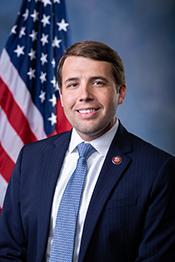
U.S. Representative for New Hampshire’s 1st district
Democrat
119th Congress, two-year term
Missed 0.0% of roll calls. Chamber median 1.9%.
The full voting recordCounts roll calls where most Democrats and most Republicans voted differently, leaving out procedural votes.
How we countFrom FEC filings, Voteview roll calls and Congress.gov.
Democrat. In Congress since 2019, 4 terms in total.
Following saves Pappas to your list, which Chamber & Street keeps on its server, linked to a cookie on this browser and not to your name or email. Email alerts will come with constituent verification.
Bills and resolutions Pappas signed on to as a cosponsor. An original cosponsor signed on the day the bill was introduced. Source: govinfo bill status files, last updated Nov 6, 2026.
Survivor Benefits Fairness Act
Sponsor Bryan Steil (R). Joined Dec 18, 2025. 6 cosponsors. H.R. 2228 on Congress.gov
Introduced
Community News and Small Business Support Act
Sponsor Claudia Tenney (R). Joined Dec 18, 2025. 9 cosponsors. H.R. 1753 on Congress.gov(opens in a new tab)
Introduced
Community News and Small Business Support Act
This bill establishes a temporary business tax credit for expenses incurred by an eligible small business to advertise in local media. The bill also establishes a temporary refundable tax credit for a percentage of wages paid by an eligible employer to local news journalists. (Limitations apply.)
Under the bill, an eligible small business (a business with an average of fewer than 50 employees) may claim a tax credit for (1) 80% of local media advertising expenses, up to a maximum of $5,000, in the first year of the tax credit; and (2) 50% of such expenses, up to a maximum of $2,500, in the subsequent four years. (Other conditions and limitations may apply.)
The bill also allows an eligible employer to claim each calendar quarter a refundable tax credit against Medicare payroll taxes for (1) 50% of wages paid to a local news journalist in the first four calendar quarters of the tax credit, and (2) 30% of such wages paid in each calendar quarter in the subsequent four years.
However, under the bill, the tax credit for local news journalist wages is limited to $12,500 in wages paid per local news journalist per quarter and the wages of no more than 1,500 local news journalists may be included. Further, the tax credit may not be claimed for wages for which certain other tax credits (e.g., the tax credit for paid family and medical leave) are claimed. (Other conditions and limitations may apply.)
9/11 Responder and Survivor Health Funding Correction Act of 2025
Sponsor Andrew Garbarino (R). Joined Dec 18, 2025. 133 cosponsors. H.R. 1410 on Congress.gov(opens in a new tab)
Introduced
9/11 Responder and Survivor Health Funding Correction Act of 2025
This bill modifies the World Trade Center Health Program (WTCHP), including by updating the formula for determining the program’s annual funding amounts and authorizing mental health providers to provide certain evaluations under the program.
The WTCHP is a federal health care program (terminating in FY2090) providing responders and survivors with monitoring and treatment of certified medical conditions related to the terrorist attacks that occurred on September 11, 2001. Under current law, the program’s annual federal funding is determined based on the amount specifically appropriated in the previous fiscal year, adjusted for inflation.
The bill establishes a new federal funding formula for FY2026-FY2090 that is generally based on annual changes in the number of enrollees. The bill also increases the amounts the program may spend annually on medical research and activities relating to data collection. The bill requires the National Institute for Occupational Safety and Health (NIOSH), which administers the program, to submit a report to Congress on the program’s projected budgetary needs and expenditures.
In addition, the bill authorizes licensed mental health providers to perform initial health evaluations with respect to mental health conditions for purposes of determining eligibility under the WTCHP. NIOSH must issue regulations specifying the categories of mental health providers that may perform these activities.
Blind Americans Return to Work Act of 2025
Sponsor Pete Sessions (R). Joined Dec 18, 2025. 54 cosponsors. H.R. 1175 on Congress.gov(opens in a new tab)
Introduced
Blind Americans Return to Work Act of 2025
This bill requires the Social Security Administration to carry out a demonstration project during which blind Social Security Disability Insurance (SSDI) beneficiaries receive reduced benefits commensurate with income above certain thresholds.
Under current law, only individuals who earn under a specified monthly income, known as the substantial gainful activity (SGA) threshold, are considered disabled and thereby eligible for SSDI benefits. For blind workers, this limit is $2,700 per month in 2025. SSDI beneficiaries may earn beyond the SGA threshold for a limited period of time, known as the trial work period, before their benefits are suspended and ultimately terminate.
The bill establishes a 20-year demonstration project during which individuals who are entitled to SSDI benefits by reason of blindness and who earn above the SGA threshold continue to receive benefits at an amount gradually reduced commensurate with their earnings beyond a specified amount.
During this period, blind workers’ SSDI benefits must be reduced by $1 for every $2 that a worker earns above the sum of (1) the SGA threshold, and (2) the worker’s expenses reasonably attributable to their work. The SGA threshold may not be used to determine whether an individual is disabled during this period, and blind workers’ SSDI benefits may not be terminated due to work-related earnings. The trial work period also must not apply.
After 10 years, affected beneficiaries may opt out of the modified benefits structure.
Public Shipyard Workforce Protection Act of 2025
Sponsor Maggie Goodlander (D). Original cosponsor. 6 cosponsors. H.R. 6793 on Congress.gov(opens in a new tab)
Introduced
Aviation Funding Solvency Act
Sponsor Sam Graves (R). Joined Dec 17, 2025. 29 cosponsors. H.R. 6086 on Congress.gov(opens in a new tab)
Passed committee
Aviation Funding Solvency Act
This bill provides continuing appropriations to the Federal Aviation Administration (FAA) if (1) an appropriations bill for the FAA has not been enacted before a fiscal year begins, or (2) a law making continuing appropriations for the FAA is not in effect.
Specifically, the bill provides appropriations from the Aviation Insurance Revolving Fund at the rate of operations that was provided for the prior fiscal year to continue programs, projects, and activities that were funded in the preceding fiscal year. The FAA may use the balance of the fund, minus $1 billion. If the FAA determines that the amounts from the fund are insufficient to continue all programs, projects, or activities, then the FAA must prioritize compensation payments for employees of the Air Traffic Organization (e.g., air traffic controllers).
The bill provides the appropriations until the date on which either (1) specified appropriations legislation for the fiscal year becomes law, or (2) a bill making continuing appropriations becomes law.
Finally, the bill permanently extends the FAA Non-premium War Risk Insurance Program. This program provides aviation insurance without a premium to eligible air carriers at the request of the Department of Defense or another federal agency, provided that the agency agrees to indemnify the FAA from all losses covered under the insurance. Eligible air carriers include those whose operations are under a federal contract and are necessary for national security or to carry out U.S. foreign policy.
Continuous Skilled Nursing Quality Improvement Act of 2025
Sponsor Michael Rulli (R). Original cosponsor. 4 cosponsors. H.R. 6592 on Congress.gov(opens in a new tab)
Introduced
CommonGround for Affordable Health Care Act
Sponsor Jennifer Kiggans (R). Original cosponsor. 38 cosponsors. H.R. 6575 on Congress.gov(opens in a new tab)
Introduced
Ensuring Patient Access to Critical Breakthrough Products Act
Sponsor Blake Moore (R). Joined Dec 9, 2025. 68 cosponsors. H.R. 5343 on Congress.gov(opens in a new tab)
Passed committee
Ensuring Patient Access to Critical Breakthrough Products Act
This bill provides for Medicare coverage of medical devices that are approved under the Food and Drug Administration (FDA) Breakthrough Devices Program. (Under the program, manufacturers work with the FDA to expedite the review and approval of certain medical devices that provide for more effective treatment or diagnosis of life-threatening or irreversibly debilitating human diseases or conditions.)
The bill allows designated medical breakthrough devices to be temporarily covered under Medicare during a four-year transitional period. Manufacturers must apply to the Centers for Medicare & Medicaid Services (CMS) to receive this designation. Qualifying devices must (1) have received priority review from the FDA, (2) received premarket approval (if applicable) based on clinical data that includes data from Medicare beneficiaries, (3) already generally qualify for Medicare coverage, and (4) not present an undue risk of harm that outweighs potential clinical benefits for Medicare beneficiaries.
The CMS must approve or deny applications within six months of receipt and must provide an explanation in the case of a denial. In addition, the CMS must make permanent coverage decisions before the end of the transitional period upon a timely request to do so, as specified.
The bill provides funds through FY2030 for the CMS to implement the bill.
Alternatives to PAIN Act
Sponsor Mariannette Miller-Meeks (R). Joined Dec 9, 2025. 116 cosponsors. H.R. 1227 on Congress.gov(opens in a new tab)
Introduced
Alternatives to Prevent Addiction In the Nation Act or the Alternatives to PAIN Act
This bill reduces cost-sharing and prohibits the imposition of certain utilization requirements under the Medicare prescription drug benefit for certain non-opioid pain management drugs.
Specifically, the bill requires such drugs to be covered without a deductible and to be placed on the lowest cost-sharing tier (if any). The bill also prohibits the imposition of prior authorization requirements (i.e., requiring prior approval from a plan) or step therapy requirements (i.e., requiring the use of alternative drugs before a drug is covered under a plan) with respect to such drugs.
Guarding Readiness Resources Act
Sponsor Pat Harrigan (R). Joined Dec 3, 2025. 24 cosponsors. H.R. 1695 on Congress.gov(opens in a new tab)
Introduced
Guarding Readiness Resources Act
This bill modifies the treatment of funds received by the National Guard Bureau as a reimbursement from a state or other U.S. territory (e.g., Guam) for the use of military property.
Specifically, the funds must be credited to (1) the appropriation, fund, or account used in incurring the obligation; or (2) an appropriation, fund, or account currently available for the purposes of which the expenditures were made. Further, the funds may only be used by the Department of Defense for the repair, maintenance, replacement, or other similar functions related directly to assets used by National Guard units while operating under state active duty status.
Condemning the Hamas attacks of October 7, 2023, and calling for Hamas and its leaders to immediately and unconditionally surrender and to release the hostages, including Americans.
Sponsor Josh Gottheimer (D). Joined Dec 1, 2025. 68 cosponsors. H.Res. 795 on Congress.gov(opens in a new tab)
Introduced
Protecting First Responders from Secondary Exposure Act of 2025
Sponsor David Joyce (R). Joined Dec 1, 2025. 28 cosponsors. H.R. 621 on Congress.gov(opens in a new tab)
Introduced
Protecting First Responders from Secondary Exposure Act of 2025
This bill expands the allowable uses of grant funds under the Comprehensive Opioid, Stimulant, and Substance Use Program administered by the Department of Justice.
Specifically, the bill allows grants to be used for purchasing containment devices for first responders and training first responders on the use of containment devices to prevent secondary exposure to fentanyl and other potentially lethal substances.
Accelerating Access to Dementia and Alzheimer’s Provider Training Act
Sponsor Troy Balderson (R). Joined Dec 1, 2025. 97 cosponsors. H.R. 3747 on Congress.gov(opens in a new tab)
Passed the House
Accelerating Access to Dementia and Alzheimer’s Provider Training Act or the AADAPT Act
This bill reauthorizes through FY2031 and revises the Technology-enabled Collaborative Learning Program, which is administered by the Health Resources and Services Administration. This program provides grants to support the use of technology that connects different health care professionals to improve access to health care, including specialty care, for certain rural and medically underserved populations.
The bill explicitly adds dementia care to the types of specialty care that the program may address.
Public Safety Officer Concussion and Traumatic Brain Injury Health Act of 2025
Sponsor Dan Crenshaw (R). Joined Dec 1, 2025. 15 cosponsors. H.R. 2830 on Congress.gov(opens in a new tab)
Introduced
Public Safety Officer Concussion and Traumatic Brain Injury Health Act of 2025
This bill requires the Centers for Disease Control and Prevention (CDC) to collect and disseminate information about concussions and traumatic brain injuries among public safety officers, including information relating to diagnosis, treatment, and prevention.
The CDC must put the information it collects on its website. The CDC must also disseminate the information to medical and public health professionals, public safety employers and employee representatives, and other stakeholders.
In implementing the bill, the CDC may support public and private efforts to identify and create guidelines, protocols, and evidence-based practices for treating concussions and traumatic brain injuries in public safety officers.
REDI Act
Sponsor Brian Babin (R). Joined Dec 1, 2025. 133 cosponsors. H.R. 2028 on Congress.gov(opens in a new tab)
Introduced
Resident Education Deferred Interest Act or the REDI Act
This bill allows borrowers in medical or dental internships or residency programs to defer student loan payments until the completion of their programs.
Supporting the goals and principles of Transgender Day of Remembrance by recognizing the epidemic of violence toward transgender people and memorializing the lives lost this year.
Sponsor Pramila Jayapal (D). Original cosponsor. 83 cosponsors. H.Res. 899 on Congress.gov(opens in a new tab)
Introduced
Small Business RELIEF Act
Sponsor Kelly Morrison (D). Original cosponsor. 32 cosponsors. H.R. 6215 on Congress.gov(opens in a new tab)
Introduced
Proposing an amendment to the Constitution of the United States providing that there is no immunity from criminal prosecution for an act on the grounds that such act was within the constitutional authority or official duties of an individual, and providing that the President may not grant a pardon to himself or herself.
Sponsor Joseph Morelle (D). Joined Nov 20, 2025. 187 cosponsors. H.J.Res. 108 on Congress.gov(opens in a new tab)
Introduced
Supporting the goals and ideals of "National Rural Health Day".
Sponsor Diana Harshbarger (R). Original cosponsor. 38 cosponsors. H.Res. 891 on Congress.gov(opens in a new tab)
Introduced
This resolution supports the designation of National Rural Health Day.
Restoring Food Security for American Families and Farmers Act of 2025
Sponsor Jahana Hayes (D). Original cosponsor. 206 cosponsors. H.R. 6088 on Congress.gov(opens in a new tab)
Introduced
Nancy Gardner Sewell Medicare Multi-Cancer Early Detection Screening Coverage Act
Sponsor Jodey Arrington (R). Joined Nov 17, 2025. 338 cosponsors. H.R. 842 on Congress.gov(opens in a new tab)
Introduced
Nancy Gardner Sewell Medicare Multi-Cancer Early Detection Screening Coverage Act
This bill allows, beginning in 2028, for Medicare coverage and payment for multi-cancer early detection screening tests that are approved by the Food and Drug Administration and that are used to screen for cancer across many cancer types, if the Centers for Medicare & Medicaid Services determines such coverage is appropriate. Coverage is limited to those under a certain age (age 68 in 2028, increased by one year every year thereafter) and to one test every 11 months.
Stop CMV Act of 2025
Sponsor Michael Lawler (R). Joined Nov 17, 2025. 12 cosponsors. H.R. 5435 on Congress.gov(opens in a new tab)
Introduced
Community TEAMS Act of 2025
Sponsor Carol Miller (R). Joined Nov 17, 2025. 36 cosponsors. H.R. 3885 on Congress.gov(opens in a new tab)
Introduced
Federal Bird Safe Buildings Act of 2025
Sponsor H. Griffith (R). Joined Nov 17, 2025. 6 cosponsors. H.R. 3268 on Congress.gov(opens in a new tab)
Introduced