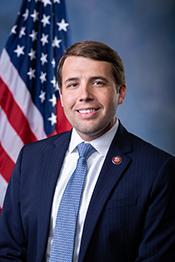
U.S. Representative for New Hampshire’s 1st district
Democrat
119th Congress, two-year term
Missed 0.0% of roll calls. Chamber median 1.9%.
The full voting recordCounts roll calls where most Democrats and most Republicans voted differently, leaving out procedural votes.
How we countFrom FEC filings, Voteview roll calls and Congress.gov.
Democrat. In Congress since 2019, 4 terms in total.
Following saves Pappas to your list, which Chamber & Street keeps on its server, linked to a cookie on this browser and not to your name or email. Email alerts will come with constituent verification.
Bills and resolutions Pappas signed on to as a cosponsor. An original cosponsor signed on the day the bill was introduced. Source: govinfo bill status files, last updated Nov 6, 2026.
HEARTS Act of 2025
Sponsor Ken Calvert (R). Original cosponsor. 18 cosponsors. H.R. 1291 on Congress.gov
Introduced
Humane and Existing Alternatives in Research and Testing Sciences Act of 2025 or the HEARTS Act of 2025
This bill establishes a center within the National Institutes of Health (NIH) and requires other activities to promote alternatives to using animals in research and testing.
The duties of the center include developing nonanimal research models (e.g., advanced cell cultures, advanced imaging systems) and training scientists about the methods.
Additionally, if an agency or other entity conducting federally funded research uses animals for research and testing, it must develop and update a plan for reducing such use and periodically report to the center the number and types of animals it uses.
The NIH must also provide incentives for the use of nonanimal research and generally ensure that nonanimal alternatives are considered when reviewing research proposals. Further, applications for NIH research grants must include an assurance that nonanimal methods for carrying out the research are unavailable.
Water Infrastructure Subcontractor and Taxpayer Protection Act of 2025
Sponsor Mike Bost (R). Original cosponsor. 29 cosponsors. H.R. 1285 on Congress.gov(opens in a new tab)
Introduced
AM Radio for Every Vehicle Act of 2025
Sponsor Gus Bilirakis (R). Joined Feb 12, 2025. 317 cosponsors. H.R. 979 on Congress.gov(opens in a new tab)
Passed the House
AM Radio for Every Vehicle Act of 2025
This bill requires the Department of Transportation (DOT) to issue a rule requiring AM radio capabilities to be standard in all new passenger vehicles. (AM radio is often used to deliver emergency alerts and news and entertainment programming; some newer vehicles do not include AM equipment.)
Specifically, this bill applies to passenger vehicles (1) manufactured in the United States for sale in the United States, imported into the United States, or shipped in interstate commerce; and (2) manufactured after the rule's effective date. The rule must require all such vehicles to have devices that can receive signals and play content transmitted by AM stations or digital audio AM stations installed as standard equipment and made easily accessible to drivers.
Prior to the rule's effective date, manufacturers that do not include devices that can access AM radio as standard equipment (1) must inform purchasers of this fact through clear and conspicuous labeling, and (2) may not charge an additional or separate fee for AM radio access.
DOT may assess civil penalties for any violation of the rule. The Department of Justice may also bring a civil action to enjoin a violation.
The rule, including DOT’s authority to enforce it, must expire 10 years after the bill’s enactment.
Further, the Government Accountability Office must study and report on the dissemination of emergency alerts to the public, including by conducting an assessment of AM radio relative to other Integrated Public Alert and Warning System communication technologies.
Rural Telehealth and Education Enhancement Act of 2025
Sponsor Nicholas Langworthy (R). Joined Feb 12, 2025. 7 cosponsors. H.R. 290 on Congress.gov(opens in a new tab)
Introduced
Rural Telehealth and Education Enhancement Act of 2025
This bill reauthorizes the Distance Learning and Telemedicine Program through FY2030. This Department of Agriculture program provides grants to help rural communities gain the technology and training necessary to engage in telemedicine and distance learning.
Combating Illicit Xylazine Act
Sponsor Jimmy Panetta (D). Original cosponsor. 114 cosponsors. H.R. 1266 on Congress.gov(opens in a new tab)
Passed the House
Combating Illicit Xylazine Act
This bill regulates xylazine under the Controlled Substances Act (CSA).
Xylazine, also known as tranq, is a nonopioid sedative and pain reliever that is approved for use in animals. Recently, the Drug Enforcement Administration (DEA) has reported an increase in trafficking of fentanyl mixed with xylazine.
This bill adds xylazine, including its salts, isomers, and salts of isomers, to schedule III of the CSA. Schedule III controlled substances, including anabolic steroids, buprenorphine, and ketamine, have less potential for abuse than a schedule I or II substance, have a currently accepted medical use, and have low or moderate risk of dependence if abused.
Under the bill, manufacturing, distributing, or dispensing xylazine, or possessing with intent to manufacture, distribute, or dispense xylazine for illicit use is subject to criminal penalties under the CSA. The bill also requires xylazine transactions to be tracked in the drug reporting system maintained by the DEA.
The bill exempts from registration under the CSA persons and entities that possess xylazine (1) lawfully dispensed by a veterinarian or pharmacy and (2) for an animal or for use in certain animal-control or wildlife programs.
The bill also exempts xylazine manufacturers from the CSA's physical security requirements.
Finally, the bill requires the DEA, in coordination with the Food and Drug Administration, to report on (1) the prevalence and impact of illicit xylazine use in the United States, and (2) updated information on the prevalence and proliferation of xylazine trafficking and misuse in the United States.
OPIOIDS Act
Sponsor Laurel Lee (R). Original cosponsor. 2 cosponsors. H.R. 1257 on Congress.gov(opens in a new tab)
Introduced
Overcoming Prevalent Inadequacies in Overdose Information Data Sets Act or the OPIOIDS Act
This bill establishes and revises certain grants and resources to address opioid-related overdoses.
Specifically, the bill authorizes the Department of Justice (DOJ) to award grants to states, territories, and localities to improve data and surveillance related to opioid overdoses.
Additionally, the bill authorizes DOJ to award grants to law enforcement agencies and forensic laboratories in communities with high rates of drug overdoses to (1) provide training to help officers better identify overdoses; (2) upgrade essential systems for drug tracing and processing samples in forensic laboratories; (3) provide training to better trace criminals through the dark web; or (4) provide training, staffing, and equipment in medical examiners and coroners’ offices to provide more timely and comprehensive services in suspected overdose cases.
The bill requires the Federal Law Enforcement Training Centers to provide training to state and local law enforcement agencies on how to best coordinate with state and federal partners for tracking drug-related activity.
The bill allows funds under the Community Oriented Policing Services grant program to be used to provide training and resources for equipment that protects first responders from secondary fentanyl exposure.
Finally, the bill directs the Drug Enforcement Administration to (1) develop uniform reporting standards for information concerning drug control activities, and (2) budget for a program that analyzes fentanyl samples.
Expanding Access to Capital for Rural Job Creators Act
Sponsor Troy Downing (R). Original cosponsor. 5 cosponsors. H.R. 1190 on Congress.gov(opens in a new tab)
Passed the House
Expanding Access to Capital for Rural Job Creators Act
This bill requires the Office of the Advocate for Small Business Capital Formation within the Securities and Exchange Commission to report on issues encountered by rural-area small businesses.
Goldie’s Act
Sponsor Nicole Malliotakis (R). Joined Feb 10, 2025. 109 cosponsors. H.R. 349 on Congress.gov(opens in a new tab)
Introduced
Goldie's Act
This bill expands enforcement provisions under the Animal Welfare Act (AWA).
Specifically, the bill directs the Department of Agriculture (USDA) to document and record detailed descriptions of violations of the act observed during inspections and investigations. USDA must provide a copy of all records documenting violations to state, local, and municipal animal control or law enforcement officials within 24 hours of such inspections or investigations.
Inspections must be held at least once a year of each research facility, the premises of each animal dealer, and each exhibitor of animals. If violations are found during inspections, then USDA must conduct any necessary follow-up inspections until all the violations are corrected. Inspectors must confiscate or destroy in a humane manner animals found to be suffering physical or psychological harm as a result of failure to comply with the AWA.
Violators are subject to civil penalties as outlined in the bill.
Right to Contraception Act
Sponsor Lizzie Fletcher (D). Joined Feb 7, 2025. 211 cosponsors. H.R. 999 on Congress.gov(opens in a new tab)
Introduced
Right to Contraception Act
This bill sets out statutory protections for an individual's right to access and a health care provider's right to provide contraception and related information. Contraception refers to an action taken to prevent pregnancy, including the use of contraceptives (i.e., a device or medication used to prevent pregnancy), fertility-awareness based methods, and sterilization procedures.
Generally, the bill prohibits measures that single out and impede access to contraception and related information. However, a party may defend against a claim that a measure violates the bill's prohibitions by demonstrating, through clear and convincing evidence, that the measure significantly advances the safety of contraception and cannot be achieved through less restrictive means. The bill also specifies that the prohibition preempts inconsistent state and local laws and applies notwithstanding other federal laws, including the Religious Freedom Restoration Act of 1993.
The Department of Justice, individuals, or health care providers may bring a lawsuit to enforce this bill, and states are not immune from suits for violations.
Sustainable Cardiopulmonary Rehabilitation Services in the Home Act
Sponsor John Joyce (R). Joined Feb 7, 2025. 37 cosponsors. H.R. 783 on Congress.gov(opens in a new tab)
Introduced
Sustainable Cardiopulmonary Rehabilitation Services in the Home Act
This bill permanently allows services relating to cardiac rehabilitation programs, intensive cardiac rehabilitation programs, and pulmonary rehabilitation programs to be furnished via telehealth at a beneficiary's home under Medicare.
BEACH Act of 2025
Sponsor David Joyce (R). Joined Feb 6, 2025. 38 cosponsors. H.R. 583 on Congress.gov(opens in a new tab)
Introduced
Beaches Environmental Assessment and Coastal Health Act of 2025 or the BEACH Act of 2025
This bill reauthorizes through FY2029 and expands an existing program of the Environmental Protection Agency (EPA) that awards grants to states and local governments to (1) monitor the water quality of coastal recreational waters adjacent to beaches or similar points of access that are used by the public; and (2) notify the public, local governments, and the EPA when the water is not safe for recreational activities.
Specifically, the bill expands the program to allow the EPA to award grants for identifying sources of contamination (i.e., pathogens) for coastal recreation waters. It also allows grants to be used for monitoring and notification of contamination in (1) shallow waters upstream from recreational waters, and (2) recreational waters on beaches.
Ski Hill Resources for Economic Development Act
Sponsor Joe Neguse (D). Original cosponsor. 9 cosponsors. H.R. 1084 on Congress.gov(opens in a new tab)
Introduced
Ski Hill Resources for Economic Development Act
This bill allows National Forest System (NFS) units to keep the majority of ski area permit rental fees that were generated within their boundaries and outlines how revenues from those fees may be used. Such fees are collected by the Department of Agriculture (USDA) from ski area operators on NFS land.
Within the NFS unit where the fees were generated, USDA must expend (1) 60%-48% of the collected fees for activities such as administration of the ski area permit program, visitor information, or reducing the likelihood of wildfire in or adjacent to a recreation site; and (2) 20% of the collected fees for activities such as repair of a Forest Service-owned facility, habitat restoration, or search and rescue activities.
The remainder of the collected fees must be expended by USDA at any NFS unit for any of the activities specified in this bill.
WARN Act
Sponsor Nicholas Langworthy (R). Original cosponsor. 41 cosponsors. H.R. 1076 on Congress.gov(opens in a new tab)
Introduced
Marc Fischer Memorial Act
Sponsor Don Bacon (R). Original cosponsor. 135 cosponsors. H.R. 1046 on Congress.gov(opens in a new tab)
Introduced
Antisemitism Awareness Act of 2025
Sponsor Michael Lawler (R). Original cosponsor. 89 cosponsors. H.R. 1007 on Congress.gov(opens in a new tab)
Introduced
Antisemitism Awareness Act of 2025
This bill provides statutory authority for the requirement that the Department of Education’s Office for Civil Rights take into consideration the International Holocaust Remembrance Alliance's (IHRA's) working definition of antisemitism when reviewing or investigating complaints of discrimination based on race, color, or national origin in programs or activities that receive federal financial assistance. According to the IHRA's working definition, antisemitism is a certain perception of Jews, which may be expressed as hatred toward Jews.
Banning SPR Oil Exports to Foreign Adversaries Act
Sponsor Chrissy Houlahan (D). Original cosponsor. 37 cosponsors. H.R. 942 on Congress.gov(opens in a new tab)
Introduced
Federal Initiative to Guarantee Health by Targeting Fentanyl Act
Sponsor Vern Buchanan (R). Original cosponsor. 1 cosponsor. H.R. 920 on Congress.gov(opens in a new tab)
Introduced
Federal Initiative to Guarantee Health by Targeting Fentanyl Act
This bill places fentanyl-related substances as a class into schedule I of the Controlled Substances Act. A schedule I controlled substance is a drug, substance, or chemical that has a high potential for abuse; has no currently accepted medical value; and is subject to regulatory controls and administrative, civil, and criminal penalties under the Controlled Substances Act.
Additionally, the bill prohibits the application of a mandatory minimum prison term for certain drug offenses involving fentanyl-related substances.
Global Health, Empowerment and Rights Act
Sponsor Lois Frankel (D). Joined Jan 31, 2025. 138 cosponsors. H.R. 764 on Congress.gov(opens in a new tab)
Introduced
Global Health, Empowerment and Rights Act
This bill establishes that a foreign nongovernmental organization shall not be disqualified from receiving certain U.S. international development assistance solely because the organization provides medical services (including counseling and referral services) using non-U.S. government funds if the medical services do not violate the laws of the country in which they are being provided. Such foreign organizations shall not be subject to requirements relating to their use of non-U.S. funds for advocacy or lobbying activities other than those that apply to U.S. nongovernmental organizations receiving such assistance.
Recognizing Gold Shield Families and affirming that their sacrifices and difficulties should not be forgotten.
Sponsor Daniel Meuser (R). Original cosponsor. 20 cosponsors. H.Res. 76 on Congress.gov(opens in a new tab)
Introduced
This resolution recognizes and honors Gold Shield Families for their sacrifices and support of their loved ones in service to our nation. Gold Shield Families consist of the families of fallen police officers, firefighters, emergency medical technicians (EMTs), correction officers, emergency dispatch officers, and emergency service providers.
Rural Small Business Resilience Act
Sponsor Kelly Morrison (D). Original cosponsor. 4 cosponsors. H.R. 804 on Congress.gov(opens in a new tab)
Passed the House
Rural Small Business Resilience Act
This bill requires the Small Business Administration's Office of Disaster Recovery and Resilience to take necessary actions to ensure that individuals located in rural areas where a disaster has been declared have full access to disaster assistance. Such actions include providing targeted outreach and marketing materials to such individuals.
Charitable Act
Sponsor Blake Moore (R). Original cosponsor. 54 cosponsors. H.R. 801 on Congress.gov(opens in a new tab)
Introduced
Charitable Act
This bill allows an individual taxpayer who does not itemize their tax deductions to claim a tax deduction for charitable contributions and eliminates the tax penalty for overstating charitable contributions. (Some limitations apply).
Under the bill, for tax years beginning in 2026 or 2027, an individual taxpayer who does not itemize their tax deductions may deduct charitable contributions of up to one-third of the standard deduction allowed to such individual. (Under current law, an individual taxpayer generally must itemize their tax deductions to deduct charitable contributions.)
The bill also eliminates the tax penalty for an underpayment of taxes attributable to overstated charitable contributions by taxpayers who do not itemize deductions. (Under current law, taxpayers who claim a deduction under this bill may be assessed a tax penalty in the amount of 50% of the portion of an understatement of tax liability attributable to overstated charitable contributions.)
RELIEVE Act
Sponsor Jack Bergman (R). Original cosponsor. 5 cosponsors. H.R. 748 on Congress.gov(opens in a new tab)
Introduced
Removing Extraneous Loopholes Insuring Every Veteran Emergency Act or the RELIEVE Act
This bill expands eligibility for Department of Veterans Affairs (VA) reimbursement of emergency treatment for veterans who are treated in a non-VA facility. Specifically, the bill waives the requirement that a veteran must have received VA care within the 24-month period preceding the furnishing of emergency treatment if the veteran receives such emergency treatment within the 60-day period following their enrollment in the VA health care system.
Expressing strong disapproval of the President's announcement to withdraw the United States from the Paris Agreement.
Sponsor Bradley Schneider (D). Original cosponsor. 162 cosponsors. H.Res. 68 on Congress.gov(opens in a new tab)
Introduced
Medal of Honor Act
Sponsor Troy Nehls (R). Original cosponsor. 4 cosponsors. H.R. 695 on Congress.gov(opens in a new tab)
Became law
Medal of Honor Act
This act increases the monthly special pension for living Medal of Honor recipients. The act also prohibits the Department of Veterans Affairs from increasing the amount of the pension for inflation if the amount was already increased during such year.
Additionally, the act extends a limitation on the pension paid to veterans who reside in Medicaid nursing homes and have no spouse or child. Currently, such pensions are limited to $90 per month through November 30, 2031. The act extends this limitation through January 31, 2033.
Rosie the Riveter Commemorative Coin Act
Sponsor John Garamendi (D). Joined Jan 23, 2025. 169 cosponsors. H.R. 429 on Congress.gov(opens in a new tab)
Introduced
Rosie the Riveter Commemorative Coin Act
This bill directs the Department of the Treasury to mint and issue coins in recognition and celebration of the women who contributed to the U.S. home front during World War II. All sales of coins issued under this bill must include a surcharge to be paid to the Rosie the Riveter Trust to support the National Park Service in maintaining and repairing the Rosie the Riveter WWII Home Front National Historical Park.