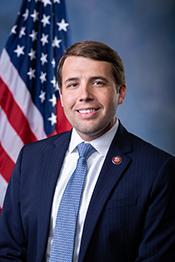
U.S. Representative for New Hampshire’s 1st district
Democrat
119th Congress, two-year term
Missed 0.0% of roll calls. Chamber median 1.9%.
The full voting recordCounts roll calls where most Democrats and most Republicans voted differently, leaving out procedural votes.
How we countFrom FEC filings, Voteview roll calls and Congress.gov.
Democrat. In Congress since 2019, 4 terms in total.
Following saves Pappas to your list, which Chamber & Street keeps on its server, linked to a cookie on this browser and not to your name or email. Email alerts will come with constituent verification.
Bills and resolutions Pappas signed on to as a cosponsor. An original cosponsor signed on the day the bill was introduced. Source: govinfo bill status files, last updated Nov 6, 2026.
Major Richard Star Act
Sponsor Gus Bilirakis (R). Original cosponsor. 340 cosponsors. H.R. 2102 on Congress.gov
Introduced
Major Richard Star Act
This bill allows a veteran with a combat-related disability to receive retirement pay, without reduction, concurrently with their disability compensation. This includes veterans with a combat-related disability and fewer than 20 years of creditable service. (Currently, veterans who receive combat-related special compensation and retirement pay are subject to an offset in retirement pay for concurrent receipt of such benefits.)
Public Safety Free Speech Act
Sponsor Jefferson Van Drew (R). Joined Mar 11, 2025. 18 cosponsors. H.R. 1443 on Congress.gov(opens in a new tab)
Introduced
United States-Israel Defense Partnership Act of 2025
Sponsor Joe Wilson (R). Joined Mar 11, 2025. 178 cosponsors. H.R. 1229 on Congress.gov(opens in a new tab)
Introduced
United States-Israel Defense Partnership Act of 2025
This bill requires or authorizes certain actions to increase defense-related cooperation between the United States and Israel.
Specifically, the bill requires the Department of Defense (DOD) to
• establish a cooperative program, with the concurrence of Israel's Ministry of Defense (MOD), to develop and deploy advanced technologies for countering unmanned systems that threaten the United States and Israel;
• establish in Israel an office of the Defense Innovation Unit (an organization that focuses on rapidly fielding and scaling commercial technology across the U.S. military); and
• seek to engage Israel's MOD on the ascension of Israel into the national technology and industrial base (currently defined in law as the persons and organizations engaged in research, development, production, integration, services, or information technology activities conducted within the United States, the United Kingdom, Australia, New Zealand, and Canada).
The bill authorizes DOD, upon request of Israel's MOD, to jointly conduct research, development, test, and evaluation (RDT&E) of emerging technologies such as artificial intelligence and robotics to meet defense challenges.
Additionally, the bill extends the authority for DOD to (1) carry out RDT&E on a joint basis with Israel to establish anti-tunnel and counter unmanned aerial systems capabilities through 2028, and (2) transfer defense articles intended for use as reserve stocks for Israel through January 1, 2029.
American Innovation and R&D Competitiveness Act of 2025
Sponsor Ron Estes (R). Original cosponsor. 81 cosponsors. H.R. 1990 on Congress.gov(opens in a new tab)
Introduced
Providing Veterans Essential Medications Act
Sponsor Mariannette Miller-Meeks (R). Original cosponsor. 53 cosponsors. H.R. 1970 on Congress.gov(opens in a new tab)
Introduced
Enhanced Iran Sanctions Act of 2025
Sponsor Michael Lawler (R). Joined Mar 10, 2025. 295 cosponsors. H.R. 1422 on Congress.gov(opens in a new tab)
Passed the House
Enhanced Iran Sanctions Act of 2025
This bill imposes sanctions on certain foreign persons (individuals and entities) that are involved in Iran's petroleum sector as well as certain associated persons. The bill also requires or authorizes actions to facilitate the enforcement of sanctions on Iran.
Specifically, the bill requires the President to impose visa- and property-blocking sanctions on any foreign person that, after the bill's enactment, knowingly engages in any transaction related to the processing, export, or sale of oil, condensates, gas, liquefied natural gas, or other petrochemical products in whole or in part from Iran. The President must also impose sanctions on certain foreign persons associated with a sanctioned individual or entity. For example, the President must sanction the subsidiaries and corporate officers of a sanctioned business.
The bill provides certain exceptions to these sanctions, including specifying that sanctions do not apply to the importation of goods or to conducting or facilitating transactions for humanitarian assistance.
The Department of State must establish an interagency working group that shall seek to establish a multilateral contact group to coordinate international efforts to enforce sanctions on Iran.
The bill expands the State Department rewards program to authorize a reward payment to any individual who furnishes information leading to the identification of a person (1) subject to sanctions under this bill, or (2) that has attempted or is attempting to evade sanctions under this bill.
Audio-Only Telehealth Access Act of 2025
Sponsor Randy Feenstra (R). Original cosponsor. 1 cosponsor. H.R. 1899 on Congress.gov(opens in a new tab)
Introduced
Audio-Only Telehealth Access Act of 2025
This bill permanently allows for Medicare coverage of audio-only telehealth services for evaluation and management and behavioral health services.
Honoring Our Fallen Heroes Act of 2025
Sponsor Mary Gay Scanlon (D). Joined Mar 6, 2025. 180 cosponsors. H.R. 1269 on Congress.gov(opens in a new tab)
Introduced
Honoring Our Fallen Heroes Act of 2025
This bill extends death and disability benefits under the Public Safety Officers' Benefits Program (PSOB) to certain public safety officers who suffer from exposure-related cancer while on duty and their survivors. The PSOB program provides death, disability, and education benefits to public safety officers who are killed or injured in the line of duty and their survivors.
The bill specifies that exposure to a carcinogen shall be presumed to constitute a personal injury in the line of duty if
• the exposure occurred while the officer was in the line of duty;
• the officer began serving as an officer not fewer than 5 years before the date of the diagnosis of an exposure-related cancer and the diagnosis occurred not more than 15 years after the last date of active service; and
• the exposure-related cancer directly and proximately resulted in the death or permanent and total disability of the officer.
The Department of Justice's Bureau of Justice Assistance must periodically review the definition of exposure-related cancer and update the definition if appropriate based on medical evidence and in accordance with the requirements of a petition process.
Richard L. Trumka Protecting the Right to Organize Act of 2025
Sponsor Robert Scott (D). Original cosponsor. 217 cosponsors. H.R. 20 on Congress.gov(opens in a new tab)
Introduced
Turkey Diplomatic Realignment Act
Sponsor Bradley Schneider (D). Original cosponsor. 6 cosponsors. H.R. 1890 on Congress.gov(opens in a new tab)
Introduced
John R. Lewis Voting Rights Advancement Act of 2025
Sponsor Terri Sewell (D). Original cosponsor. 221 cosponsors. H.R. 14 on Congress.gov(opens in a new tab)
Introduced
John R. Lewis Voting Rights Advancement Act of 2025
This bill establishes new criteria for determining which states and political subdivisions must obtain preclearance before changes to voting practices may take effect. Preclearance is the process of receiving preapproval from the Department of Justice (DOJ) or the U.S. District Court for the District of Columbia before making legal changes that would affect voting rights.
A state and all of its political subdivisions shall be subject to preclearance of voting practice changes for a 10-year period if, during the previous 25 years:
• 15 or more voting rights violations occurred in the state;
• 10 or more violations occurred, at least 1 of which was committed by the state itself; or
• 3 or more violations occurred and the state administers the elections.
A political subdivision as a separate unit shall also be subject to preclearance for a 10-year period if three or more voting rights violations occurred there during the previous 25 years.
States and political subdivisions that meet certain thresholds regarding minority groups must preclear covered practices before implementation, such as redistricting.
States and political subdivisions must notify the public of changes to voting practices.
The bill authorizes DOJ to require states or political subdivisions to provide certain documents or answers to questions for enforcing voting rights.
The bill outlines factors courts must consider when hearing challenges to voting practices, such as the extent of any history of official voting discrimination in the state or political subdivision.
Proxy Voting for New Parents Resolution
Sponsor Brittany Pettersen (D). Joined Feb 27, 2025. 175 cosponsors. H.Res. 23 on Congress.gov(opens in a new tab)
Introduced
Proxy Voting for New Parents Resolution
This resolution authorizes proxy voting in the House of Representatives for a Member who has given birth or whose spouse has given birth and pregnant Members who are unable to travel safely or have a serious medical condition.
Under the resolution, a qualifying Member may designate a proxy to cast a vote in a committee, the Committee of the Whole, or on the House floor; however, proxies will not be counted for purposes of establishing a quorum. The proxy designation is valid for up to 12 weeks.
To designate a proxy for House and Committee of the Whole votes, the Member must submit a signed and dated letter to the Clerk stating the Member’s qualifying circumstances and the name and state of the Member who has agreed to be designated as proxy. A Member who has designated a proxy according to these requirements may also designate a proxy for committee votes. To designate a proxy for committee votes, the Member must provide the committee chair and ranking minority member with a signed and dated letter specifying another member of the committee to cast a proxy vote.
The resolution further provides that a Member may revoke the proxy authorization by (1) casting the Member’s own vote; (2) recording the Member’s own presence in the House or in the Committee of the Whole; or (3) in a committee, by submitting a signed letter to the chair and ranking minority member.
Justice for ALS Veterans Act of 2025
Sponsor Brian Fitzpatrick (R). Original cosponsor. 32 cosponsors. H.R. 1685 on Congress.gov(opens in a new tab)
Introduced
Justice for ALS Veterans Act of 2025
This bill extends increased dependency and indemnity compensation to the surviving spouse of a veteran who dies from amyotrophic lateral sclerosis (ALS or Lou Gehrig's disease) regardless of how long the veteran had such disease prior to death. Under current law, such compensation is paid for a service-connected disability that was rated totally disabling for a continuous period of at least eight years immediately preceding death.
For purposes of compensation for a surviving spouse of a veteran who dies from ALS, the spouse must have been married to the veteran for a continuous period of eight years or longer prior to the death of the veteran.
Additionally, the Department of Veterans Affairs (VA) must report on service-connected disabilities the VA determines should be treated in the same manner as ALS for purposes of dependency and indemnity compensation.
PAST Act of 2025
Sponsor Brian Fitzpatrick (R). Original cosponsor. 207 cosponsors. H.R. 1684 on Congress.gov(opens in a new tab)
Introduced
Prevent All Soring Tactics Act of 2025 or the PAST Act of 2025
This bill increases protections for horses at shows, exhibitions, sales, or auctions (horse events) to prevent the practice of soring horses. Generally, the soring of horses includes certain actions taken on horses' limbs to produce higher gaits that may cause pain, distress, inflammation, or lameness.
Specifically, the bill expands existing soring prohibitions under the Horse Protection Act, including by banning the use of certain action devices (e.g., nonprotective boots) on specified horse breeds.
The bill also requires soring inspectors at horse events to be assigned by the Animal and Plant Health Inspection Service (APHIS) of the Department of Agriculture rather than appointed by the management of horse events. APHIS must also license, train, and oversee inspectors to detect and diagnose soring at such events.
Additionally, the bill increases penalties for violations of the act. It also directs APHIS to disqualify horses found to be sore from being shown or exhibited for specified periods. Further, APHIS may permanently disqualify violators from participating in horse events after the third or any subsequent violation.
By way of background, APHIS issued a rule in 2024 to increase efforts to protect horses from soring practices. However, in 2025, a court vacated parts of the rule as exceeding APHIS' statutory authority (e.g., prohibiting the use of certain action devices) while deeming other parts acceptable (e.g., establishing APHIS-designated inspectors). APHIS subsequently delayed the effective date of the rule to December 31, 2026.
SAFE Act of 2025
Sponsor Vern Buchanan (R). Original cosponsor. 238 cosponsors. H.R. 1661 on Congress.gov(opens in a new tab)
Introduced
Save America's Forgotten Equines Act of 2025 or the SAFE Act of 2025
This bill permanently prohibits the slaughter of equines (e.g., horses and mules) for human consumption. (Current law prohibits the slaughter of dogs and cats for human consumption. This bill extends the prohibition to equines.)
Specifically, this bill prohibits a person from knowingly (1) slaughtering an equine for human consumption; or (2) shipping, transporting, possessing, purchasing, selling, or donating an equine to be slaughtered for human consumption or equine parts for human consumption.
The bill subjects a violator to a fine.
The bill applies to conduct in or affecting interstate or foreign commerce or within the special maritime and territorial jurisdiction of the United States. However, it does not apply to an activity carried out by an Indian for a religious ceremony.
As background, in recent years, the appropriations acts have prohibited the Department of Agriculture (USDA) from using federal funds to inspect horses before they are slaughtered for human consumption. Therefore, there are currently no USDA-inspected horse slaughter facilities in the United States.
Truck Parking Safety Improvement Act
Sponsor Mike Bost (R). Original cosponsor. 54 cosponsors. H.R. 1659 on Congress.gov(opens in a new tab)
Introduced
Truck Parking Safety Improvement Act
This bill directs the Department of Transportation (DOT) to provide competitive grants for projects that provide public parking for commercial motor vehicles and improve the safety of commercial motor vehicle drivers. States, metropolitan planning organizations, tribal governments, and local governments are eligible for these grants.
The grants must be used for projects on federal-aid highways or a facility with reasonable access to such a highway or a freight facility.
A grant recipient may not charge a fee to a commercial motor vehicle driver to access a public parking facility that is constructed, opened, maintained, or improved with a grant under this program.
In providing grants, DOT must determine that
• there is a shortage of commercial motor vehicle parking capacity in the project's corridor;
• the eligible entity has consulted motor carriers, commercial motor vehicle drivers, public safety officials, and private providers of commercial motor vehicle parking regarding the project;
• the project will likely increase the availability or utilization of commercial motor vehicle parking, facilitate the efficient movement of freight, or improve highway safety, traffic congestion, and air quality; and
• the eligible entity has demonstrated the ability to provide for the facility's maintenance and operation.
To the maximum extent practicable, DOT must select grant projects that maximize the geographic dispersion of new commercial motor vehicle parking capacity across the United States.
Expressing support for the Iranian people's desires for a democratic, secular, and nonnuclear Republic of Iran, and condemning the Iranian regime's terrorism, regional proxy war, internal suppression, and for other purposes.
Sponsor Tom McClintock (R). Original cosponsor. 230 cosponsors. H.Res. 166 on Congress.gov(opens in a new tab)
Introduced
ThinkDIFFERENTLY About Disability Employment Act
Sponsor Pete Stauber (R). Original cosponsor. 4 cosponsors. H.R. 1634 on Congress.gov(opens in a new tab)
Passed the House
ThinkDIFFERENTLY About Disability Employment Act
This bill requires the Small Business Administration (SBA) to (1) provide assistance to individuals with disabilities who desire to become entrepreneurs or to be self-employed, (2) help individuals with disabilities find employment at small businesses; and (3) assist small businesses with hiring such individuals and with accessibility issues applicable to such individuals.
The SBA must conduct outreach and education about such activities.
The bill establishes reporting requirements with respect to these activities.
Expressing support for the designation of the week of February 24 through February 28, 2025, as "Public Schools Week".
Sponsor Mark Pocan (D). Original cosponsor. 99 cosponsors. H.Res. 159 on Congress.gov(opens in a new tab)
Introduced
This resolution supports the designation of Public Schools Week.
Expressing condolences to the families, friends, and loved ones of the victims of the crash of American Eagle Flight 5342 and PAT 25, and for other purposes.
Sponsor Ron Estes (R). Original cosponsor. 93 cosponsors. H.Res. 153 on Congress.gov(opens in a new tab)
Passed the House
This resolution expresses condolences to the families, friends, and loved ones of the victims of the crash of American Eagle Flight 5342 and the U.S. Army helicopter flying under the call sign PAT 25 near Ronald Reagan Washington National Airport on January 29, 2025.
The resolution also commends the heroic actions of the first responders, emergency services personnel, and all those who aided in the recovery efforts.
Protect Our Letter Carriers Act of 2025
Sponsor Brian Fitzpatrick (R). Joined Feb 24, 2025. 231 cosponsors. H.R. 1065 on Congress.gov(opens in a new tab)
Introduced
Protect Our Letter Carriers Act of 2025
This bill requires or authorizes certain actions related to the U.S. Postal Service (USPS).
The bill requires the Department of Justice to appoint an assistant U.S. attorney in each judicial district to coordinate and supervise the investigation and prosecution of various crimes related to postal services (for example, assault on a postal service employee, breaking into a post office, or obstruction of mails).
The bill also requires the U.S. Sentencing Commission to amend sentencing guidelines to provide that the assault or robbery of a postal employee shall be treated the same as the assault of a law enforcement officer.
Additionally, the bill authorizes appropriations for the USPS to install high security collection boxes and replace older versions of the universal mailbox key with electronic versions.
Expressing the sense of the House of Representatives that Congress should take all appropriate measures to ensure that the United States Postal Service remains an independent establishment of the Federal Government and is not subject to privatization.
Sponsor Stephen Lynch (D). Joined Feb 21, 2025. 238 cosponsors. H.Res. 70 on Congress.gov(opens in a new tab)
Introduced
This resolution expresses the sense of the House of Representatives that Congress should ensure that the U.S. Postal Service is not privatized and remains an independent establishment of the federal government.
Rural Health Innovation Act of 2025
Sponsor David Kustoff (R). Original cosponsor. 1 cosponsor. H.R. 1480 on Congress.gov(opens in a new tab)
Introduced
Supporting the Local Radio Freedom Act.
Sponsor Steve Womack (R). Joined Feb 21, 2025. 233 cosponsors. H.Con.Res. 12 on Congress.gov(opens in a new tab)
Introduced
This concurrent resolution declares that Congress should not impose any new performance fee, tax, royalty, or other charge relating to the public performance of sound recordings on a local radio station for broadcasting sound recordings over the air, or on any business for such public performance of sound recordings.
POSTAL Act
Sponsor Harriet Hageman (R). Original cosponsor. 1 cosponsor. H.R. 1310 on Congress.gov(opens in a new tab)
Introduced