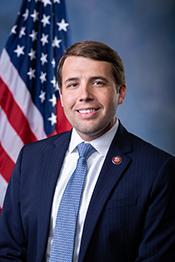
U.S. Representative for New Hampshire’s 1st district
Democrat
119th Congress, two-year term
Missed 0.0% of roll calls. Chamber median 1.9%.
The full voting recordCounts roll calls where most Democrats and most Republicans voted differently, leaving out procedural votes.
How we countFrom FEC filings, Voteview roll calls and Congress.gov.
Democrat. In Congress since 2019, 4 terms in total.
Following saves Pappas to your list, which Chamber & Street keeps on its server, linked to a cookie on this browser and not to your name or email. Email alerts will come with constituent verification.
Bills and resolutions Pappas signed on to as a cosponsor. An original cosponsor signed on the day the bill was introduced. Source: govinfo bill status files, last updated Nov 6, 2026.
To amend the Federal Water Pollution Control Act to make certain technology investments eligible for additional subsidization, and for other purposes.
Sponsor Vince Fong (R). Original cosponsor. 2 cosponsors. H.R. 5513 on Congress.gov
Introduced
Ukraine Support Act
Sponsor Gregory Meeks (D). Joined Sep 19, 2025. 43 cosponsors. H.R. 2913 on Congress.gov(opens in a new tab)
Passed the House
Ukraine Support Act
This bill addresses the war between Russia and Ukraine by (1) providing assistance to Ukraine and certain European countries, and (2) establishing penalties for Russia and certain foreign persons (individuals and entities).
Assistance provided under the bill includes
• establishing a reconstruction trust fund for Ukraine,
• requiring the U.S. International Development Finance Corporation to prioritize support for Ukraine,
• reviving the President’s authority to lend or lease defense articles to Ukraine or Eastern European countries affected by the war through FY2028,
• extending through 2027 the Department of Defense’s authority to provide security assistance and intelligence support to Ukrainian forces, and
• requiring the Department of State to take certain actions to build the capacity of the militaries and border forces of Baltic countries.
Additionally, the President must periodically determine if the Russian government or any proxy is waging a war of aggression against Ukraine, refusing to sincerely negotiate a peace agreement with Ukraine, or acting in violation of a negotiated peace agreement with Ukraine. If the President makes such a determination, the President must impose certain penalties including
• property- and visa-blocking sanctions on certain Russian officials;
• property-blocking sanctions on Russian companies in the oil and mining sectors, Rosatom (Russia's state-owned nuclear enterprise) and its subsidiaries, and certain Russian financial institutions; and
• increasing the rate of duty on all goods and services imported from Russia into the United States to at least 500% relative to the value of such goods and services.
Prevent Youth Suicide Act
Sponsor Zachary Nunn (R). Original cosponsor. 5 cosponsors. H.R. 5482 on Congress.gov(opens in a new tab)
Introduced
Bipartisan Premium Tax Credit Extension Act
Sponsor Jennifer Kiggans (R). Joined Sep 18, 2025. 30 cosponsors. H.R. 5145 on Congress.gov(opens in a new tab)
Introduced
Bipartisan Premium Tax Credit Extension Act
This bill extends for one year, through 2026, temporary changes enacted by the American Rescue Plan Act of 2021 (ARPA) and the Inflation Reduction Act of 2022 (IRA) that generally expand eligibility for and increase the amount of the premium tax credit.
Currently, eligible taxpayers may be able to claim the premium tax credit, which applies toward the cost of obtaining health insurance through health insurance exchanges. To be eligible for the premium tax credit, a taxpayer’s household income must meet or exceed 100% of the federal poverty level (FPL) and, after 2025, may not exceed 400% of the FPL (maximum income limit). For 2021-2025, the ARPA and IRA eliminated the maximum income limit, which generally expands eligibility for the premium tax credit.
Further, under current law, the amount of the premium tax credit is (1) generally the plan premium (conditions apply), minus (2) the taxpayer’s household income multiplied by the applicable percentage. The applicable percentage is a specific percentage that varies depending on which of six income ranges (adjusted for inflation after 2025) the taxpayer’s household income falls within. For 2021-2025, the ARPA and IRA lowered the applicable percentages and eliminated the adjustment of the applicable percentages for inflation, which generally increases the amount of the premium tax credit.
The bill extends for one year, through 2026, the elimination of the 400% maximum income limit, the lower applicable percentages, and the elimination of the inflation adjustment for the applicable percentages.
Pay Our Troops Act of 2026
Sponsor Jennifer Kiggans (R). Original cosponsor. 210 cosponsors. H.R. 5401 on Congress.gov(opens in a new tab)
Introduced
Pay Our Troops Act of 2026
This bill provides continuing appropriations for military pay for any period during which interim or full-year appropriations for FY2026 are not in effect (i.e., a government shutdown).
Specifically, the bill provides FY2026 continuing appropriations for the pay and allowances of (1) members of the Armed Forces, including reserve components, who perform active service during the period; and (2) civilian personnel and contractors of the Department of Defense (and the Department of Homeland Security in the case of the Coast Guard) who are providing support to such members of the Armed Forces.
If a government shutdown occurs, the bill provides the continuing appropriations until the earlier of (1) the enactment into law of specified appropriations legislation, or (2) January 1, 2027.
Trucker Bathroom Access Act
Sponsor Troy Nehls (R). Joined Sep 16, 2025. 18 cosponsors. H.R. 2514 on Congress.gov(opens in a new tab)
Introduced
Trucker Bathroom Access Act
This bill expands access to restroom facilities for certain commercial truck drivers, including drayage truck operators.
Drayage truck operator means the driver of any in-use on-road vehicle with a gross vehicle weight rating of greater than 33,000 pounds operating on or transgressing through port or intermodal rail yard property for the purpose of loading, unloading, or transporting cargo, including containerized, bulk, or break-bulk goods.
Specifically, the bill requires certain retailers, warehouses, and other establishments to give commercial truck drivers access to existing restroom facilities when they are loading or delivering cargo, or waiting to load or transport cargo.
Further, operators of marine terminals, including port authorities, must provide drayage truck operators with (1) access to existing restrooms, (2) additional restrooms if necessary, and (3) parking while accessing such restrooms.
Protecting Health Care and Lowering Costs Act of 2025
Sponsor Adam Gray (D). Joined Sep 15, 2025. 142 cosponsors. H.R. 4849 on Congress.gov(opens in a new tab)
Introduced
Protecting Health Care and Lowering Costs Act 2025
This bill makes permanent temporary provisions that generally expand eligibility for and increase the amount of the premium tax credit. This bill also repeals multiple Medicaid, Medicare, and health-related tax provisions enacted by the One Big Beautiful Bill Act (OBBBA).
Currently, eligible taxpayers may claim the premium tax credit, which applies toward the cost of obtaining health insurance through health insurance exchanges. To qualify, a taxpayer’s household income must meet or exceed 100% of the federal poverty level (FPL) and, after 2025, may not exceed 400% of the FPL (maximum income limit). For 2021-2025, the maximum income limit is eliminated, which generally expands eligibility for the premium tax credit.
Further, under current law, the amount of the premium tax credit is partially based on the taxpayer’s household income multiplied by the applicable percentage. The applicable percentage varies depending on which of six income ranges (adjusted for inflation after 2025) the taxpayer’s household income falls within. For 2021-2025, the applicable percentages are lowered and the adjustment of the applicable percentages for inflation is eliminated, which generally increases the amount of the premium tax credit.
The bill permanently eliminates the 400% maximum income limit, lowers the applicable percentages, and eliminates the inflation adjustment for the applicable percentages.
Finally, the bill repeals multiple Medicaid, Medicare, and health-related tax provisions enacted by the OBBBA, including
• certain Medicare and Medicare eligibility and verification requirements,
• the reduced window for retroactive Medicaid coverage, and
• premium tax credit verification requirements.
Combating Organized Retail Crime Act of 2025
Sponsor David Joyce (R). Joined Sep 15, 2025. 206 cosponsors. H.R. 2853 on Congress.gov(opens in a new tab)
Passed the House
Combating Organized Retail Crime Act of 2025
This bill expands federal enforcement of criminal offenses related to organized retail and supply chain crime. The term organized retail and supply chain crime includes criminal offenses involving the interstate transportation of stolen property, the sale or receipt of stolen goods, or theft from an interstate or foreign shipment that is committed by, in coordination with, or at the instruction of an organization.
First, with respect to criminal offenses involving the interstate transportation of stolen property or the sale or receipt of stolen goods, the bill broadens the scope of conduct that qualifies as offenses by allowing prosecutions to be based on the aggregate value of stolen items over a 12-month period. Additionally, the bill makes the offenses predicate offenses (i.e., underlying offenses) for prosecutions under the federal money laundering statute and authorizes the criminal forfeiture of any property obtained from the proceeds of an offense.
Second, with respect to criminal offenses involving theft from an interstate or foreign shipment, the bill also makes an offense an underlying offense for prosecution under the federal money laundering statute and authorizes the criminal forfeiture of any associated property.
Third, the bill expands the federal money laundering statute to include offenses involving general-use prepaid cards, gift certificates, or store gift cards.
Finally, the bill temporarily establishes a center within the Department of Homeland Security to coordinate federal law enforcement activities related to organized retail and supply chain crime.
Health Care Affordability Act of 2025
Sponsor Lauren Underwood (D). Joined Sep 15, 2025. 165 cosponsors. H.R. 247 on Congress.gov(opens in a new tab)
Introduced
Health Care Affordability Act of 2025
This bill makes permanent temporary changes enacted by the American Rescue Plan Act of 2021 (ARPA) and the Inflation Reduction Act of 2022 (IRA) that generally expand eligibility for and increase the amount of the premium tax credit.
Currently, eligible taxpayers may be able to claim the premium tax credit, which applies toward the cost of obtaining health insurance through health insurance exchanges. To be eligible for the premium tax credit, a taxpayer’s household income must meet or exceed 100% of the federal poverty level (FPL) and, after 2025, may not exceed 400% of the FPL (maximum income limit). For 2021-2025, the ARPA and IRA eliminated the maximum income limit, which generally expands eligibility for the premium tax credit.
Further, under current law, the amount of the premium tax credit is (1) generally the plan premium (conditions apply), minus (2) the taxpayer’s household income multiplied by the applicable percentage. The applicable percentage is a specific percentage that varies depending on which of six income ranges (adjusted for inflation after 2025) the taxpayer’s household income falls within. For 2021-2025, the ARPA and IRA lowered the applicable percentages and eliminated the adjustment of the applicable percentages for inflation, which generally increases the amount of the premium tax credit.
The bill makes permanent the elimination of the 400% maximum income limit, the lower applicable percentages, and the elimination of the inflation adjustment for the applicable percentages.
Mikaela Naylon Give Kids a Chance Act
Sponsor Michael McCaul (R). Joined Sep 15, 2025. 313 cosponsors. H.R. 1262 on Congress.gov(opens in a new tab)
Passed the House
Give Kids a Chance Act of 2025
This bill expands the Food and Drug Administration’s (FDA’s) authority with respect to research on rare pediatric diseases, including by permitting the FDA to take enforcement action against drug sponsors that fail to satisfy pediatric study requirements and by reauthorizing programs that support pediatric research.
Specifically, the bill
• modifies requirements relating to molecularly targeted pediatric cancer investigations to permit research on new drugs in combination with active ingredients that have already been approved, provided certain conditions are met;
• permits the FDA to take enforcement action against drug sponsors that fail to comply with pediatric study requirements, if such sponsors demonstrated a lack of due diligence in satisfying the requirement;
• renews the FDA’s authority to award priority review vouchers to sponsors of new products intended to treat rare pediatric diseases through September 30, 2029; and
• reauthorizes through FY2027 certain funding for the National Institutes of Health to support priority pediatric research.
The bill also provides statutory authority for the FDA’s interpretation of the orphan drug exclusivity period. The bill specifies, consistent with FDA regulations, that the seven-year market exclusivity period for drugs for rare diseases or conditions (i.e., orphan drugs) prohibits the approval of the same drug for the same approved use or indication with respect to the disease or condition. (In Catalyst Pharmaceuticals, Inc. v. Becerra, a court rejected the FDA’s interpretation and held that orphan drug exclusivity extends to all uses or indications for the disease or condition.)
Recognizing suicide as a serious public health problem and expressing support for the designation of September as "National Suicide Prevention Month" as well as September 10, 2025, as "World Suicide Prevention Day".
Sponsor Shri Thanedar (D). Joined Sep 11, 2025. 54 cosponsors. H.Res. 697 on Congress.gov(opens in a new tab)
Introduced
This resolution expresses support for the designation of National Suicide Prevention Month and World Suicide Prevention Day.
Lindsey O. Graham Sanctioning Russia and Iran Act of 2026
Sponsor Jimmy Panetta (D). Original cosponsor. 23 cosponsors. H.R. 5334 on Congress.gov(opens in a new tab)
Became law
Lindsey O. Graham Sanctioning Russia and Iran Act of 2026
This bill imposes a variety of sanctions, tariffs, and prohibitions related to Russia, extends an Iran-related sanctions law, and expands a tax deduction for teacher expenses to include early childhood educators.
For example, under the bill, the President must impose visa- and property-blocking sanctions on specified persons (individuals and entities) such as the Russian president and certain Russian military commanders. The President must also increase the rate of duty up to 100% ad valorem (i.e., relative to the value) on all goods imported into the United States from a country that was among the five largest importers of Russian-origin crude oil or natural gas if such country knowingly makes new purchases of such products after enactment of the bill.
The bill prohibits (1) the export, reexport, or in-country transfer to or in Russia of any U.S.-produced energy or energy product; (2) U.S. persons from making new investments in Russia or purchasing Russian sovereign debt; and (3) trading the securities of Russian government-owned, -controlled, or -affiliated entities on U.S. national securities exchanges.
The bill extends through 2031 the Iran Sanctions Act of 1996, which requires the President, with some exceptions, to impose sanctions on certain persons engaged in specified transactions related to Iran's energy sector or Iran's efforts to acquire or develop certain weapons.
The bill expands eligibility for federal tax deductions of certain educator expenses to early childhood educators providing educational or childcare services to those under age 6.
25th Anniversary of 9/11 Commemorative Coin Act
Sponsor Daniel Goldman (D). Joined Sep 11, 2025. 302 cosponsors. H.R. 1993 on Congress.gov(opens in a new tab)
Passed the House
25th Anniversary of 9/11 Commemorative Coin Act
This bill directs the Department of the Treasury to mint and issue coins to commemorate the 25th anniversary of the September 11, 2001, terrorist attacks on the United States and the establishment of the National September 11 Memorial and Museum at the World Trade Center.
The sale of all coins issued under this bill must include a surcharge to be paid to the National September 11 Memorial and Museum at the World Trade Center to support operations and maintenance. However, if the issuance of this commemorative coin exceeds certain annual limits, no surcharge may be included.
SBIR/STTR Reauthorization Act of 2025
Sponsor Nydia Velázquez (D). Joined Sep 9, 2025. 3 cosponsors. H.R. 3169 on Congress.gov(opens in a new tab)
Introduced
Rural Behavioral Health Improvement Act of 2025
Sponsor Jill Tokuda (D). Original cosponsor. 23 cosponsors. H.R. 5217 on Congress.gov(opens in a new tab)
Introduced
Modernizing Rural Physician Assistant and Nurse Practitioner Utilization Act of 2025
Sponsor Tracey Mann (R). Original cosponsor. 26 cosponsors. H.R. 5199 on Congress.gov(opens in a new tab)
Introduced
Rural Health Clinic Location Modernization Act of 2025
Sponsor Tracey Mann (R). Original cosponsor. 28 cosponsors. H.R. 5198 on Congress.gov(opens in a new tab)
Introduced
First-Time Homebuyer Tax Credit Act of 2025
Sponsor Jimmy Panetta (D). Joined Sep 4, 2025. 38 cosponsors. H.R. 4717 on Congress.gov(opens in a new tab)
Introduced
Stop Chinese Fentanyl Act of 2025
Sponsor Andy Barr (R). Joined Aug 29, 2025. 9 cosponsors. H.R. 747 on Congress.gov(opens in a new tab)
Passed the House
Stop Chinese Fentanyl Act of 2025
This bill subjects certain Chinese entities and government officials to potential sanctions related to opioid trafficking and requires the President to conduct certain preliminary analyses before regulating economic transactions in the event of a national emergency related to international drug trafficking.
Specifically, for the purposes of the Fentanyl Sanctions Act, the bill changes the definition of foreign opioid trafficker to specify that the term includes (1) Chinese entities involved in the production or sale of synthetic opioids or related pharmaceutical ingredients that fail to take steps to detect or prevent opioid trafficking; and (2) certain senior Chinese government officials that aid and abet opioid trafficking, including through intentional inaction. Under current law, the President must impose certain sanctions on individuals and entities identified as foreign opioid traffickers.
Further, the bill extends through 2029 an existing requirement that the President report to Congress annually on identified foreign opioid traffickers and any sanctions imposed on them. (This requirement expired in December 2024.)
The bill also requires the President to take additional steps in issuing regulations under the International Emergency Economic Powers Act (IEEPA) pursuant to a declared national emergency related to international drug trafficking. (IEEPA authorizes the President to regulate a variety of economic transactions following a declaration of national emergency.) Under the bill, the President must evaluate the costs and benefits of issuing economic regulations for the purpose of resolving the drug trafficking emergency and publish a discussion of such costs and benefits.
MODERN WIC Act of 2025
Sponsor Brian Fitzpatrick (R). Joined Aug 22, 2025. 80 cosponsors. H.R. 1464 on Congress.gov(opens in a new tab)
Introduced
More Options to Develop and Enhance Remote Nutrition in WIC Act of 2025 or the MODERN WIC Act of 2025
This bill permanently allows individuals to remotely certify their eligibility for, and receive benefits through, the Special Supplemental Nutrition Program for Women, Infants, and Children (WIC).
Specifically, the bill requires that a state agency allow an individual seeking a WIC certification, recertification, or a nutritional risk evaluation to do so by phone or through video teleconference, in addition to the in-person option.
A state agency has 90 days to collect data for a nutritional risk evaluation for a remotely certified individual. Further, a state agency may consider an applicant who meets the income eligibility standards to be temporarily eligible on an interim basis to participate in the program and may certify the individual for immediate participation without waiting for a nutritional risk evaluation.
The bill also allows states to provide benefits on WIC electronic benefit transfer cards through mail or remote issuance instead of requiring participants to pick up or reload benefits in person at a WIC office.
Further, the Department of Agriculture must report to Congress about the use of remote technologies and other digital tools in the WIC program.
Currently, individuals are generally required to be physically present to certify their WIC eligibility and receive benefits, with exceptions. The Food and Nutrition Service has temporarily waived these requirements and allowed remote certification and benefits using authorities that were provided by laws that were enacted to address COVID-19.
Caring for Survivors Act of 2025
Sponsor Jahana Hayes (D). Joined Aug 12, 2025. 134 cosponsors. H.R. 2055 on Congress.gov(opens in a new tab)
Introduced
Caring for Survivors Act of 2025
This bill increases the monthly rate of dependency and indemnity compensation payable to surviving spouses through the Department of Veterans Affairs (VA).
Dependency and indemnity compensation is a monthly payment made to eligible survivors (i.e., spouses, parents, or children) of (1) certain veterans who died as a result of a service-connected condition; (2) service members killed while on active military duty or active or inactive duty for training; or (3) veterans who did not die from a service-connected condition, but were totally disabled by a service-connected disability for a certain period of time.
The bill also (1) reduces, from 10 years to 5 years, the period of time that certain veterans must have been rated totally disabled due to a service-connected disability in order for a survivor to qualify for benefits; and (2) specifies the amount that is payable to survivors of veterans who were rated totally disabled for a period of less than 10 years before their death.
No Tax on Tips Act
Sponsor Vern Buchanan (R). Joined Aug 8, 2025. 27 cosponsors. H.R. 482 on Congress.gov(opens in a new tab)
Introduced
No Tax on Tips Act
This bill establishes a new tax deduction of up to $25,000 for tips, subject to limitations. The bill also expands the business tax credit for the portion of payroll taxes an employer pays on certain tips to include payroll taxes paid on tips received in connection with certain beauty services.
Under the bill, the new tax deduction for tips is limited to cash tips (1) received by an employee during the course of employment in an occupation that customarily receives tips, and (2) reported by the employee to the employer for purposes of withholding payroll taxes. (Under current law, an employee is required to report tips exceeding $20 per month to their employer.)
Further, an employee with compensation exceeding a specified threshold ($160,000 in 2025 and adjusted annually for inflation) in the prior tax year may not claim the new tax deduction for tips.
Finally, the bill expands the business tax credit for the portion of payroll taxes that an employer pays on certain tips to include payroll taxes paid on tips received in connection with barbering and hair care, nail care, esthetics, and body and spa treatments. (Under current law, an employer is allowed a business tax credit for the amount of payroll taxes paid on certain tips received by an employee in connection with providing, delivering, or serving food or beverages.)
Reproductive Freedom for Veterans Act
Sponsor Julia Brownley (D). Original cosponsor. 154 cosponsors. H.R. 4876 on Congress.gov(opens in a new tab)
Introduced
Workplace Violence Prevention for Health Care and Social Service Workers Act
Sponsor Joe Courtney (D). Joined Aug 5, 2025. 134 cosponsors. H.R. 2531 on Congress.gov(opens in a new tab)
Introduced
Workplace Violence Prevention for Health Care and Social Service Workers Act
This bill requires the Department of Labor to address workplace violence in health care, social service, and similar sectors.
Specifically, Labor must issue an occupational safety and health standard that requires certain employers to take actions to protect workers and other personnel from workplace violence. The standard applies to employers in the health care sector, in the social service sector, and in sectors that conduct activities similar to those in the health care and social service sectors. Among other elements, the standard must require each employer to (1) develop a workplace violence prevention plan, (2) promptly investigate incidents of workplace violence, and (3) provide relevant training and education to employees.
The bill requires certain hospitals and skilled nursing facilities to comply with this standard as a condition of Medicare participation.
ESTUARIES Act
Sponsor Shomari Figures (D). Joined Aug 1, 2025. 26 cosponsors. H.R. 3962 on Congress.gov(opens in a new tab)
Passed the House
Enhancing Science, Treatment, and Upkeep of America’s Resilient and Important Estuarine Systems Act or the ESTUARIES Act
This bill reauthorizes through FY2031 grants provided under the National Estuary Program to protect and restore estuaries of national significance. Estuaries are coastal waterbodies where freshwater from rivers and streams mixes with the ocean’s saltwater. Under the existing program, the Environmental Protection Agency provides grants for (1) developing and implementing comprehensive conservation and management plans for estuaries of national significance, and (2) addressing issues that threaten the ecological and economic well-being of such estuaries. The existing program provides grants to states, regional water pollution control agencies and entities, state coastal zone management agencies, interstate agencies, other public or nonprofit private agencies, institutions, organizations, and individuals.