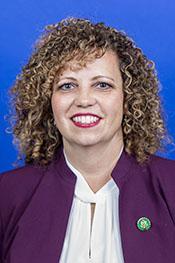
U.S. Representative for Utah’s 2nd district
Republican
119th Congress, two-year term
Missed 0.9% of roll calls. Chamber median 1.9%.
The full voting recordCounts roll calls where most Democrats and most Republicans voted differently, leaving out procedural votes.
How we countFrom FEC filings, Voteview roll calls and Congress.gov.
Republican. In Congress since 2023, 2 terms in total.
Following saves Maloy to your list, which Chamber & Street keeps on its server, linked to a cookie on this browser and not to your name or email. Email alerts will come with constituent verification.
Bills and resolutions Maloy signed on to as a cosponsor. An original cosponsor signed on the day the bill was introduced. Source: govinfo bill status files, last updated Nov 6, 2026.
Ending Green Giveaways Act
Sponsor Mike Flood (R). Original cosponsor. 8 cosponsors. H.R. 1066 on Congress.gov
Introduced
Utah Wildfire Research Institute Act of 2025
Sponsor Mike Kennedy (R). Original cosponsor. 3 cosponsors. H.R. 1045 on Congress.gov(opens in a new tab)
Passed the House
Utah Wildfire Research Institute Act of 2025
This bill requires the establishment of a Southwest Ecological Restoration Institute in Utah. Such institutes currently exist in Arizona, New Mexico, and Colorado and promote the use of adaptive ecosystem management to reduce the risk of wildfires and restore the health of forest and woodland ecosystems.
Superior National Forest Restoration Act of 2025
Sponsor Pete Stauber (R). Original cosponsor. 11 cosponsors. H.R. 978 on Congress.gov(opens in a new tab)
Introduced
Antisemitism Awareness Act of 2025
Sponsor Michael Lawler (R). Original cosponsor. 89 cosponsors. H.R. 1007 on Congress.gov(opens in a new tab)
Introduced
Antisemitism Awareness Act of 2025
This bill provides statutory authority for the requirement that the Department of Education’s Office for Civil Rights take into consideration the International Holocaust Remembrance Alliance's (IHRA's) working definition of antisemitism when reviewing or investigating complaints of discrimination based on race, color, or national origin in programs or activities that receive federal financial assistance. According to the IHRA's working definition, antisemitism is a certain perception of Jews, which may be expressed as hatred toward Jews.
FARM Act
Sponsor Ronny Jackson (R). Joined Jan 31, 2025. 29 cosponsors. H.R. 620 on Congress.gov(opens in a new tab)
Introduced
Foreign Adversary Risk Management Act or the FARM Act
This bill places the Secretary of Agriculture on the Committee on Foreign Investment in the United States (CFIUS). It also requires CFIUS to review any investment that could result in foreign control of any U.S. agricultural business.
Further, the bill includes agricultural systems and supply chains in the definitions of critical infrastructure and critical technologies for the purposes of reviewing such investments.
The Department of Agriculture and the Government Accountability Office must each annually analyze and report on foreign influence in the U.S. agricultural industry.
Fred Korematsu Congressional Gold Medal Act of 2025
Sponsor Mark Takano (D). Original cosponsor. 29 cosponsors. H.R. 821 on Congress.gov(opens in a new tab)
Introduced
Fred Korematsu Congressional Gold Medal Act of 2025
This bill provides for the award of a Congressional Gold Medal posthumously to Fred Korematsu in recognition of his contributions to civil rights, his loyalty and patriotism to the nation, and his dedication to justice and equality.
Critical Mineral Consistency Act of 2025
Sponsor Juan Ciscomani (R). Original cosponsor. 13 cosponsors. H.R. 755 on Congress.gov(opens in a new tab)
Passed the House
Critical Mineral Consistency Act of 2025
This bill modifies the Energy Act of 2020 to expand the definition of critical minerals to include critical materials designated by the Department of Energy (DOE).
Under current law, DOE's critical materials list contains certain materials that are essential for energy, including those on the critical minerals list of the U.S. Geological Survey (USGS). The USGS's list, which contains certain minerals that are essential to the nation's economic or national security, is not required to include the materials on DOE's list. Currently, both lists include minerals with a high risk of supply chain disruptions, and both DOE and USGS must conduct a variety of efforts to ensure a secure and reliable supply chain of the minerals.
By expanding the definition of critical minerals, this bill requires the USGS to include on its list the materials on DOE's list. Within 45 days of DOE adding a mineral, element, substance, or material to its critical materials list, the USGS must update its list to include such mineral, element, substance, or material.
Abundant American Resources Act of 2025
Sponsor Jodey Arrington (R). Original cosponsor. 6 cosponsors. H.R. 745 on Congress.gov(opens in a new tab)
Introduced
Whole Milk for Healthy Kids Act of 2025
Sponsor Glenn Thompson (R). Joined Jan 24, 2025. 118 cosponsors. H.R. 649 on Congress.gov(opens in a new tab)
Introduced
Whole Milk for Healthy Kids Act of 2025
This bill revises requirements for milk provided by the National School Lunch Program of the Department of Agriculture (USDA).
Currently, schools participating in the program must provide milk that is consistent with the most recent Dietary Guidelines for Americans; USDA regulations require milk to be fat-free or low-fat and allow milk to be flavored or unflavored. The bill modifies these restrictions and instead permits schools to offer students whole, reduced-fat, low-fat, and fat-free flavored and unflavored milk. The milk that is offered may be organic or nonorganic. Further, USDA may not prohibit a participating school from offering students any of these milk choices.
Further, schools currently must provide a substitute for fluid milk, on receipt of a written statement from a licensed physician, for students whose disability restricts their diet. Under the bill, a parent or legal guardian may also provide the written statement.
In addition, schools currently participating in the program must provide meals that meet certain nutrition requirements; USDA regulations require that the average saturated fat content of the meals offered must be less than 10% of the total calories. Under the bill, fluid milk is excluded from the saturated fat content calculation; milk fat included in any fluid milk provided by the program must not be considered saturated fat for the purposes of measuring compliance with USDA regulations.
Finally, the bill prohibits schools participating in the program from purchasing or offering milk produced by Chinese state-owned enterprises.
Main Street Tax Certainty Act
Sponsor Lloyd Smucker (R). Original cosponsor. 192 cosponsors. H.R. 703 on Congress.gov(opens in a new tab)
Introduced
Main Street Tax Certainty Act
This bill makes permanent the qualified business income (QBI) tax deduction.
Under current law, individuals, estates, and trusts may deduct the lower of (1) 20% of QBI from a qualified business, qualified real estate investment trust dividends, and qualified publicly traded partnership income; or (2) 20% of taxable income less net capital gain. (Some limitations apply.)
However, under current law, the QBI tax deduction expires after December 31, 2025.
Born-Alive Abortion Survivors Protection Act
Sponsor Ann Wagner (R). Joined Jan 22, 2025. 163 cosponsors. H.R. 21 on Congress.gov(opens in a new tab)
Passed the House
Born-Alive Abortion Survivors Protection Act
This bill establishes requirements for the degree of care a health care practitioner must provide in the case of a child born alive following an abortion or attempted abortion.
Specifically, a health care practitioner who is present must (1) exercise the same degree of care as would reasonably be provided to any other child born alive at the same gestational age, and (2) ensure the child is immediately admitted to a hospital. Additionally, a health care practitioner or other employee who has knowledge of a failure to comply with the degree-of-care requirements must immediately report such failure to law enforcement.
A health care practitioner who fails to provide the required degree of care, or a health care practitioner or other employee who fails to report such failure, is subject to criminal penalties—a fine, up to five years in prison, or both.
An individual who intentionally kills or attempts to kill a child born alive is subject to prosecution for murder.
The bill bars the criminal prosecution of a mother of a child born alive under this bill and allows her to bring a civil action against a health care practitioner or other employee for violations.
Declaration of Energy Independence Act
Sponsor Andrew Ogles (R). Original cosponsor. 8 cosponsors. H.R. 526 on Congress.gov(opens in a new tab)
Introduced
Declaration of Energy Independence Act
This bill reduces certain royalty rates, minimum bids, rental rates, and fees for onshore oil and gas leases on federal lands and modifies related leasing procedures.
Specifically, the bill (1) decreases the royalty rate from 16 2/3% to 12 1/2% for developing oil and gas on federal lands, (2) lowers the minimum bid amount from $10.00 to $2.00 per acre for oil and gas leases on federal lands, and (3) decreases the rental rates from a maximum of $15.00 per acre to $1.50 per acre for the first five years and $2.00 per acre thereafter. The bill also eliminates the fee for expressing interest in a lease.
It also modifies leasing procedures to provide for noncompetitive leasing under certain circumstances.
In addition, the bill modifies the conditions for the reinstatement of leases that have been cancelled or terminated, including by reducing the applicable royalty and rental rates.
Fix Our Forests Act
Sponsor Bruce Westerman (R). Original cosponsor. 56 cosponsors. H.R. 471 on Congress.gov(opens in a new tab)
Passed the House
Fix Our Forests Act
This bill establishes requirements for managing forests on federal land, including requirements concerning reducing wildfire threats, expediting the review of certain forest management projects, and implementing forest management projects and other activities.
Specifically, the bill (1) designates certain firesheds at high risk for wildfires as fireshed management areas; (2) directs the U.S. Forest Service and U.S. Geological Survey to jointly establish an interagency Fireshed Center that is responsible for duties related to assessing and predicting fire, including maintaining a fireshed registry on a publicly accessible website that provides interactive geospatial data on individual firesheds; and (3) makes other requirements related to reducing wildfire.
Next, the bill expedites the review of certain forest management projects under the National Environmental Policy Act (NEPA) of 1969 and exempts certain activities from NEPA review. It also establishes intra-agency strike teams to accelerate the review and any interagency consultation processes under NEPA, the Endangered Species Act of 1973, and the National Historic Preservation Act. It also limits consultation requirements concerning threatened and endangered species under the Forest and Rangeland Renewable Resources Planning Act of 1974 and the Federal Land Management and Policy Act of 1976. Finally, it limits litigation involving fireshed management projects and limits remedies that courts may provide.
Additionally, the bill supports reducing community wildfire risks, carrying out forest restoration and stewardship activities (including watershed protection and restoration), conducting biochar demonstration projects, advancing technologies to address forest wildfires, and assisting wildland firefighters and their families.
Miracle on Ice Congressional Gold Medal Act
Sponsor Pete Stauber (R). Original cosponsor. 299 cosponsors. H.R. 452 on Congress.gov(opens in a new tab)
Became law
Miracle on Ice Congressional Gold Medal Act
This act provides for the award of Congressional Gold Medals to the members of the 1980 U.S. Olympic men's ice hockey team in recognition of the team's achievement at the 1980 Winter Olympic Games.
Hearing Protection Act
Sponsor Ben Cline (R). Original cosponsor. 151 cosponsors. H.R. 404 on Congress.gov(opens in a new tab)
Introduced
Historic Roadways Protection Act
Sponsor Mike Kennedy (R). Original cosponsor. 3 cosponsors. H.R. 376 on Congress.gov(opens in a new tab)
Introduced
Historic Roadways Protection Act
This bill prohibits the Bureau for Land Management (BLM) from closing historical roads on public lands in certain areas of Utah until the Federal District Court for Utah makes a decision on each of the R.S. 2477 cases, which are cases brought by Utah and counties to keep historical roads on BLM land in Utah open for public use.
By way of background, a provision of the Mining Law of 1866, commonly known as R.S. 2477, granted rights-of-way to states and counties across public lands for the construction of roads for public use in order to promote settlement of the American West. In 1976, Congress repealed R.S. 2477 when it enacted the Federal Land Policy and Management Act (FLPMA), but FLPMA preserved rights-of-way that had been established under R.S. 2477. After the BLM released travel management plans that closed some historical roads, Utah and 22 counties filed lawsuits about their rights-of-way across public lands for historical roads.
Until the BLM certifies that those cases have been decided, the bill prohibits the BLM from obligating or expending federal funds to (1) finalize or implement a new travel management plan for certain travel management areas in Utah; or (2) implement, with respect to land within the boundary of Utah, the Indian Creek (Canyon Rims) Travel Management Plan, the San Rafael Desert Travel Management Plan, the San Rafael Swell Travel Management Plan, or the Labyrinth/Gemini Bridges Travel Management Plan.