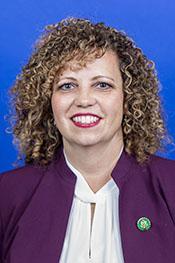
U.S. Representative for Utah’s 2nd district
Republican
119th Congress, two-year term
Missed 0.9% of roll calls. Chamber median 1.9%.
The full voting recordCounts roll calls where most Democrats and most Republicans voted differently, leaving out procedural votes.
How we countFrom FEC filings, Voteview roll calls and Congress.gov.
Republican. In Congress since 2023, 2 terms in total.
Following saves Maloy to your list, which Chamber & Street keeps on its server, linked to a cookie on this browser and not to your name or email. Email alerts will come with constituent verification.
Bills and resolutions Maloy signed on to as a cosponsor. An original cosponsor signed on the day the bill was introduced. Source: govinfo bill status files, last updated Nov 6, 2026.
FOCA Act of 2025
Sponsor Clay Higgins (R). Original cosponsor. 107 cosponsors. H.R. 2126 on Congress.gov
Introduced
Fair and Open Competition Act of 2025 or the FOCA Act of 2025
This bill requires that federal contracts for construction projects neither require nor prohibit a bidder, offeror, contractor, or subcontractor from entering into agreements with one or more labor organizations with respect to such projects or related projects.
Under the bill, the controlling documents for federal construction contracts (such as bid specifications and project agreements) may not require or prohibit a bidder, offeror, contractor, or subcontractor from entering into or adhering to such labor agreements. Additionally, the controlling documents may not discriminate against or give preference to a bidder, offeror, contractor, or subcontractor who signs or refuses to sign such a labor agreement.
These requirements also apply to any (1) construction manager acting on behalf of the federal government with respect to such contract, (2) recipient of a federal grant or financial assistance for construction projects or construction manager acting on the recipient's behalf, and (3) party to a federal cooperative agreement for construction projects or construction managers acting on the party's behalf.
An agency may exempt a project from this prohibition to avert an imminent threat to public health or safety or to serve the national security.
Crime Victims Fund Stabilization Act of 2025
Sponsor Ann Wagner (R). Joined Mar 11, 2025. 327 cosponsors. H.R. 909 on Congress.gov(opens in a new tab)
Passed the House
Crime Victims Fund Stabilization Act of 2025
This bill adds a new source of revenue for the Crime Victims Fund (CVF). Specifically, the bill requires certain civil monetary penalties collected from settlements and judgments in cases involving fraud and false claims against the federal government to be deposited into the CVF through FY2029.
The CVF supports federal, state, and local programs and activities to compensate and assist victims of crimes. Currently, the CVF is funded by deposits from a variety of sources, including federal criminal fines, penalties, and assessments; forfeited bail bonds; and certain other gifts, donations, and bequests.
Pay Our Border Patrol and Customs Agents Act of 2025
Sponsor Monica De La Cruz (R). Joined Mar 10, 2025. 20 cosponsors. H.R. 1916 on Congress.gov(opens in a new tab)
Introduced
Pay Our Border Patrol and Customs Agents Act of 2025
This bill provides FY2025 appropriations for the salaries and expenses of certain U.S. Customs and Border Protection (CBP) employees who are required to work during a lapse in appropriations (i.e., government shutdown) in FY2025.
Specifically, the bill provides appropriations to CBP for the salaries and expenses of agents of the U.S. Border Patrol and officers of the Office of Field Operations who are excepted from furlough (i.e., required to work) during a lapse in discretionary appropriations in FY2025.
ESA Amendments Act of 2025
Sponsor Bruce Westerman (R). Original cosponsor. 26 cosponsors. H.R. 1897 on Congress.gov(opens in a new tab)
Passed committee
ESA Amendments Act of 2025
This bill reauthorizes through FY2031 the Endangered Species Act and generally narrows protections provided under the act.
The bill directs the Fish and Wildlife Service and the National Marine Fisheries Service to submit a National Listing Work Plan that establishes a five-year schedule and plan for addressing listing of endangered or threatened species and designation of critical habitats for such species. Under the plan, the bill gives the Services flexibility on the timing of acting on listing petitions and eliminates the requirement for the Services to act within 12 months on listing petitions.
The bill limits what land may be designated as critical habitat for an endangered or threatened species.
It also limits protections provided to threatened species and allows a state to regulate the recovery of such species if the Services determine the state's proposed recovery strategy would conserve the species.
The bill provides statutory authority for Conservation Benefit Agreements, which allow private landowners to voluntarily enter agreements to reduce threats to candidate species in exchange for being allowed to continue their operations if the species is later listed.
The bill also modifies the permitting process for certain other voluntary conservation agreements, including by exempting incidental take permits (e.g., permits to harm or kill a species) from environmental review requirements.
The bill also makes a variety of other changes to the act, including limiting consultation requirements, judicial review, and awards for attorneys’ fees in certain cases.
Charlotte Woodward Organ Transplant Discrimination Prevention Act
Sponsor Kat Cammack (R). Joined Mar 6, 2025. 28 cosponsors. H.R. 1520 on Congress.gov(opens in a new tab)
Passed the House
Charlotte Woodward Organ Transplant Discrimination Prevention Act
This bill expressly prohibits health care providers and other entities involved in matching donated organs with recipients from denying or restricting an individual's access to organ transplants solely on the basis of the individual's disability, except in limited circumstances.
Specifically, these entities may consider an individual's disability when making decisions about transplants only if a physician finds, based on an individualized evaluation, that the individual's physical or mental disability is medically significant to the provision of the transplant. A disability shall not be considered medically significant if the individual has an adequate support system in place to comply with transplant-related medical requirements.
These entities must also make reasonable changes to their policies to make transplants and related care more available to individuals with disabilities.
Aggrieved individuals may bring claims of discrimination to the Office of Civil Rights of the Department of Health and Human Services. The bill provides for expedited resolutions of these claims.
In addition, the board of directors of the Organ Procurement and Transplantation Network may not issue policies that prohibit or hinder access to an organ transplant based solely on the individual's disability. This network is a public-private partnership linking professionals involved in the U.S. organ donation and transplantation system.
To amend the Internal Revenue Code of 1986 to modify the railroad track maintenance credit.
Sponsor Mike Kelly (R). Joined Mar 4, 2025. 183 cosponsors. H.R. 516 on Congress.gov(opens in a new tab)
Introduced
This bill increases the annual limit on the tax credit for qualified railroad track maintenance expenses (also referred to as the short line railroad tax credit) and expands eligibility for claiming the credit.
Under current law, the tax credit is limited each tax year to $3,500 multiplied by the sum of the number of miles of railroad track owned or leased by the taxpayer (miles owned or leased) and the number of railroad track miles assigned to the taxpayer by a Class II or III railroad (miles assigned). This bill increases the annual limit to $6,100 multiplied by the sum of miles owned or leased and miles assigned. The $6,100 amount used in the calculation of the tax credit limit is adjusted for inflation for tax years beginning after 2025.
The bill also expands eligibility for the tax credit to include gross expenses for maintaining railroad tracks owned or leased as of January 1, 2024. Under current law, the tax credit is limited to gross expenses for maintaining railroad tracks owned or leased as of January 1, 2015.
No American Land for Communist China Act
Sponsor Dan Newhouse (R). Joined Mar 3, 2025. 60 cosponsors. H.R. 1575 on Congress.gov(opens in a new tab)
Introduced
CLEAN Act
Sponsor Russ Fulcher (R). Original cosponsor. 4 cosponsors. H.R. 1687 on Congress.gov(opens in a new tab)
Passed the House
Committing Leases for Energy Access Now Act or the CLEAN Act
This bill directs the Department of the Interior to increase the frequency of lease sales for developing and utilizing geothermal energy on federal land.
Specifically, Interior must hold lease sales at least once a year (rather than two years) in states with pending nominations of federal land to be leased for geothermal energy development.
In conducting such lease sales, Interior must offer all of the pending nominated parcels eligible for geothermal development and utilization under the resource management plan in effect for the state.
If a lease sale is canceled or delayed, Interior must conduct a replacement sale during the same year.
Finally, the bill establishes deadlines for Interior to respond to applications for geothermal drilling permits.
Expressing support for the Iranian people's desires for a democratic, secular, and nonnuclear Republic of Iran, and condemning the Iranian regime's terrorism, regional proxy war, internal suppression, and for other purposes.
Sponsor Tom McClintock (R). Original cosponsor. 230 cosponsors. H.Res. 166 on Congress.gov(opens in a new tab)
Introduced
Uranium for Energy Independence Act of 2025
Sponsor John McGuire (R). Original cosponsor. 7 cosponsors. H.R. 1622 on Congress.gov(opens in a new tab)
Introduced
Uranium for Energy Independence Act of 2025
This bill includes uranium on the critical minerals list. In 2018, the U.S. Geological Survey (USGS) published a list of critical minerals, including uranium, in response to an executive order that called for a federal strategy to ensure secure and reliable supplies of critical minerals. The USGS updates the list every three years and includes certain minerals that are essential to economic or national security and have a supply chain vulnerable to disruption. In 2022, USGS removed uranium from the list. The bill reinstates uranium as a critical mineral and requires uranium to be treated as if it were included on that list at the time of publication.
Secure Rural Schools Reauthorization Act of 2025
Joined Feb 25, 2025. 93 cosponsors. H.R. 1383 on Congress.gov(opens in a new tab)
Progress not on file
Secure Rural Schools Reauthorization Act of 2025
This bill extends and modifies the Secure Rural Schools and Community Self-Determination Act of 2000, including by
• extending payments made to states and counties containing federal land through FY2026,
• providing for payments for FY2024 and FY2025,
• extending the authority of counties to initiate projects using such funds through FY2028, and
• extending the authority to initiate projects proposed by resource advisory committees through FY2028.
Expressing support for the designation of February 15 through February 22, 2025, as "National FFA Week", recognizing the important role of the National FFA Organization in developing the next generation of leaders who will change the world, and celebrating the 90th anniversary of New Farmers of America and the 75th anniversary of the Federal charter to Future Farmers of America.
Sponsor Tracey Mann (R). Joined Feb 24, 2025. 67 cosponsors. H.Res. 133 on Congress.gov(opens in a new tab)
Introduced
This resolution supports the designation of National FFA (Future Farmers of America) Week.
It also celebrates the 90th anniversary of New Farmers of America (NFA), which served Black vocational agriculture students in segregated public schools until NFA and FFA became one organization in 1965.
The resolution also commemorates the 75th anniversary of the federal charter for the Future Farmers of America.
Colorado River Basin System Conservation Extension Act of 2025
Sponsor Harriet Hageman (R). Joined Feb 21, 2025. 2 cosponsors. H.R. 231 on Congress.gov(opens in a new tab)
Passed committee
Colorado River Basin System Conservation Extension Act of 2025
This bill extends through FY2026 the Bureau of Reclamation's pilot projects to increase water levels in the Upper Colorado River Basin and Lake Mead due to drought conditions.
Downwinders Parity Act of 2025
Sponsor Paul Gosar (R). Original cosponsor. 9 cosponsors. H.R. 1362 on Congress.gov(opens in a new tab)
Introduced
REPLACE Act
Sponsor Joe Neguse (D). Original cosponsor. 2 cosponsors. H.R. 1338 on Congress.gov(opens in a new tab)
Introduced
Replacing Essential Passports and Licenses After Certain Emergencies Act or the REPLACE Act
This bill automatically waives the fees to replace certain federal documents (e.g., passports, visas, or immigration documents) destroyed by a major disaster.
Under current law, the Department of State and U.S. Citizenship and Immigration Services (USCIS) may waive replacement fees for these critical documents for individuals or households adversely affected by a major disaster. The bill requires the State Department and USCIS to waive these replacement fees when the documents are destroyed by a major disaster for which assistance is provided under the Federal Emergency Management Agency’s Individuals and Households Program. The agencies must notify the public of the availability of these waivers on their respective websites.
The bill also requires the State Department and USCIS to annually report to Congress the number of such fee waivers granted and the resulting cost to the respective agencies.
Protect America’s Lands Act
Original cosponsor. 22 cosponsors. H.R. 1309 on Congress.gov(opens in a new tab)
Progress not on file
Protect America’s Lands Act
This bill prohibits national securities exchanges from allowing the trade of securities issued by natural asset companies. Natural asset companies are companies that oversee land for conservation, restoration, or for the sustainable management of the natural resources and ecosystem services on that land.
Death Tax Repeal Act
Sponsor Randy Feenstra (R). Original cosponsor. 182 cosponsors. H.R. 1301 on Congress.gov(opens in a new tab)
Introduced
Supporting the Local Radio Freedom Act.
Sponsor Steve Womack (R). Original cosponsor. 233 cosponsors. H.Con.Res. 12 on Congress.gov(opens in a new tab)
Introduced
This concurrent resolution declares that Congress should not impose any new performance fee, tax, royalty, or other charge relating to the public performance of sound recordings on a local radio station for broadcasting sound recordings over the air, or on any business for such public performance of sound recordings.
Water Systems PFAS Liability Protection Act
Sponsor Marie Perez (D). Original cosponsor. 34 cosponsors. H.R. 1267 on Congress.gov(opens in a new tab)
Introduced
Water Systems PFAS Liability Protection Act
This bill exempts specified water management entities from liability under the Comprehensive Environmental Response, Compensation, and Liability Act of 1980 (CERCLA) for releases of certain perfluoroalkyl or polyfluoroalkyl substances, commonly referred to as PFAS. Specifically, the entities covered under the bill are public water systems, publicly or privately owned or operated treatment works, municipalities with a stormwater discharge permit, political subdivisions or special districts of a state that act as a wholesale water agency, and contractors performing the management or disposal activities for such entities.
Under the bill, the exemption only applies if a specified entity transports, treats, disposes of, or arranges for the transport, treatment or disposal of PFAS consistent with applicable laws and during and following the conveyance or treatment of water under federal or state law, such as through the management or disposal of biosolids consistent with the Federal Water Pollution Control Act.
Liability for damages or costs associated with the release of certain PFAS must not be precluded if an entity acted with gross negligence or willful misconduct.
National Right-to-Work Act
Sponsor Joe Wilson (R). Original cosponsor. 129 cosponsors. H.R. 1232 on Congress.gov(opens in a new tab)
Introduced
To provide for a memorandum of understanding to address the impacts of a certain record of decision on the Upper Colorado River Basin Fund.
Sponsor Harriet Hageman (R). Joined Feb 11, 2025. 2 cosponsors. H.R. 1001 on Congress.gov(opens in a new tab)
Passed the House
This bill directs the Bureau of Reclamation and the Western Area Power Administration, in consultation with the Glen Canyon Dam Adaptive Management Work Group, to enter into a memorandum of understanding to explore and address the impact that the 2024 record of decision entitled Supplement to the 2016 Glen Canyon Dam Long-Term Experimental and Management Plan Record of Decision has on the Upper Colorado River Basin Fund. The memorandum of understanding must include a plan to (1) address the effects that the decision may have on the fund's obligations, (2) address the impact that the decision has on hydropower production at Glen Canyon Dam, and (3) identify impacts that the decision has had on species listed as threatened or endangered species.
By way of background, Reclamation published a Final Supplemental Environmental Impact Statement (SEIS) under the National Environmental Policy Act of 1969 for the Glen Canyon Dam Long-Term Experimental and Management Plan (LTEMP) in 2024. The SEIS revises the 2016 LTEMP Record of Decision to address two issues: (1) responding to the threat of the invasive smallmouth bass below Glen Canyon Dam, and (2) incorporating the latest sediment science to assess when high-flow experiments should be conducted in order to protect the endangered humpback chub.
Family Farm and Small Business Exemption Act
Sponsor Tracey Mann (R). Original cosponsor. 89 cosponsors. H.R. 1131 on Congress.gov(opens in a new tab)
Introduced
Family Farm and Small Business Exemption Act
This bill restores an exemption for certain family farms and small businesses on the Free Application for Federal Student Aid (FAFSA) form. The bill applies to the net worth of (1) a family farm on which the family resides, or (2) a small business with not more than 100 full-time or full-time equivalent employees that is owned and controlled by the family.
Prior to recent changes made to the FAFSA, the net worth of these family farms and small businesses were excluded as assets when calculating a student's financial need to determine federal student aid eligibility. Beginning with the 2024-2025 academic year, the net worth of these farms and businesses are treated as an asset and therefore included in the calculation. This bill restores the exemption to exclude such net worth from the calculation.
LOCAL Act
Sponsor Jeff Hurd (R). Original cosponsor. 17 cosponsors. H.R. 1125 on Congress.gov(opens in a new tab)
Introduced
Grazing for Wildfire Risk Reduction Act
Original cosponsor. 10 cosponsors. H.R. 1110 on Congress.gov(opens in a new tab)
Progress not on file
STEAM Act
Sponsor Susie Lee (D). Original cosponsor. 5 cosponsors. H.R. 1077 on Congress.gov(opens in a new tab)
Passed committee
Streamlining Thermal Energy through Advanced Mechanisms Act or the STEAM Act
This bill expedites the environmental review of certain geothermal energy activities under the National Environmental Policy Act of 1969 (NEPA). Specifically, the bill expands the Energy Policy Act of 2005 to include certain geothermal exploration or development activities in an existing categorical exclusion from NEPA for certain oil or gas activities.
A categorical exclusion applies to a class of actions that do not require an environmental assessment nor an environmental impact statement under NEPA.
The categorical exclusion established by the bill applies to drilling a geothermal well (1) in an area where drilling has occurred previously within the five years prior to the date when drilling begins; or (2) within a developed field for which an approved land use plan or environmental document prepared under NEPA determined drilling to be a reasonably foreseeable activity, so long as the plan or document was approved within the five years prior to the date when drilling begins.