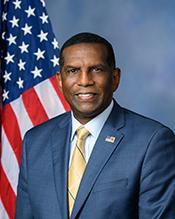
U.S. Representative for Utah’s 4th district
Republican
119th Congress, two-year term
Missed 2.2% of roll calls. Chamber median 1.9%.
The full voting recordCounts roll calls where most Democrats and most Republicans voted differently, leaving out procedural votes.
How we countFrom FEC filings, Voteview roll calls and Congress.gov.
Republican. In Congress since 2021, 3 terms in total.
Following saves Owens to your list, which Chamber & Street keeps on its server, linked to a cookie on this browser and not to your name or email. Email alerts will come with constituent verification.
Bills and resolutions Owens signed on to as a cosponsor. An original cosponsor signed on the day the bill was introduced. Source: govinfo bill status files, last updated Nov 6, 2026.
Health Care Provider Shortage Minimization Act of 2025
Sponsor Earl Carter (R). Joined May 7, 2025. 9 cosponsors. H.R. 1160 on Congress.gov
Introduced
Health Care Provider Shortage Minimization Act of 2025
This bill provides statutory authority to classify qualified locum tenens physicians and advanced care practitioners as independent contractors for federal tax purposes. (Locum tenens generally refers to an individual who temporarily fulfills the duties of another individual and is commonly used to refer to temporary staffing in the healthcare industry.)
Under current law, independent contractors are considered self-employed for federal tax purposes and, thus, are required to make quarterly estimated income tax payments and pay self-employment taxes (Social Security and Medicare taxes). (Other federal tax reporting requirements and obligations apply.)
The bill defines a qualified locum tenens physician or advanced care practitioner as an individual who provides temporary services for not more than one continuous year at a site of service as (1) a doctor of medicine, osteopathy, dentistry, optometry, or podiatry (authorized to provide such services by the state, U.S. possession, or U.S. territory in which such services are performed); or (2) a nurse practitioner, physician’s assistant, or certified registered nurse anesthetist. The term also includes an individual who provides such temporary services and is otherwise considered a physician under the Social Security Act (e.g., certain chiropractors).
Expressing support for local law enforcement officers.
Sponsor Mike Ezell (R). Joined May 7, 2025. 35 cosponsors. H.Con.Res. 30 on Congress.gov(opens in a new tab)
Passed the House
This concurrent resolution recognizes and appreciates local law enforcement officers, extends gratitude to local law enforcement officers and their families, honors local law enforcement officers who have fallen in the line of duty, and encourages continued collaboration between local law enforcement agencies and the communities they serve.
ACRE Act of 2025
Sponsor Randy Feenstra (R). Joined May 6, 2025. 63 cosponsors. H.R. 1822 on Congress.gov(opens in a new tab)
Introduced
Fair Access to Banking Act
Sponsor Andy Barr (R). Joined May 5, 2025. 151 cosponsors. H.R. 987 on Congress.gov(opens in a new tab)
Introduced
Fair Access to Banking Act
This bill places restrictions on certain banks, credit unions, and payment card networks if they refuse to do business with a person who complies with the law. Restrictions include prohibiting the use of electronic funds transfer systems and lending programs, termination of an institution's depository insurance, and specified civil penalties.
Banks and other specified financial institutions are allowed to deny financial services to a person only if the denial is justified by a documented failure of that person to meet quantitative, impartial, risk-based standards established in advance by the institution. This justification may not be based upon reputational risks to the institution.
The bill establishes the right for a person to bring a civil action for a violation of this bill.
Providing for congressional disapproval under chapter 8 of title 5, United States Code, of the rule submitted by the National Park Service relating to "Glen Canyon National Recreation Area: Motor Vehicles".
Sponsor Celeste Maloy (R). Joined Apr 24, 2025. 3 cosponsors. H.J.Res. 60 on Congress.gov(opens in a new tab)
Became law
This joint resolution allows off-road vehicles to be used in certain areas of the Glen Canyon National Recreation Area, which is in northern Arizona and southeastern Utah and contains Lake Powell.
Specifically, the joint resolution nullifies the rule issued by the National Park Service (NPS) titled Glen Canyon National Recreation Area; Motor Vehicles and published on January 13, 2025. Under the rule, the NPS limited the use of off-road vehicles, such as off-highway vehicles and all-terrain vehicles, in certain areas. For instance, the rule prohibited the use of off-road vehicles on an 8-mile segment of the Poison Spring Loop located on Route 633 proceeding north to Route 730 in the Orange Cliffs Special Management Unit. The rule also eliminated the authority of the NPS to open the upper portion of the Flint Trail in that unit to off-road vehicles. Additionally, the rule limited off-road vehicle use from certain roads to the shoreline of the lake.
Truck Parking Safety Improvement Act
Sponsor Mike Bost (R). Joined Apr 14, 2025. 54 cosponsors. H.R. 1659 on Congress.gov(opens in a new tab)
Introduced
Truck Parking Safety Improvement Act
This bill directs the Department of Transportation (DOT) to provide competitive grants for projects that provide public parking for commercial motor vehicles and improve the safety of commercial motor vehicle drivers. States, metropolitan planning organizations, tribal governments, and local governments are eligible for these grants.
The grants must be used for projects on federal-aid highways or a facility with reasonable access to such a highway or a freight facility.
A grant recipient may not charge a fee to a commercial motor vehicle driver to access a public parking facility that is constructed, opened, maintained, or improved with a grant under this program.
In providing grants, DOT must determine that
• there is a shortage of commercial motor vehicle parking capacity in the project's corridor;
• the eligible entity has consulted motor carriers, commercial motor vehicle drivers, public safety officials, and private providers of commercial motor vehicle parking regarding the project;
• the project will likely increase the availability or utilization of commercial motor vehicle parking, facilitate the efficient movement of freight, or improve highway safety, traffic congestion, and air quality; and
• the eligible entity has demonstrated the ability to provide for the facility's maintenance and operation.
To the maximum extent practicable, DOT must select grant projects that maximize the geographic dispersion of new commercial motor vehicle parking capacity across the United States.
University of Utah Research Park Act
Sponsor Blake Moore (R). Original cosponsor. 3 cosponsors. H.R. 2876 on Congress.gov(opens in a new tab)
Passed the House
University of Utah Research Park Act
This bill confirms the use by the University of Utah of approximately 593 acres of specified nonfederal land in Salt Lake City, Utah, as a university research park and for related university purposes (including development of student housing and a transit hub) as a valid public purpose.
EBSA Investigations Transparency Act
Sponsor Lisa McClain (R). Original cosponsor. 3 cosponsors. H.R. 2869 on Congress.gov(opens in a new tab)
Introduced
Freedom to Invest in Tomorrow’s Workforce Act
Sponsor Robert Wittman (R). Joined Apr 10, 2025. 203 cosponsors. H.R. 1151 on Congress.gov(opens in a new tab)
Introduced
Freedom to Invest in Tomorrow’s Workforce Act
This bill expands the expenses eligible for tax-free withdrawals from a qualified tuition program (known as a 529 plan) to include tuition, fees (including test fees), books, supplies, equipment, and other expenses related to the enrollment or attendance in a recognized postsecondary credentialing program.
Under the bill, a recognized postsecondary credentialing program includes certain programs identified by a state as providing training services, a program listed in the Web Enabled Approval Management System (WEAMS) maintained by the Department of Veterans Affairs, certain examinations required to obtain or maintain a credential, and other reputable credentialing programs.
Further, under the bill, such programs must be designed for an individual to obtain
• an industry-recognized postsecondary employment credential (e.g., project management professional certificate, advanced emergency medical technician certificate, and welding supervisor certificate),
• a certificate of completion of a registered and certified apprenticeship,
• an occupational or professional license issued or recognized by a state or the federal government (and any certification required for obtaining such license), or
• an associate or baccalaureate degree.
High-Quality Charter Schools Act
Sponsor Claudia Tenney (R). Original cosponsor. 8 cosponsors. H.R. 2798 on Congress.gov(opens in a new tab)
Introduced
High-Quality Charter Schools Act
This bill establishes a federal tax credit for 75% of the qualified contributions of cash or market securities made by an individual to an eligible charter school organization to create or expand the charter schools operated or managed by the organization. (Limitations apply.)
The bill limits the tax credit to the greater of $5,000 or 10% of the individual’s adjusted gross income. The tax credit is not refundable, but any amount of the tax credit that exceeds an individual’s tax liability for the tax year may be carried forward for up to five tax years.
Further, the bill establishes an annual $5 billion volume cap (which must be increased under certain circumstances) from which $10 million must be distributed to each state for allocation of the tax credit to individuals residing in the state. The remaining amount of the volume cap must be allocated to individuals on a first-come, first-serve basis. The bill requires the Internal Revenue Service (IRS) to develop a system for tracking qualified contributions in real time.
Under the bill, an eligible charter school organization generally is required to spend all of the qualified contributions (less reasonable administrative expenses) within a certain amount of time. If the IRS determines that an organization has failed to meet such spending requirements, the tax credit is not allowed for contributions to the organization for one year after the date of the determination.
Expressing the sense of Congress that the United States should resume normal diplomatic relations with Taiwan, negotiate a bilateral free trade agreement with Taiwan, and support Taiwans membership in international organizations.
Sponsor Thomas Tiffany (R). Joined Apr 8, 2025. 38 cosponsors. H.Con.Res. 8 on Congress.gov(opens in a new tab)
Introduced
This concurrent resolution calls on the President to abandon the One China policy in favor of one that recognizes Taiwan as an independent country that is not a part of China. The resolution also urges the President to bolster diplomatic and economic relations between the United States and Taiwan through specified means.
Muhammad Ali Congressional Gold Medal Act
Sponsor André Carson (D). Joined Apr 7, 2025. 88 cosponsors. H.R. 485 on Congress.gov(opens in a new tab)
Introduced
Muhammad Ali Congressional Gold Medal Act
This bill provides for the posthumous award of a Congressional Gold Medal to Muhammad Ali.
There is authorized to be charged against the U.S. Mint Public Enterprise Fund such amounts as may be necessary to pay for the costs of the medals struck under this bill.
Sums received from the sale of duplicate bronze medals authorized by this bill shall be deposited into that fund.
Protecting Student Athletes’ Economic Freedom Act of 2025
Sponsor Lisa McClain (R). Original cosponsor. 9 cosponsors. H.R. 2688 on Congress.gov(opens in a new tab)
Introduced
Moab UMTRA Project Transition Act of 2025
Sponsor Mike Kennedy (R). Original cosponsor. 3 cosponsors. H.R. 2681 on Congress.gov(opens in a new tab)
Introduced
Moab UMTRA Project Transition Act of 2025
This bill allows the Department of Energy (DOE) to convey the Moab site to Grand County, Utah, at no cost when it finishes cleaning up uranium mill tailings (i.e., radioactive waste) at the site. (The Moab site is a uranium milling site located approximately three miles northwest of Moab, Utah.)
DOE must retain certain water rights that are necessary to carry out its responsibilities, such as maintaining access to wells and the associated surface footprint of the wells if the remediation of groundwater is ongoing at the time of the conveyance.
The conveyance of the site must include a provision that prohibits Grand County from reconveying to a private entity or nonprofit organization any portion of the land conveyed to the county.
Stopping Indoctrination and Protecting Kids Act
Sponsor Tim Walberg (R). Joined Apr 7, 2025. 4 cosponsors. H.R. 2616 on Congress.gov(opens in a new tab)
Passed the House
Parental Rights Over The Education and Care of Their Kids Act or the PROTECT Kids Act
This bill requires public elementary and middle schools, as a condition of receiving certain federal funds for elementary and secondary education, to obtain parental consent before changing a student's gender on school forms or changing a student's sex-based accommodations.
Specifically, an elementary school or a school consisting of only grades 5-8 must obtain parental consent before changing a minor student's (1) gender markers, pronouns, or preferred name on any school form; or (2) sex-based accommodations, including locker rooms or bathrooms.
Free Speech On Campus Act
Sponsor Kevin Kiley (I). Original cosponsor. 1 cosponsor. H.R. 2634 on Congress.gov(opens in a new tab)
Introduced
Association Health Plans Act
Sponsor Tim Walberg (R). Joined Apr 3, 2025. 32 cosponsors. H.R. 2528 on Congress.gov(opens in a new tab)
Introduced
AM Radio for Every Vehicle Act of 2025
Sponsor Gus Bilirakis (R). Joined Apr 1, 2025. 317 cosponsors. H.R. 979 on Congress.gov(opens in a new tab)
Passed the House
AM Radio for Every Vehicle Act of 2025
This bill requires the Department of Transportation (DOT) to issue a rule requiring AM radio capabilities to be standard in all new passenger vehicles. (AM radio is often used to deliver emergency alerts and news and entertainment programming; some newer vehicles do not include AM equipment.)
Specifically, this bill applies to passenger vehicles (1) manufactured in the United States for sale in the United States, imported into the United States, or shipped in interstate commerce; and (2) manufactured after the rule's effective date. The rule must require all such vehicles to have devices that can receive signals and play content transmitted by AM stations or digital audio AM stations installed as standard equipment and made easily accessible to drivers.
Prior to the rule's effective date, manufacturers that do not include devices that can access AM radio as standard equipment (1) must inform purchasers of this fact through clear and conspicuous labeling, and (2) may not charge an additional or separate fee for AM radio access.
DOT may assess civil penalties for any violation of the rule. The Department of Justice may also bring a civil action to enjoin a violation.
The rule, including DOT’s authority to enforce it, must expire 10 years after the bill’s enactment.
Further, the Government Accountability Office must study and report on the dissemination of emergency alerts to the public, including by conducting an assessment of AM radio relative to other Integrated Public Alert and Warning System communication technologies.
Maximum Pressure Act
Sponsor Zachary Nunn (R). Original cosponsor. 55 cosponsors. H.R. 2570 on Congress.gov(opens in a new tab)
Introduced
Supporting the Local Radio Freedom Act.
Sponsor Steve Womack (R). Joined Apr 1, 2025. 233 cosponsors. H.Con.Res. 12 on Congress.gov(opens in a new tab)
Introduced
This concurrent resolution declares that Congress should not impose any new performance fee, tax, royalty, or other charge relating to the public performance of sound recordings on a local radio station for broadcasting sound recordings over the air, or on any business for such public performance of sound recordings.
Providing for congressional disapproval under chapter 8 of title 5, United States Code, of the rule submitted by the Environmental Protection Agency relating to "Phasedown of Hydrofluorocarbons: Management of Certain Hydrofluorocarbons and Substitutes Under the American Innovation and Manufacturing Act of 2020".
Sponsor Neal Dunn (R). Joined Mar 31, 2025. 17 cosponsors. H.J.Res. 38 on Congress.gov(opens in a new tab)
Introduced
This joint resolution nullifies the Environmental Protection Agency rule titled Phasedown of Hydrofluorocarbons: Management of Certain Hydrofluorocarbons and Substitutes Under the American Innovation and Manufacturing Act of 2020 and published on October 11, 2024. The rule establishes an emission reduction and reclamation program for the management of hydrofluorocarbons, which are greenhouse gases. The rule also establishes alternative Resource Conservation and Recovery Act standards for certain ignitable spent refrigerants being recycled for reuse.
Keep Our Girls Safe Act of 2025
Sponsor Mary Miller (R). Original cosponsor. 13 cosponsors. H.R. 2452 on Congress.gov(opens in a new tab)
Introduced
Stop Antisemitism on College Campuses Act
Sponsor Michael Lawler (R). Original cosponsor. 19 cosponsors. H.R. 2446 on Congress.gov(opens in a new tab)
Introduced
Stop Antisemitism on College Campuses Act
This bill prohibits an institution of higher education (IHE) that participates in federal student aid programs from authorizing, facilitating, providing funding for, or otherwise supporting any event that promotes anti-Semitism on the IHE's campus.
John W. Walsh Alpha-1 Home Infusion Act of 2025
Sponsor Maria Salazar (R). Original cosponsor. 61 cosponsors. H.R. 2343 on Congress.gov(opens in a new tab)
Introduced
John W. Walsh Alpha-1 Home Infusion Act of 2025
This bill provides for Medicare coverage of treatment for alpha-1 antitrypsin (AAT) deficiency (a protein deficiency that raises the risk of lung and other diseases). Specifically, the bill provides for coverage of at-home augmentation therapy for beneficiaries with emphysema as a result of severe hereditary AAT deficiency. Treatment must be provided through qualified home infusion therapy suppliers; beneficiaries must be under the care of a physician, nurse practitioner, or physician assistant.
Aviation Workforce Development Act
Sponsor Mike Collins (R). Joined Mar 25, 2025. 27 cosponsors. H.R. 1818 on Congress.gov(opens in a new tab)
Introduced