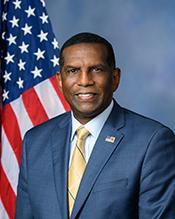
U.S. Representative for Utah’s 4th district
Republican
119th Congress, two-year term
Missed 2.2% of roll calls. Chamber median 1.9%.
The full voting recordCounts roll calls where most Democrats and most Republicans voted differently, leaving out procedural votes.
How we countFrom FEC filings, Voteview roll calls and Congress.gov.
Republican. In Congress since 2021, 3 terms in total.
Following saves Owens to your list, which Chamber & Street keeps on its server, linked to a cookie on this browser and not to your name or email. Email alerts will come with constituent verification.
Bills and resolutions Owens signed on to as a cosponsor. An original cosponsor signed on the day the bill was introduced. Source: govinfo bill status files, last updated Nov 6, 2026.
FOCA Act of 2025
Sponsor Clay Higgins (R). Joined Jun 11, 2025. 107 cosponsors. H.R. 2126 on Congress.gov
Introduced
Fair and Open Competition Act of 2025 or the FOCA Act of 2025
This bill requires that federal contracts for construction projects neither require nor prohibit a bidder, offeror, contractor, or subcontractor from entering into agreements with one or more labor organizations with respect to such projects or related projects.
Under the bill, the controlling documents for federal construction contracts (such as bid specifications and project agreements) may not require or prohibit a bidder, offeror, contractor, or subcontractor from entering into or adhering to such labor agreements. Additionally, the controlling documents may not discriminate against or give preference to a bidder, offeror, contractor, or subcontractor who signs or refuses to sign such a labor agreement.
These requirements also apply to any (1) construction manager acting on behalf of the federal government with respect to such contract, (2) recipient of a federal grant or financial assistance for construction projects or construction manager acting on the recipient's behalf, and (3) party to a federal cooperative agreement for construction projects or construction managers acting on the party's behalf.
An agency may exempt a project from this prohibition to avert an imminent threat to public health or safety or to serve the national security.
Military Spouse Hiring Act
Sponsor Donald Beyer (D). Joined Jun 11, 2025. 130 cosponsors. H.R. 2033 on Congress.gov(opens in a new tab)
Introduced
Military Spouse Hiring Act
This bill allows employers to claim a tax credit for a percentage of qualified wages paid to an employee who is a military spouse by expanding the federal Work Opportunity Tax Credit (WOTC) to add qualified military spouses as a targeted group. (The WOTC applies to employers who hire members of specific targeted groups, such as veterans, ex-felons, and long-term unemployment recipients, and is generally equal to a percentage of the wages paid to such individuals in the first year of employment, up to a maximum amount. Under current law, the wages must be paid before 2026.)
The bill defines a qualified military spouse as any individual who is certified by a state workforce agency as being (as of the hiring date) a spouse of a member of the Armed Forces.
Repealing Big Brother Overreach Act
Sponsor Warren Davidson (R). Joined Jun 10, 2025. 193 cosponsors. H.R. 425 on Congress.gov(opens in a new tab)
Passed committee
Repealing Big Brother Overreach Act
This bill repeals the Corporate Transparency Act. The act requires existing companies and newly created companies to report beneficial ownership information to the Department of the Treasury’s Financial Crimes Enforcement Network for purposes of addressing the financing of terrorism and money laundering.
Mental Health in Aviation Act of 2025
Sponsor Sean Casten (D). Joined Jun 10, 2025. 43 cosponsors. H.R. 2591 on Congress.gov(opens in a new tab)
Passed the House
Mental Health in Aviation Act of 2025
This bill requires the Federal Aviation Administration (FAA) to review and update its regulations and policies on mental health for pilots and air traffic controllers.
The FAA must update regulations and take any other actions necessary to implement the recommendations of (1) the Aviation Workforce Mental Health Task Group, and (2) the Mental Health and Aviation Medical Clearances Aviation Rulemaking Committee (the ARC).
The FAA must also annually review and update, as appropriate, the applicable regulations and policies on mental health-related special issuance for pilots and air traffic controllers. As background, an Authorization for Special Issuance of a Medical Certificate is a discretionary document from the FAA which allows an airman with a disqualifying medical condition to fly under a restricted medical certificate.
Among other things, the review and update must
• reclassify and approve additional medications that may be safely prescribed to airmen to treat mental health conditions,
• delegate additional authority to aviation medical examiners (AMEs) consistent with the ARC recommendations, and
• improve the special issuance process for pilots and air traffic controllers.
The bill authorizes the FAA to take actions to recruit and train additional AMEs.
The bill also authorizes an FAA public information campaign or education efforts to (1) destigmatize individuals in (or interested in joining) the aviation industry who seek mental health care, (2) broaden awareness of available supportive services, and (3) establish trust with pilots and air traffic controllers.
Access Technology Affordability Act of 2025
Sponsor Mike Kelly (R). Joined Jun 6, 2025. 78 cosponsors. H.R. 1529 on Congress.gov(opens in a new tab)
Introduced
Access Technology Affordability Act of 2025
This bill allows a refundable federal tax credit, through 2030, equal to the amounts paid for qualified access technology for use by a blind individual who is the taxpayer, the taxpayer's spouse, or a dependent of the taxpayer. (Limits apply.)
The bill defines qualified access technology as hardware, software, or other information technology with the primary function of converting or adapting information that is visually represented into forms or formats usable by blind individuals.
The tax credit is limited to (1) amounts paid that are not compensated by insurance or otherwise, and (2) an aggregate amount of $2,000 (adjusted for inflation) per blind individual in any period of three consecutive taxable years.
Condemning the rise in ideologically motivated attacks on Jewish individuals in the United States, including the recent violent assault in Boulder, Colorado, and reaffirming the House of Representatives commitment to combating antisemitism and politically motivated violence.
Sponsor Jefferson Van Drew (R). Original cosponsor. 70 cosponsors. H.Res. 481 on Congress.gov(opens in a new tab)
Passed the House
This resolution condemns the June 1, 2025, targeted act of terror in Boulder, Colorado, as an act of ideologically motivated violence and reaffirms the House of Representatives' commitment to protecting the rights of all Americans to assemble peacefully and practice their faith without fear of violence.
Public Land Search and Rescue Act
Sponsor Celeste Maloy (R). Original cosponsor. 7 cosponsors. H.R. 3777 on Congress.gov(opens in a new tab)
Introduced
Condemning the antisemitic terrorist attack in Boulder, Colorado.
Sponsor Randy Fine (R). Original cosponsor. 30 cosponsors. H.Res. 472 on Congress.gov(opens in a new tab)
Introduced
No In-State Tuition for Illegal Immigrants Act
Sponsor Tim Burchett (R). Joined Jun 4, 2025. 4 cosponsors. H.R. 2490 on Congress.gov(opens in a new tab)
Introduced
Generating Retirement Ownership through Long-Term Holding
Sponsor Beth Van Duyne (R). Joined Jun 4, 2025. 130 cosponsors. H.R. 2089 on Congress.gov(opens in a new tab)
Introduced
Modern Worker Security Act
Sponsor Kevin Kiley (I). Joined Jun 4, 2025. 9 cosponsors. H.R. 1320 on Congress.gov(opens in a new tab)
Introduced
Modern Worker Empowerment Act
Sponsor Kevin Kiley (I). Joined Jun 4, 2025. 23 cosponsors. H.R. 1319 on Congress.gov(opens in a new tab)
Introduced
This bill specifies a legal standard for determining whether an individual is considered an independent contractor rather than an employee for the purposes of federal labor laws that address issues such as the federal minimum wage, overtime compensation, and collective bargaining. The rights and protections provided by these laws exclusively apply to employees.
Under the bill, an individual is considered an independent contractor if (1) another individual or entity does not exercise significant control over the details of how the individual's work is performed, without regard to any control the other individual or entity may exercise over the final result of the work performed; and (2) while performing such work, the individual has opportunities and risks inherent with entrepreneurship (for example, the discretion to exercise professional judgment).
The bill also sets forth factors that may not be used to determine whether an individual is an employee. Specifically, factors such as whether another individual or entity requires the individual to meet certain legal, health and safety, insurance, or performance requirements may not be used to make such a determination.
Establishing the Congressional Fitness Challenge, and for other purposes.
Sponsor Abraham Hamadeh (R). Joined Jun 4, 2025. 8 cosponsors. H.Con.Res. 20 on Congress.gov(opens in a new tab)
Introduced
Collision Avoidance Systems Act of 2025
Sponsor Daniel Webster (R). Joined May 29, 2025. 47 cosponsors. H.R. 1361 on Congress.gov(opens in a new tab)
Introduced
Collision Avoidance Systems Act of 2025
This bill allows for the use of a pulsating light system for vehicle braking.
Specifically, Federal Motor Vehicle Safety Standard Number 108 (Standard 108) must be deemed to allow for the use of a pulsating light system on covered vehicles (i.e., passenger cars, multipurpose passenger vehicles, trucks, buses, trailers, and motorcycles). The Department of Transportation must issue regulations to update Standard 108 to (1) include performance-based standards for pulsating light systems, and (2) allow for the use of the systems on motor vehicles.
As background, Standard 108 regulates all automotive lighting, signaling, and reflective devices. Under the bill, a pulsating light system includes a system for a high-mounted stop lamp in which the lamp pulses rapidly no more than four times and for no more than 1.2 seconds when the brake of the vehicle is applied and then converts to a continuous light (as a normal stop lamp) until the brake is released.
To amend the Higher Education Act of 1965 to prohibit graduate medical schools from receiving Federal financial assistance if such schools adopt certain policies and requirements relating to diversity, equity, and inclusion.
Sponsor Gregory Murphy (R). Original cosponsor. 16 cosponsors. H.R. 3518 on Congress.gov(opens in a new tab)
Introduced
To amend the National Trails System Act to direct the Secretary of the Interior to conduct a study on the feasibility of designating the Bonneville Shoreline Trail.
Sponsor Mike Kennedy (R). Joined May 20, 2025. 3 cosponsors. H.R. 3451 on Congress.gov(opens in a new tab)
Introduced
Metastatic Breast Cancer Access to Care Act
Sponsor Andrew Garbarino (R). Joined May 20, 2025. 271 cosponsors. H.R. 2048 on Congress.gov(opens in a new tab)
Introduced
Metastatic Breast Cancer Access to Care Act
This bill expedites payment of Social Security Disability Insurance (SSDI) benefits and eligibility for Medicare coverage for those with metastatic breast cancer (i.e., breast cancer that has spread to other sites in the body).
Specifically, the bill eliminates the 5-month waiting period for SSDI benefits and the subsequent 24-month waiting period for Medicare coverage for individuals with metastatic breast cancer. Under current law, individuals generally must wait 5 months after the onset of disability to begin receiving SSDI benefits and an additional 24 months to become eligible for Medicare.
GUARD VA Benefits Act
Sponsor Chris Pappas (D). Joined May 20, 2025. 137 cosponsors. H.R. 1732 on Congress.gov(opens in a new tab)
Introduced
Governing Unaccredited Representatives Defrauding VA Benefits Act or the GUARD VA Benefits Act
This bill imposes fines on individuals for soliciting, contracting for, charging, or receiving any unauthorized fee or compensation with respect to the preparation, presentation, or prosecution of any claim for Department of Veterans Affairs benefits. The attempted commission of such offenses is also punishable by fine.
Protect Children’s Innocence Act
Original cosponsor. 44 cosponsors. H.R. 3492 on Congress.gov(opens in a new tab)
Progress not on file
Protect Children’s Innocence Act of 2025
This bill establishes federal criminal offenses for providing gender-affirming care to minors. The bill also changes the existing federal criminal offense that prohibits female genital mutilation (FGM) and related conduct.
Specifically, the bill makes it a federal crime to knowingly perform or attempt to perform procedures or provide medications (e.g., hormonal treatments) to a minor for the purpose of changing their body to correspond to a sex that differs from their biological sex. The bill provides exceptions for specified types of surgeries or procedures, including those for treating (1) individuals who have both ovarian and testicular tissue or abnormal sex chromosome structure or hormones, or (2) infections or other harms that result from a previous gender-transition procedure. A violation is punishable by a fine, a prison term of up to 10 years, or both. The bill prohibits the arrest or prosecution of an individual who undergoes gender-affirming procedures or medications.
Additionally, the bill makes changes to the existing federal criminal prohibition on performing FGM on a minor and related conduct. Among the changes, the bill broadens the scope of prohibited conduct to include the facilitation or consent to FGM by any person (currently, prohibited facilitation or consent applies only to a parent, guardian, or caretaker of the minor). The bill also prohibits the arrest or prosecution of an individual who undergoes FGM. The bill does not change the applicable criminal penalty of a fine, a prison term of up to 10 years, or both.
Resolution memorializing law enforcement officers killed in the line of duty.
Sponsor Michael Guest (R). Original cosponsor. 27 cosponsors. H.Res. 421 on Congress.gov(opens in a new tab)
Introduced
This resolution expresses support for police officers and other law enforcement personnel.
The resolution further recognizes
• law enforcement officers across the United States in the pursuit of preserving safe and secure communities;
• the need to ensure that such officers have the equipment, training, and resources necessary to protect their health and safety while they are protecting the public; and
• the law enforcement community for acts of sacrifice and heroism.
The resolution expresses condolences and appreciation to the loved ones of each law enforcement officer who has made the ultimate sacrifice in the line of duty.
STOP Screwworms Act
Original cosponsor. 51 cosponsors. H.R. 3392 on Congress.gov(opens in a new tab)
Progress not on file
Affordable Housing Credit Improvement Act of 2025
Sponsor Darin LaHood (R). Joined May 13, 2025. 168 cosponsors. H.R. 2725 on Congress.gov(opens in a new tab)
Introduced
Honoring mothers, and recognizing the significance of motherhood and the impact mothers have on raising the next generation, on the occasion of Mother's Day.
Sponsor Randy Weber (R). Original cosponsor. 20 cosponsors. H.Res. 402 on Congress.gov(opens in a new tab)
Introduced
Shivwits Band of Paiutes Jurisdictional Clarity Act
Sponsor Celeste Maloy (R). Joined May 8, 2025. 2 cosponsors. H.R. 3073 on Congress.gov(opens in a new tab)
Passed the House
Shivwits Band of Paiutes Jurisdictional Clarity Act
This bill confers legal jurisdiction to the State of Utah over certain civil cases involving the Shivwits Band of Paiutes. It also allows the tribe to lease its land held in trust. The tribe is located in southwestern Utah.
Specifically, the bill confers jurisdiction to the State of Utah over any civil cause of action (1) to which the Shivwits Band of Paiutes is a party, and (2) that arises on or within Indian lands. Under the bill, Indian lands are lands of the tribe that are (1) held in trust for the benefit of the tribe, or (2) subject to restrictions by the United States against alienation (i.e., sale or transfer).
Additionally, the bill specifies that any cause of action arising from any contract or agreement (including a lease) to which the tribe is party or that affects or arises on these Indian lands shall be deemed a civil cause of action. Therefore, this bill allows the tribe and third parties to resolve contract disputes in state court.
The bill also authorizes the tribe to lease its land held in trust for a term of up to 99 years.
PROTECT Jewish Student and Faculty Act
Sponsor Rudy Yakym (R). Joined May 7, 2025. 8 cosponsors. H.R. 406 on Congress.gov(opens in a new tab)
Introduced
Promote Restoring Order To End Campus Targeting of Jewish Students and Faculty Act or the PROTECT Jewish Student and Faculty Act
This bill requires institutions of higher education (IHEs) that participate in federal student aid programs to adopt a standard definition of anti-Semitism in their student and employee codes of conduct and prohibit such conduct on campus.
Specifically, the IHE must include in its documents related to student and employee conduct a definition of anti-Semitism which states that (1) anti-Semitism is a certain perception of Jews, which may be expressed as hatred toward Jews; and (2) rhetorical and physical manifestations of anti-Semitism may be directed toward Jewish or non-Jewish individuals, including the property of such individuals, and Jewish community institutions and religious facilities. (This definition is the same as the working definition of anti-Semitism from the International Holocaust Remembrance Alliance.)
Additionally, the IHE must include in such documents a statement that anti-Semitic conduct is prohibited on campus and that such conduct may result in expulsion or termination of employment.