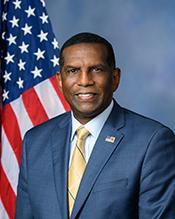
U.S. Representative for Utah’s 4th district
Republican
119th Congress, two-year term
Missed 2.2% of roll calls. Chamber median 1.9%.
The full voting recordCounts roll calls where most Democrats and most Republicans voted differently, leaving out procedural votes.
How we countFrom FEC filings, Voteview roll calls and Congress.gov.
Republican. In Congress since 2021, 3 terms in total.
Following saves Owens to your list, which Chamber & Street keeps on its server, linked to a cookie on this browser and not to your name or email. Email alerts will come with constituent verification.
Bills and resolutions Owens signed on to as a cosponsor. An original cosponsor signed on the day the bill was introduced. Source: govinfo bill status files, last updated Nov 6, 2026.
PROTECTS Act of 2025
Sponsor Richard McCormick (R). Original cosponsor. 39 cosponsors. H.R. 742 on Congress.gov
Introduced
Protecting Resources Of Taxpayers to Eliminate Childhood Transgender Surgeries Act of 2025 or the PROTECTS Act of 2025
This bill prohibits providing or using federal funds to perform, refer for, or reimburse any entity for certain gender transition procedures for an individual under the age of 18.
The bill’s prohibition applies to certain gender transition procedures that are performed to intentionally change an individual’s body to no longer correspond to the individual's biological sex, including surgeries, medications, and implants specified in the bill. The bill provides exceptions for specified procedures, such as treating certain genetic abnormalities or preventing imminent death or impairment of a major bodily function, when performed by a health care provider with the consent of the individual’s parent or legal guardian.
Life at Conception Act
Sponsor Eric Burlison (R). Original cosponsor. 116 cosponsors. H.R. 722 on Congress.gov(opens in a new tab)
Introduced
Life at Conception Act
This bill declares that the right to life guaranteed by the Constitution is vested in each human being at all stages of life, including the moment of fertilization, cloning, or other moment at which an individual comes into being.
Nothing in this bill shall be construed to authorize the prosecution of any woman for the death of her unborn child.
Expressing support for the designation of the week of January 26 through February 1, 2025, as "National School Choice Week".
Sponsor John Moolenaar (R). Original cosponsor. 36 cosponsors. H.Res. 63 on Congress.gov(opens in a new tab)
Introduced
This resolution supports the designation of National School Choice Week.
FAIR Act of 2025
Sponsor Thomas Tiffany (R). Original cosponsor. 9 cosponsors. H.R. 711 on Congress.gov(opens in a new tab)
Introduced
Fairness, Anti-discrimination and Individual Rights Act of 2025 or FAIR Act of 2025
This bill prohibits the federal government and federally funded entities from discriminating against, or giving preference to, any person or group on the basis of race, color, or national origin with respect to contracts, employment, or other relevant activities. Federal agencies must review and modify their policies to conform with the bill's requirements. The bill also provides a private right of action for violations.
The bill defines preference as an advantage of any kind, including quotas, set-asides, numerical goals, timetables, or other numerical objectives.
Main Street Tax Certainty Act
Sponsor Lloyd Smucker (R). Original cosponsor. 192 cosponsors. H.R. 703 on Congress.gov(opens in a new tab)
Introduced
Main Street Tax Certainty Act
This bill makes permanent the qualified business income (QBI) tax deduction.
Under current law, individuals, estates, and trusts may deduct the lower of (1) 20% of QBI from a qualified business, qualified real estate investment trust dividends, and qualified publicly traded partnership income; or (2) 20% of taxable income less net capital gain. (Some limitations apply.)
However, under current law, the QBI tax deduction expires after December 31, 2025.
FREE Act
Sponsor Celeste Maloy (R). Original cosponsor. 19 cosponsors. H.R. 689 on Congress.gov(opens in a new tab)
Introduced
MERIT Act of 2025
Sponsor Barry Loudermilk (R). Original cosponsor. 24 cosponsors. H.R. 687 on Congress.gov(opens in a new tab)
Introduced
Whole Milk for Healthy Kids Act of 2025
Sponsor Glenn Thompson (R). Original cosponsor. 118 cosponsors. H.R. 649 on Congress.gov(opens in a new tab)
Introduced
Whole Milk for Healthy Kids Act of 2025
This bill revises requirements for milk provided by the National School Lunch Program of the Department of Agriculture (USDA).
Currently, schools participating in the program must provide milk that is consistent with the most recent Dietary Guidelines for Americans; USDA regulations require milk to be fat-free or low-fat and allow milk to be flavored or unflavored. The bill modifies these restrictions and instead permits schools to offer students whole, reduced-fat, low-fat, and fat-free flavored and unflavored milk. The milk that is offered may be organic or nonorganic. Further, USDA may not prohibit a participating school from offering students any of these milk choices.
Further, schools currently must provide a substitute for fluid milk, on receipt of a written statement from a licensed physician, for students whose disability restricts their diet. Under the bill, a parent or legal guardian may also provide the written statement.
In addition, schools currently participating in the program must provide meals that meet certain nutrition requirements; USDA regulations require that the average saturated fat content of the meals offered must be less than 10% of the total calories. Under the bill, fluid milk is excluded from the saturated fat content calculation; milk fat included in any fluid milk provided by the program must not be considered saturated fat for the purposes of measuring compliance with USDA regulations.
Finally, the bill prohibits schools participating in the program from purchasing or offering milk produced by Chinese state-owned enterprises.
Semiquincentennial Congressional Time Capsule Act
Sponsor Bonnie Watson Coleman (D). Joined Jan 23, 2025. 26 cosponsors. H.R. 469 on Congress.gov(opens in a new tab)
Passed the House
Semiquincentennial Congressional Time Capsule Act
This bill requires the Architect of the Capitol to create a congressional time capsule in honor of the 250th anniversary of the Declaration of Independence to be buried on the west lawn of the Capitol on or before July 4, 2026. Congressional leadership will determine the contents of the time capsule, and the time capsule shall be sealed until July 4, 2276.
Sarah’s Law
Sponsor Randy Feenstra (R). Joined Jan 22, 2025. 53 cosponsors. H.R. 578 on Congress.gov(opens in a new tab)
Introduced
Sarah's Law
This bill requires the Department of Justice or the Department of Homeland Security (DHS) to detain a non-U.S. national (alien under federal law) who is unlawfully present in the United States and has been charged with, arrested for, convicted of, or admits to having committed acts that constitute the essential elements of a crime that resulted in the death or serious bodily injury of another person.
DHS must obtain information about the identity of any victims of the crimes for which the detained individual was charged or convicted. DHS shall provide the victim, or a relative or guardian of a deceased victim, with information about the detained individual, including name, date of birth, nationality, immigration status, criminal history, and a description of any related removal efforts.
REMAIN in Mexico Act of 2025
Sponsor Brandon Gill (R). Joined Jan 22, 2025. 110 cosponsors. H.R. 273 on Congress.gov(opens in a new tab)
Introduced
Return Excessive Migrants and Asylees to International Neighbors in Mexico Act of 2025 or the REMAIN in Mexico Act of 2025
This bill requires the Department of Homeland Security (DHS) to implement the Migrant Protection Protocols as outlined in the January 25, 2019, memo titled Policy Guidance for Implementation of the Migrant Protection Protocols.
(The protocols generally required aliens who are not clearly admissible, including those seeking asylum, arriving by land along the U.S.-Mexico border to be returned to Mexico while their immigration proceedings are pending, rather than remain in the United States. On January 21, 2021, DHS stopped applying the protocols to newly-arrived individuals.)
No Immigration Benefits for Hamas Terrorists Act of 2025
Sponsor Tom McClintock (R). Joined Jan 22, 2025. 19 cosponsors. H.R. 176 on Congress.gov(opens in a new tab)
Passed the House
No Immigration Benefits for Hamas Terrorists Act
This bill imposes immigration-related penalties on certain non-U.S. nationals (aliens under federal law) who are involved with terrorism or attacks against Israel.
Under this bill, members of Palestinian Islamic Jihad or Hamas or individuals who participated in or otherwise facilitated the October 7, 2023, attacks on Israel may not be admitted into the United States.
The bill also expands an existing admissions bar against officers, representatives, and spokespersons of the Palestinian Liberation Organization (PLO). Under this bill, all PLO members are barred from admission into the United States.
The bill also prohibits any non-U.S. national who participated in or otherwise facilitated the October 7, 2023, attacks from seeking any immigration-related relief or protections, including (1) protection from being deported to a country where the individual's life or freedom would be threatened, or (2) asylum in the United States.
The Department of Homeland Security must annually report to Congress the number of individuals found to be inadmissible or deportable due to their participation in or facilitation of the attacks.
Consequences for Social Security Fraud Act
Sponsor Tom McClintock (R). Joined Jan 22, 2025. 17 cosponsors. H.R. 174 on Congress.gov(opens in a new tab)
Introduced
Consequences for Social Security Fraud Act
This bill adds additional criminal offences to the grounds upon which a non-U.S. national (alien under federal law) may be barred from admission into the United States or deported. Specifically, an individual who has been convicted of, or admits to committing, Social Security fraud, identification document fraud, or fraud related to COVID-19 financial assistance programs is inadmissible or deportable under the bill.
To amend the Convention on Cultural Property Implementation Act to make certain technical corrections to facilitate the lawful trade and collecting of numismatic materials.
Sponsor Beth Van Duyne (R). Original cosponsor. 15 cosponsors. H.R. 595 on Congress.gov(opens in a new tab)
Introduced
This bill revises the standard for providing satisfactory evidence to U.S. Customs and Border Protection (CBP) regarding the importation of numismatic material (i.e., coins, tokens, paper money, medals, and related objects) into the United States.
Current law generally prohibits the importation of designated archaeological or ethnological material that is exported from certain countries that are a party to the 1970 UNESCO Convention on the Means of Prohibiting and Preventing the Illicit Import, Export and Transfer of Ownership of Cultural Property. Importation is allowed if the country issues a certification or other documentation certifying the exportation was not in violation of the country's laws. The United States implements its obligations through the Convention on Cultural Property Implementation Act.
Under current law, CBP must seize imports of designated archaeological or ethnological material unless the importer establishes by certain documentation or satisfactory evidence that the material is admissible into the United States.
This bill specifies the standard for satisfactory evidence with respect to numismatic material. Specifically, the bill allows for the import of numismatic material with evidence that the numismatic material was acquired and exported lawfully, is of a known type, and is not known to be the direct product of illicit excavations within certain countries after the effective date for any import restrictions on such material.
The bill prohibits CBP, when reviewing satisfactory evidence, from requiring other documentation unless there is probable cause to believe the presented evidence is false or fraudulent.
FACE Act Repeal Act of 2025
Sponsor Chip Roy (R). Original cosponsor. 44 cosponsors. H.R. 589 on Congress.gov(opens in a new tab)
Passed committee
FACE Act Repeal Act of 2025
This bill repeals provisions of federal criminal law that prohibit conduct intended to injure, intimidate, or interfere with persons who are seeking to (1) obtain or provide reproductive health services, or (2) exercise their right of religious freedom at a place of religious worship.
Protecting Access for Hunters and Anglers Act
Sponsor Robert Wittman (R). Joined Jan 21, 2025. 83 cosponsors. H.R. 556 on Congress.gov(opens in a new tab)
Passed the House
Protecting Access for Hunters and Anglers Act of 2025
This bill bars the Fish and Wildlife Service (FWS), the Bureau of Land Management (BLM), and the Forest Service from prohibiting or regulating the use of lead ammunition or tackle on federal land or water. The bill makes exceptions for specified existing regulations and where the FWS, the BLM, or the Forest Service determines that a decline in wildlife population at the specific unit of federal land or water is primarily caused by the use of lead in ammunition or tackle, based on the field data from such unit, and the state approves the regulations.
Miracle on Ice Congressional Gold Medal Act
Sponsor Pete Stauber (R). Joined Jan 21, 2025. 299 cosponsors. H.R. 452 on Congress.gov(opens in a new tab)
Became law
Miracle on Ice Congressional Gold Medal Act
This act provides for the award of Congressional Gold Medals to the members of the 1980 U.S. Olympic men's ice hockey team in recognition of the team's achievement at the 1980 Winter Olympic Games.
Make the Migrant Protection Protocols Mandatory Act of 2025
Sponsor Roger Williams (R). Original cosponsor. 40 cosponsors. H.R. 551 on Congress.gov(opens in a new tab)
Introduced
Make the Migrant Protection Protocols Mandatory Act of 2025
This bill requires the Department of Justice (DOJ) to remove certain non-U.S. nationals (aliens under federal law) from the United States while such an individual's application for admission is pending.
Specifically, if such an individual arrived by land from a foreign country bordering the United States and the individual is not clearly and beyond a doubt entitled to admission into the United States, DOJ must return that individual to that bordering foreign country while the individual's application for admission is pending. (Currently, DOJ may choose to detain such an individual or return the individual to the bordering foreign country while the application for admission is pending.)
Ending Presidential Overreach on Public Lands Act
Sponsor Celeste Maloy (R). Original cosponsor. 15 cosponsors. H.R. 521 on Congress.gov(opens in a new tab)
Introduced
Ending Presidential Overreach on Public Lands Act
This bill removes the president's authority to designate or expand national monuments and gives that authority to Congress instead.
Concerning the National Collegiate Athletic Association policy for eligibility in women's sports.
Sponsor W. Steube (R). Original cosponsor. 14 cosponsors. H.Res. 47 on Congress.gov(opens in a new tab)
Introduced
This resolution calls on the National Collegiate Athletic Association (NCAA) to revoke its transgender student-athlete eligibility policy and urges the NCAA to require its member conferences to conform to a biological sex-based policy across all sports and all divisions.
Hearing Protection Act
Sponsor Ben Cline (R). Original cosponsor. 151 cosponsors. H.R. 404 on Congress.gov(opens in a new tab)
Introduced
To require the Secretary of Agriculture to carry out activities to suppress wildfires, and for other purposes.
Sponsor Tom McClintock (R). Joined Jan 15, 2025. 9 cosponsors. H.R. 178 on Congress.gov(opens in a new tab)
Introduced
This bill sets out requirements for wildfire suppression and management activities carried out by the Forest Service.
These requirements apply to Forest Service land that (1) has a severe, extreme, or exceptional drought intensity rating; (2) has a National Wildland Fire Preparedness level of 5 (i.e., the highest level of wildland fire activity); or (3) is located in a fireshed ranked in the top 10% of wildfire exposure.
Within 24 hours of detecting a wildfire on such Forest Service land, the service must use all available resources to extinguish the wildfire. Additionally, the service may not inhibit the firefighting activities of state and local agencies that are authorized to respond to wildfires on the Forest Service land.
Further, the service may only initiate a backfire or burnout as part of a fire suppression strategy if it is ordered by the responsible incident commander or is necessary to protect the health and safety of firefighting personnel. The service must use all available resources to control any initiated fire until it is extinguished.
The bill also limits the service's use of prescribed fires (i.e., the controlled application of fire by a team of experts under specified weather conditions to restore health to ecosystems that depend on fire). When using prescribed fires as a fire resource management tool, the service must comply with applicable laws and regulations and immediately suppress any prescribed fire that exceeds its prescription.
Historic Roadways Protection Act
Sponsor Mike Kennedy (R). Original cosponsor. 3 cosponsors. H.R. 376 on Congress.gov(opens in a new tab)
Introduced
Historic Roadways Protection Act
This bill prohibits the Bureau for Land Management (BLM) from closing historical roads on public lands in certain areas of Utah until the Federal District Court for Utah makes a decision on each of the R.S. 2477 cases, which are cases brought by Utah and counties to keep historical roads on BLM land in Utah open for public use.
By way of background, a provision of the Mining Law of 1866, commonly known as R.S. 2477, granted rights-of-way to states and counties across public lands for the construction of roads for public use in order to promote settlement of the American West. In 1976, Congress repealed R.S. 2477 when it enacted the Federal Land Policy and Management Act (FLPMA), but FLPMA preserved rights-of-way that had been established under R.S. 2477. After the BLM released travel management plans that closed some historical roads, Utah and 22 counties filed lawsuits about their rights-of-way across public lands for historical roads.
Until the BLM certifies that those cases have been decided, the bill prohibits the BLM from obligating or expending federal funds to (1) finalize or implement a new travel management plan for certain travel management areas in Utah; or (2) implement, with respect to land within the boundary of Utah, the Indian Creek (Canyon Rims) Travel Management Plan, the San Rafael Desert Travel Management Plan, the San Rafael Swell Travel Management Plan, or the Labyrinth/Gemini Bridges Travel Management Plan.
Water Rights Protection Act
Sponsor Celeste Maloy (R). Joined Jan 14, 2025. 6 cosponsors. H.R. 302 on Congress.gov(opens in a new tab)
Introduced
Water Rights Protection Act of 2025
This bill limits the transfer of water rights from water users to the Department of the Interior or the Department of Agriculture (USDA).
First, the bill prohibits Interior and USDA from conditioning the issuance or renewal of land use or occupancy agreements (e.g., permits and leases) on the transfer of any water right to the United States. Next, it prohibits Interior and USDA from requiring water users, including Indian tribes, to acquire water rights in the name of the United States as a condition of the issuance or renewal of a land use or occupancy agreement. Finally, it prohibits Interior and USDA from conditioning or withholding the issuance or renewal of land use or occupancy agreements on (1) limiting the date, time, quantity, location of diversion or pumping, or place of use of a state water right beyond any applicable limitations under state water law; or (2) modifying the terms and conditions of groundwater withdrawal, guidance and reporting procedures, or conservation and source protection measures established by a state.
Interior and USDA must also ensure that federal action imposes no greater restriction or regulatory requirement than under applicable state water law.
Further, Interior and USDA must not take actions that adversely affect state authority in permitting water usage or in adjudicating water rights.
Panama Canal Repurchase Act of 2025
Sponsor Dusty Johnson (R). Joined Jan 14, 2025. 29 cosponsors. H.R. 283 on Congress.gov(opens in a new tab)
Introduced
Panama Canal Repurchase Act of 2025
This bill authorizes the President to negotiate with the appropriate Panamanian government officials to reacquire the Panama Canal. The President must submit a report to Congress within 180 days of enactment detailing the progress of such negotiations, potential challenges, and anticipated outcomes.