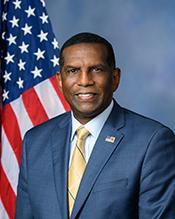
U.S. Representative for Utah’s 4th district
Republican
119th Congress, two-year term
Missed 2.2% of roll calls. Chamber median 1.9%.
The full voting recordCounts roll calls where most Democrats and most Republicans voted differently, leaving out procedural votes.
How we countFrom FEC filings, Voteview roll calls and Congress.gov.
Republican. In Congress since 2021, 3 terms in total.
Following saves Owens to your list, which Chamber & Street keeps on its server, linked to a cookie on this browser and not to your name or email. Email alerts will come with constituent verification.
Bills and resolutions Owens signed on to as a cosponsor. An original cosponsor signed on the day the bill was introduced. Source: govinfo bill status files, last updated Nov 6, 2026.
Smithsonian National Museum of the American Latino Act
Sponsor Nicole Malliotakis (R). Original cosponsor. 130 cosponsors. H.R. 1330 on Congress.gov
Introduced
Smithsonian American Women’s History Museum Act
Sponsor Nicole Malliotakis (R). Original cosponsor. 231 cosponsors. H.R. 1329 on Congress.gov(opens in a new tab)
Introduced
Smithsonian American Women’s History Museum Act
This bill authorizes the Smithsonian American Women's History Museum to be located on a particular site within the Reserve of the National Mall in Washington, DC.
Specifically, the bill designates the South Monument site as the location for the museum; however, the President may designate an alternative site within 180 days of the bill's enactment. (The site is the undeveloped land across the National Mall from the National Museum of African American History and Culture.) Administrative jurisdiction of the site must be transferred to the Smithsonian Institution.
The Board of Regents of the Smithsonian Institution must have the approval of specified federal entities (e.g., the Commission of Fine Arts) to plan, design, and construct a museum building. The bill (1) outlines the criteria for considering site and design proposals, and (2) requires the Smithsonian Institution to reimburse for costs resulting from the building approval process.
The bill directs the museum to be dedicated to preserving, researching, and presenting the history, achievements, and lived experiences of biological women in the United States. Under this bill, the museum may not identify, present, describe, or depict any biological male as a female.
In carrying out its duties, the museum's advisory council must (1) seek and utilize guidance from a broad array of knowledgeable and respected sources reflecting the diversity of the political viewpoints and authentic experiences held by women in the United States, and (2) seek guidance for the creation and substantial revision of exhibits and programs.
National Right-to-Work Act
Sponsor Joe Wilson (R). Original cosponsor. 129 cosponsors. H.R. 1232 on Congress.gov(opens in a new tab)
Introduced
WEST Act of 2025
Sponsor Celeste Maloy (R). Original cosponsor. 8 cosponsors. H.R. 1206 on Congress.gov(opens in a new tab)
Introduced
To amend the Internal Revenue Code of 1986 to modify the railroad track maintenance credit.
Sponsor Mike Kelly (R). Joined Feb 10, 2025. 183 cosponsors. H.R. 516 on Congress.gov(opens in a new tab)
Introduced
This bill increases the annual limit on the tax credit for qualified railroad track maintenance expenses (also referred to as the short line railroad tax credit) and expands eligibility for claiming the credit.
Under current law, the tax credit is limited each tax year to $3,500 multiplied by the sum of the number of miles of railroad track owned or leased by the taxpayer (miles owned or leased) and the number of railroad track miles assigned to the taxpayer by a Class II or III railroad (miles assigned). This bill increases the annual limit to $6,100 multiplied by the sum of miles owned or leased and miles assigned. The $6,100 amount used in the calculation of the tax credit limit is adjusted for inflation for tax years beginning after 2025.
The bill also expands eligibility for the tax credit to include gross expenses for maintaining railroad tracks owned or leased as of January 1, 2024. Under current law, the tax credit is limited to gross expenses for maintaining railroad tracks owned or leased as of January 1, 2015.
LASSO Act
Sponsor Paul Gosar (R). Joined Feb 10, 2025. 16 cosponsors. H.R. 34 on Congress.gov(opens in a new tab)
Introduced
Land And Social Security Optimization Act or the LASSO Act
This bill requires 10% of revenue generated by public lands, including submerged lands on the Outer Continental Shelf, under the jurisdiction of the Department of the Interior and the Forest Service to be deposited into the Federal Old-Age and Survivors Insurance Trust Fund, which is used to pay Social Security benefits to retirees and their families and to survivors of deceased workers.
Clock Hour Program Student Protection Act
Sponsor Lloyd Smucker (R). Original cosponsor. 5 cosponsors. H.R. 1176 on Congress.gov(opens in a new tab)
Introduced
Clock Hour Program Student Protection Act
This bill provides statutory authority for the 150% rule, which allows an educational program that prepares students for gainful employment in a recognized occupation to maintain eligibility for federal student aid funding if the program operates within 150% of the state's minimum hours requirement for licensure.
The Department of Education (ED) previously enforced the 150% rule through regulations. ED proposed a new regulation to rescind the 150% rule and instead limit the length of these programs to 100% of the state's minimum required hours. This revised regulation was set to take effect on July 1, 2024; however, a court imposed a temporary injunction to halt the regulation from taking effect.
Crime Victims Fund Stabilization Act of 2025
Sponsor Ann Wagner (R). Joined Feb 7, 2025. 327 cosponsors. H.R. 909 on Congress.gov(opens in a new tab)
Passed the House
Crime Victims Fund Stabilization Act of 2025
This bill adds a new source of revenue for the Crime Victims Fund (CVF). Specifically, the bill requires certain civil monetary penalties collected from settlements and judgments in cases involving fraud and false claims against the federal government to be deposited into the CVF through FY2029.
The CVF supports federal, state, and local programs and activities to compensate and assist victims of crimes. Currently, the CVF is funded by deposits from a variety of sources, including federal criminal fines, penalties, and assessments; forfeited bail bonds; and certain other gifts, donations, and bequests.
Family Farm and Small Business Exemption Act
Sponsor Tracey Mann (R). Original cosponsor. 89 cosponsors. H.R. 1131 on Congress.gov(opens in a new tab)
Introduced
Family Farm and Small Business Exemption Act
This bill restores an exemption for certain family farms and small businesses on the Free Application for Federal Student Aid (FAFSA) form. The bill applies to the net worth of (1) a family farm on which the family resides, or (2) a small business with not more than 100 full-time or full-time equivalent employees that is owned and controlled by the family.
Prior to recent changes made to the FAFSA, the net worth of these family farms and small businesses were excluded as assets when calculating a student's financial need to determine federal student aid eligibility. Beginning with the 2024-2025 academic year, the net worth of these farms and businesses are treated as an asset and therefore included in the calculation. This bill restores the exemption to exclude such net worth from the calculation.
CARTEL Act of 2025
Sponsor Morgan Luttrell (R). Original cosponsor. 15 cosponsors. H.R. 1079 on Congress.gov(opens in a new tab)
Introduced
Cartel And Radical Terrorist Enforcement Log Act of 2025 or the CARTEL Act of 2025
This bill requires U.S. Customs and Border Protection to publish each month statistics related to encounters and arrests. The report must include, for example, the total number of individuals affiliated with transnational criminal organizations who have repeatedly attempted to cross unlawfully into the United States.
The Department of Homeland Security must report annually on foreign terrorist organizations and transnational criminal organizations attempting to move their members or affiliates into the United States through the southern, northern, or maritime border.
Safe Passage on Interstates Act of 2025
Sponsor Mike Collins (R). Original cosponsor. 19 cosponsors. H.R. 1057 on Congress.gov(opens in a new tab)
Introduced
Safe Passage on Interstates Act of 2025
This bill establishes a new federal criminal offense for the obstruction of interstate highways.
Specifically, the bill makes it unlawful to knowingly engage in a listed activity with the intent to obstruct the free, convenient, and normal use of the interstate highway. The listed activities are (1) deliberately delaying traffic, (2) standing or approaching a motor vehicle, or (3) endangering the safe movement of a motor vehicle.
A violation is subject to criminal penalties.
The bill provides an exception for any lawful activity conducted or authorized by the federal government or by a state or local government.
DETERRENT Act
Sponsor Michael Baumgartner (R). Original cosponsor. 21 cosponsors. H.R. 1048 on Congress.gov(opens in a new tab)
Passed the House
Defending Education Transparency and Ending Rogue Regimes Engaging in Nefarious Transactions Act or the DETERRENT Act
This bill expands oversight and disclosure requirements related to foreign sources and institutions of higher education (IHEs).
Specifically, the bill requires an IHE to annually disclose to the Department of Education (ED) any year in which the IHE
• receives a gift from a foreign country of concern (e.g., China or Russia) or foreign entity of concern of any dollar amount;
• receives a gift or contract from a foreign source (other than a foreign country of concern or foreign entity of concern) that is valued at $50,000 or more, considered alone or in combination with all other gifts or contracts within a calendar year (current disclosure threshold is $250,000 or more), or which has an undetermined monetary value;
• enters into a contract with a foreign country of concern or foreign entity of concern after receiving a waiver for such contract; or
• is substantially controlled by a foreign source.
Additionally, the bill
• prohibits IHEs from entering into contracts with a foreign country of concern or with a foreign entity of concern without obtaining a waiver,
• requires certain IHEs to disclose gifts or contracts between covered individuals (e.g., researchers) and foreign sources, and
• requires private IHEs with specified assets or investments to file annual investment disclosure reports.
The bill requires ED to investigate possible violations of this bill and outlines the various penalties for each violation. Penalties may include losing eligibility for federal student financial aid.
Utah Wildfire Research Institute Act of 2025
Sponsor Mike Kennedy (R). Original cosponsor. 3 cosponsors. H.R. 1045 on Congress.gov(opens in a new tab)
Passed the House
Utah Wildfire Research Institute Act of 2025
This bill requires the establishment of a Southwest Ecological Restoration Institute in Utah. Such institutes currently exist in Arizona, New Mexico, and Colorado and promote the use of adaptive ecosystem management to reduce the risk of wildfires and restore the health of forest and woodland ecosystems.
Supporting the goals and ideals of "Career and Technical Education Month".
Sponsor Glenn Thompson (R). Original cosponsor. 44 cosponsors. H.Res. 115 on Congress.gov(opens in a new tab)
Introduced
This resolution supports the designation of Career and Technical Education Month to celebrate career and technical education across the United States.
Prohibiting the distribution of Chinese Communist Party-controlled publications within House facilities, and for other purposes.
Sponsor Abraham Hamadeh (R). Original cosponsor. 21 cosponsors. H.Res. 110 on Congress.gov(opens in a new tab)
Introduced
This resolution prohibits the Office of the Chief Administrative Officer of the House of Representatives from accepting, distributing, or delivering Chinese Communist Party-controlled publications (e.g., China Daily).
Protection of Women in Olympic and Amateur Sports Act of 2026
Sponsor W. Steube (R). Original cosponsor. 73 cosponsors. H.R. 1028 on Congress.gov(opens in a new tab)
Introduced
Protection of Women in Olympic and Amateur Sports Act
This bill requires certified national governing bodies (NGBs) of amateur sports (e.g., USA Gymnastics) to prohibit a person whose sex is male from participating in an amateur athletic competition that is designated for females, women, or girls.
Under the bill, male means an individual who has, had, will have—or would have, but for a developmental or genetic anomaly or historical accident—the reproductive system that at some point produces, transports, and utilizes sperm for fertilization.
Antisemitism Awareness Act of 2025
Sponsor Michael Lawler (R). Original cosponsor. 89 cosponsors. H.R. 1007 on Congress.gov(opens in a new tab)
Introduced
Antisemitism Awareness Act of 2025
This bill provides statutory authority for the requirement that the Department of Education’s Office for Civil Rights take into consideration the International Holocaust Remembrance Alliance's (IHRA's) working definition of antisemitism when reviewing or investigating complaints of discrimination based on race, color, or national origin in programs or activities that receive federal financial assistance. According to the IHRA's working definition, antisemitism is a certain perception of Jews, which may be expressed as hatred toward Jews.
Providing for congressional disapproval under chapter 8 of title 5, United States Code, of the rule submitted by the Forest Service of the Department of Agriculture relating to "Law Enforcement; Criminal Prohibitions".
Sponsor Celeste Maloy (R). Original cosponsor. 6 cosponsors. H.J.Res. 36 on Congress.gov(opens in a new tab)
Introduced
No Contracts with Foreign Adversaries Act
Sponsor Mark Harris (R). Original cosponsor. 1 cosponsor. H.R. 938 on Congress.gov(opens in a new tab)
Introduced
No Contracts with Foreign Adversaries Act
This bill prohibits institutions of higher education (IHEs) from entering into contracts with a foreign country of concern (e.g., North Korea, China, Russia, or Iran) or with a foreign entity of concern (e.g., a foreign entity that is owned or controlled by North Korea, China, Russia, or Iran) without obtaining a waiver.
The bill outlines the process by which an IHE may receive a waiver from the Department of Education (ED) to enter into a contract with a foreign country of concern or with a foreign entity of concern. Specifically, an IHE that desires to enter into such a contract may submit to ED, not later than 120 days before the IHE enters into such a contract, a request to waive the prohibition with respect to the contract. Generally, a waiver issued under this bill shall only waive the prohibition for a one-year period (subject to renewals). Additionally, the bill requires ED to notify Congress of the intent to issue a waiver, including a justification for the waiver.
The bill also requires an IHE that has already entered into a contract prior to the bill's enactment to submit a waiver request to ED within 30 days of the bill's enactment.
The bill requires ED to investigate possible violations of this bill and outlines the various penalties for each violation. Penalties may include losing eligibility for federal student financial aid.
Dismantle DEI Act of 2025
Sponsor Michael Cloud (R). Original cosponsor. 109 cosponsors. H.R. 925 on Congress.gov(opens in a new tab)
Introduced
Fred Korematsu Congressional Gold Medal Act of 2025
Sponsor Mark Takano (D). Joined Feb 4, 2025. 29 cosponsors. H.R. 821 on Congress.gov(opens in a new tab)
Introduced
Fred Korematsu Congressional Gold Medal Act of 2025
This bill provides for the award of a Congressional Gold Medal posthumously to Fred Korematsu in recognition of his contributions to civil rights, his loyalty and patriotism to the nation, and his dedication to justice and equality.
No Taxpayer Funding for the World Health Organization Act
Sponsor Chip Roy (R). Joined Feb 4, 2025. 17 cosponsors. H.R. 401 on Congress.gov(opens in a new tab)
Introduced
No Taxpayer Funding for the World Health Organization Act
This bill prohibits the United States from providing any assessed or voluntary contributions to the World Health Organization.
Educational Choice for Children Act of 2025
Sponsor Adrian Smith (R). Original cosponsor. 91 cosponsors. H.R. 833 on Congress.gov(opens in a new tab)
Introduced
To amend the Internal Revenue Code of 1986 to allow a credit against tax for charitable donations to nonprofit organizations providing education scholarships to qualified elementary and secondary students.
Sponsor Adrian Smith (R). Original cosponsor. 27 cosponsors. H.R. 817 on Congress.gov(opens in a new tab)
Introduced
Educational Choice for Children Act of 2025
This bill establishes a nonrefundable tax credit for contributions (cash or stock) made by an individual to a tax-exempt organization that provides scholarships for qualified elementary and secondary school expenses to eligible students (scholarship granting organization), subject to limitations.
Under the bill, the tax credit is limited to the greater of $5,000 or 10% of adjusted gross income.
Further, the bill establishes a $5 billion annual volume cap (for 2025-2028) for the tax credit (which may be increased under certain circumstances). The volume cap is allocated by the Department of the Treasury for the tax credit on a first-come, first-serve basis (based on the contribution date). However, under the bill, 10% of the volume cap must be divided evenly among states for allocation to individuals residing in those states.
The bill allows any portion of the tax credit that exceeds the individual’s tax liability (less certain other tax credits) to be carried forward for up to five tax years.
The bill also
• establishes specific requirements for a scholarship granting organization,
• requires a scholarship granting organization to distribute all contributions within a specific timeframe (exceptions apply), and
• excludes from gross income scholarships received by an individual from a scholarship granting organization.
Finally, the bill prohibits federal, state, and local government entities, officers, and employees from imposing requirements that prevent the use of scholarship funds for private or religious elementary or secondary education expenses or discouraging the use of scholarship funds at such education institutions.
Abundant American Resources Act of 2025
Sponsor Jodey Arrington (R). Original cosponsor. 6 cosponsors. H.R. 745 on Congress.gov(opens in a new tab)
Introduced