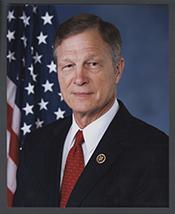
U.S. Representative for Texas’s 36th district
Republican
119th Congress, two-year term
Missed 2.1% of roll calls. Chamber median 1.9%.
The full voting recordCounts roll calls where most Democrats and most Republicans voted differently, leaving out procedural votes.
How we countFrom FEC filings, Voteview roll calls and Congress.gov.
Republican. In Congress since 2015, 6 terms in total.
Following saves Babin to your list, which Chamber & Street keeps on its server, linked to a cookie on this browser and not to your name or email. Email alerts will come with constituent verification.
Bills and resolutions Babin signed on to as a cosponsor. An original cosponsor signed on the day the bill was introduced. Source: govinfo bill status files, last updated Nov 6, 2026.
Death Tax Repeal Act
Sponsor Randy Feenstra (R). Original cosponsor. 182 cosponsors. H.R. 1301 on Congress.gov
Introduced
Medicare Patient Access and Practice Stabilization Act of 2025
Sponsor Gregory Murphy (R). Joined Feb 12, 2025. 198 cosponsors. H.R. 879 on Congress.gov(opens in a new tab)
Introduced
Medicare Patient Access and Practice Stabilization Act of 2025
This bill increases certain payment adjustments under the Medicare physician fee schedule for services furnished between April 1, 2025, and January 1, 2026.
National Right-to-Work Act
Sponsor Joe Wilson (R). Original cosponsor. 129 cosponsors. H.R. 1232 on Congress.gov(opens in a new tab)
Introduced
Operation Lone Star Reimbursement Act
Sponsor Roger Williams (R). Original cosponsor. 11 cosponsors. H.R. 1222 on Congress.gov(opens in a new tab)
Introduced
Operation Lone Star Reimbursement Act
This bill allows Texas to receive reimbursement for expenses incurred from 2021 through 2025 related to securing the southern U.S. border. Texas must submit these expenses to the Department of Homeland Security (DHS) and the Department of the Treasury. DHS must review the submission within 120 days and determine which expenses are eligible for reimbursement. Treasury must pay such reimbursable expenses within 60 days.
Protecting American Energy Production Act
Sponsor August Pfluger (R). Joined Feb 7, 2025. 18 cosponsors. H.R. 26 on Congress.gov(opens in a new tab)
Passed the House
Protecting American Energy Production Act
This bill prohibits the President from declaring a moratorium on the use of hydraulic fracturing unless Congress authorizes the moratorium. The bill also expresses the sense of Congress that states should maintain primacy (authority) for the regulation of hydraulic fracturing for oil and natural gas production on state and private lands.
Hydraulic fracturing, or fracking, is a process to extract underground resources such as oil or gas from a geologic formation by injecting water, a propping agent (e.g., sand), and chemical additives into a well under enough pressure to fracture the formation.
Deport Alien Gang Members Act
Sponsor Tom McClintock (R). Joined Feb 6, 2025. 27 cosponsors. H.R. 175 on Congress.gov(opens in a new tab)
Passed committee
Deport Alien Gang Members Act
This bill makes non-U.S. nationals (aliens under federal law) associated with criminal gangs inadmissible for entry into the United States and deportable. The bill also establishes procedures to designate groups as criminal gangs.
An individual shall be inadmissible if certain officers or agencies know or have reason to believe that the individual is or was a criminal gang member or has participated or aided such a group's illegal activities. An individual who is or was a member of such a gang, has participated or aided such a group's illegal activities, or seeks to enter or has entered the United States in furtherance of such activity shall be deportable.
Such individuals must be subject to mandatory detention. Furthermore, such individuals shall not be eligible for (1) asylum; (2) temporary protected status; (3) special immigrant juvenile visas; or (4) parole, unless they are assisting the government in a law enforcement matter.
The bill defines a criminal gang as a group of five or more persons (1) where one of its primary purposes is committing specified criminal offenses and its members have engaged in a continuing series of such offenses within the past five years, or (2) that has been designated as a criminal gang by the Department of Homeland Security (DHS).
The bill also establishes procedures for DHS to designate a group as a criminal gang, including notifying Congress, publishing a notice in the Federal Register, and providing an opportunity for the group to petition for review of the designation.
CARTEL Act of 2025
Sponsor Morgan Luttrell (R). Original cosponsor. 15 cosponsors. H.R. 1079 on Congress.gov(opens in a new tab)
Introduced
Cartel And Radical Terrorist Enforcement Log Act of 2025 or the CARTEL Act of 2025
This bill requires U.S. Customs and Border Protection to publish each month statistics related to encounters and arrests. The report must include, for example, the total number of individuals affiliated with transnational criminal organizations who have repeatedly attempted to cross unlawfully into the United States.
The Department of Homeland Security must report annually on foreign terrorist organizations and transnational criminal organizations attempting to move their members or affiliates into the United States through the southern, northern, or maritime border.
Veterans 2nd Amendment Protection Act
Sponsor Mike Bost (R). Original cosponsor. 70 cosponsors. H.R. 1041 on Congress.gov(opens in a new tab)
Passed the House
Veterans 2nd Amendment Protection Act
This bill prohibits the Department of Veterans Affairs (VA) from transmitting certain information to the National Instant Criminal Background Check System (NICS) utilized by licensed importers or dealers of firearms.
Specifically, the bill prohibits the VA from transmitting personally identifying information of a veteran or a beneficiary to the NICS solely on the basis that such veteran or beneficiary has an appointed fiduciary to manage their benefits, unless there is an order or finding of a judicial authority that such veteran or beneficiary is a danger to themselves or others.
PATROL Act
Sponsor Michael Cloud (R). Original cosponsor. 19 cosponsors. H.R. 992 on Congress.gov(opens in a new tab)
Introduced
Preventing Aliens Through Rivers or Land Act or the PATROL Act
This bill prohibits the Department of Justice (DOJ) from bringing certain civil actions against a state for building a physical structure impacting navigable waters along the U.S. border for security purposes. Specifically, the DOJ is prohibited from bringing an action for (1) the construction of a bridge, causeway, dam, dike, or other structure over or in a port, harbor, or other navigable water of the United States without federal approval; or (2) the creation of any obstruction to the navigable capacity of waters of the United States without federal approval.
Protection of Women in Olympic and Amateur Sports Act of 2026
Sponsor W. Steube (R). Original cosponsor. 73 cosponsors. H.R. 1028 on Congress.gov(opens in a new tab)
Introduced
Protection of Women in Olympic and Amateur Sports Act
This bill requires certified national governing bodies (NGBs) of amateur sports (e.g., USA Gymnastics) to prohibit a person whose sex is male from participating in an amateur athletic competition that is designated for females, women, or girls.
Under the bill, male means an individual who has, had, will have—or would have, but for a developmental or genetic anomaly or historical accident—the reproductive system that at some point produces, transports, and utilizes sperm for fertilization.
No User Fees for Gun Owners Act
Sponsor Ronny Jackson (R). Original cosponsor. 51 cosponsors. H.R. 943 on Congress.gov(opens in a new tab)
Introduced
No User Fees for Gun Owners Act
This bill prohibits a state or local government from imposing any insurance requirement, tax, user fee, or similar charge on the manufacture, import, acquisition, transfer, or continued ownership of a firearm or ammunition. The bill includes an exception for a generally applicable sales tax that is assessed against firearms or ammunition in the same proportion to which the tax applies to other goods or services.
Ensuring Justice for Victims of Partial-Birth Abortion Act
Sponsor Keith Self (R). Original cosponsor. 14 cosponsors. H.R. 895 on Congress.gov(opens in a new tab)
Introduced
IGO Anti-Boycott Act
Sponsor Michael Lawler (R). Original cosponsor. 24 cosponsors. H.R. 867 on Congress.gov(opens in a new tab)
Introduced
IGO Anti-Boycott Act
This bill penalizes U.S. persons (individuals or entities) that participate in certain boycotts imposed by international governmental organizations (IGOs).
The bill expands an existing law that prohibits various actions by U.S. persons in relation to boycotts imposed by foreign governments on a country that is friendly to the United States and not itself the object of a U.S. boycott. This bill applies those prohibitions to similar boycotts imposed by IGOs.
Prohibited actions include (1) refusing to do business with companies organized under the laws of the boycotted country, if the refusal is pursuant to an agreement with or request from the country or IGO imposing the boycott; (2) furnishing information about whether any person has a business relationship with or in the boycotted country; and (3) furnishing information about whether someone is associated with charitable or fraternal organizations that support the boycotted country.
Criminal penalties for willful violations of this law include fines of up to $1 million. In addition to such fines, individuals may be imprisoned for up to 20 years. Civil penalties may include fines and revocations of export licenses for certain national security-related items.
The bill also requires the President to annually submit to Congress and make available to the public a report describing these boycotts and listing the foreign countries and international organizations involved in fostering or imposing them.
FARM Act
Sponsor Ronny Jackson (R). Joined Jan 31, 2025. 29 cosponsors. H.R. 620 on Congress.gov(opens in a new tab)
Introduced
Foreign Adversary Risk Management Act or the FARM Act
This bill places the Secretary of Agriculture on the Committee on Foreign Investment in the United States (CFIUS). It also requires CFIUS to review any investment that could result in foreign control of any U.S. agricultural business.
Further, the bill includes agricultural systems and supply chains in the definitions of critical infrastructure and critical technologies for the purposes of reviewing such investments.
The Department of Agriculture and the Government Accountability Office must each annually analyze and report on foreign influence in the U.S. agricultural industry.
Parental Notification and Intervention Act of 2025
Sponsor Mary Miller (R). Original cosponsor. 10 cosponsors. H.R. 799 on Congress.gov(opens in a new tab)
Introduced
Parental Notification and Intervention Act of 2025
This bill restricts the performance of an abortion on an unemancipated minor under 18 years of age.
Specifically, it prohibits a person or organization from performing, facilitating, or assisting with an abortion on an unemancipated minor without first complying with certain requirements, including parental notification and a 96-hour waiting period.
It establishes penalties—a fine, up to one year in prison, or both—for each willful violation.
A parent who is required to be notified of an abortion of an unemancipated minor may sue in federal court to prohibit the abortion.
Parental notification requirements may be waived in a medical emergency or in a case of physical abuse.
Dignity for Aborted Children Act
Sponsor Mary Miller (R). Original cosponsor. 8 cosponsors. H.R. 798 on Congress.gov(opens in a new tab)
Introduced
Dignity for Aborted Children Act
This bill establishes requirements for abortion providers with respect to the disposal of human fetal tissue from an abortion.
Specifically, it requires abortion providers to obtain a patient's informed consent for one of two specified methods of disposition and to retain the corresponding documentation in the patient's file.
First, patients may choose to retain possession of the tissue. A patient may choose to transfer the tissue to an entity that provides interment or cremation services.
Second, patients may choose to release the tissue to the provider. Providers must ensure any tissue released to them is interred or cremated within seven days of the procedure in a manner consistent with state law regarding the disposal of human remains.
Abortion providers must submit reports annually to the Department of Health and Human Services about these requirements and other specified information.
The bill establishes civil penalties for violations of the requirement to retain documentation of informed consent, and it establishes criminal penalties for violations of the requirement regarding the disposal of human fetal tissue.
Ultrasounds Save Lives Act of 2025
Sponsor Mary Miller (R). Original cosponsor. 12 cosponsors. H.R. 797 on Congress.gov(opens in a new tab)
Introduced
Ultrasounds Save Lives Act of 2025
This bill requires health care providers to perform an ultrasound and obtain certain informed consent before performing an abortion procedure.
Specifically, before performing an abortion, providers must first perform an ultrasound and share the results with the woman, and also present the woman with an authorization form at least 24 hours before performing the abortion procedure. The form must (1) include specified information concerning gestational age, associated developmental characteristics, and medical risks of the abortion; (2) include a statement that an ultrasound has been performed and the results were shared with the woman; (3) disclose penalties that providers may face for failing to comply with the bill's requirements; and (4) include an affirmation that the individual signing the form understands the information. The form must be signed and witnessed in person and retained in the medical file.
The bill's requirements do not apply if, in reasonable medical judgment, compliance would pose a greater risk of death or substantial physical impairment of a major bodily function, excluding psychological or emotional conditions, of the pregnant woman.
The bill also establishes civil penalties for providers who do not comply with these requirements.
Second Chance for Moms Act
Sponsor Mary Miller (R). Original cosponsor. 13 cosponsors. H.R. 796 on Congress.gov(opens in a new tab)
Introduced
Second Chance for Moms Act of 2025
This bill requires labeling of the drug mifepristone to include certain information about the hormone progesterone and establishes a related telephone hotline. (Mifepristone is a drug that is approved to end pregnancies through 10 weeks gestation when used in conjunction with the drug misoprostol. The procedure is often referred to as medication abortion or the abortion pill.)
Pregnancy Is Not an Illness Act of 2025
Sponsor Mary Miller (R). Original cosponsor. 11 cosponsors. H.R. 795 on Congress.gov(opens in a new tab)
Introduced
Pregnancy Is Not an Illness Act of 2025
This bill prohibits the Food and Drug Administration (FDA) from treating pregnancy as an illness for the purposes of approving any abortion drug or imposing a risk evaluation and mitigation strategy for an abortion drug. The bill also nullifies FDA approval of any abortion drug that relied at all on the treatment of pregnancy as an illness, and specifically nullifies the FDA’s approval of the abortion drug mifepristone in effect before the bill is enacted.
287(g) Program Protection Act
Sponsor Michael Cloud (R). Original cosponsor. 17 cosponsors. H.R. 756 on Congress.gov(opens in a new tab)
Introduced
287(g) Program Protection Act
This bill requires the Department of Homeland Security (DHS) to allow qualified state and local law enforcement agencies to perform certain immigration enforcement activities if the agency requests such authority. DHS may refuse to grant the request only if there is a compelling reason.
Currently, DHS is authorized to grant such authority but is not required to do so.
DHS must annually report on (1) the performance of these enforcement activities, and (2) the plans to expand these activities to additional states and localities.
PROTECTS Act of 2025
Sponsor Richard McCormick (R). Original cosponsor. 39 cosponsors. H.R. 742 on Congress.gov(opens in a new tab)
Introduced
Protecting Resources Of Taxpayers to Eliminate Childhood Transgender Surgeries Act of 2025 or the PROTECTS Act of 2025
This bill prohibits providing or using federal funds to perform, refer for, or reimburse any entity for certain gender transition procedures for an individual under the age of 18.
The bill’s prohibition applies to certain gender transition procedures that are performed to intentionally change an individual’s body to no longer correspond to the individual's biological sex, including surgeries, medications, and implants specified in the bill. The bill provides exceptions for specified procedures, such as treating certain genetic abnormalities or preventing imminent death or impairment of a major bodily function, when performed by a health care provider with the consent of the individual’s parent or legal guardian.
End Unaccountable Amnesty Act
Sponsor Troy Nehls (R). Joined Jan 28, 2025. 10 cosponsors. H.R. 696 on Congress.gov(opens in a new tab)
Introduced
End Unaccountable Amnesty Act
This bill revises, restricts, and repeals various laws and programs addressing the admissibility and deportability of certain non-U.S. nationals (aliens under federal law). The bill includes changes to the Temporary Protected Status (TPS) program, the treatment of unaccompanied children, and removal proceedings.
Under current law, the Department of Homeland Security (DHS) may grant a foreign state Temporary Protected Status (TPS), which protects qualified nationals of that foreign state from removal from the United States. The bill instead requires an act of Congress to grant TPS to a foreign state. The bill limits TPS status to 12 months, subject to extension.
The bill also generally requires the return of unaccompanied inadmissible children to their country of nationality or last habitual residence, among other changes. Under current law, DHS is authorized (not required) to return these children, and only if their country of nationality or last habitual residence is contiguous to the United States.
The bill also repeals the law allowing for the cancellation of removal or adjustment of the immigration status of qualifying non-U.S. nationals.
Under the bill, certain forms of identification, including a Notice to Appear issued by DHS, are no longer valid documents for purposes of airport security checkpoints.
The bill also limits the ability of DHS to grant parole (temporary admission granted on a case-by-case basis). For example, the bill limits the granting of parole to a list of specific situations, such as the imminent death of a close family member.
RIFLE Act of 2025
Sponsor Tracey Mann (R). Joined Jan 28, 2025. 34 cosponsors. H.R. 624 on Congress.gov(opens in a new tab)
Introduced
Reining In Federal Licensing Enforcement Act of 2025 or the RIFLE Act of 2025
This bill revises the federal statutory framework governing the licensing, inspection, and enforcement of federally licensed dealers, importers, and manufacturers of firearms (i.e., federal firearms licensees, or FFLs) by the Bureau of Alcohol, Tobacco, Firearms and Explosives (ATF).
With respect to an application for a license, this bill requires the ATF to make a preliminary determination, provide notice of a proposed denial, and allow the applicant to request a hearing.
With respect to inspections, this bill requires the ATF to establish standards for how it inspects, examines, or investigates FFLs for possible violations.
With respect to the enforcement of violations, this bill establishes a new framework. The new framework establishes a presumption that a violation by an FFL is not willful and requires the ATF to provide notice of and work with an FFL to rectify a violation.
In the case of a violation that is willful, the ATF has the burden of proving by clear and convincing evidence that the violation was committed willfully. The term willfully means that the person had actual knowledge of a legal duty, understood the obligation imposed by the legal duty, and deliberately disregarded the legal duty. The ATF may pursue revocation of an FFL’s license, but only after (1) providing notice and an opportunity to comply; and (2) finding that a lesser administrative action (e.g., warning, warning letter, or warning conference) is not likely to lead to future compliance.
Protecting Access for Hunters and Anglers Act
Sponsor Robert Wittman (R). Joined Jan 28, 2025. 83 cosponsors. H.R. 556 on Congress.gov(opens in a new tab)
Passed the House
Protecting Access for Hunters and Anglers Act of 2025
This bill bars the Fish and Wildlife Service (FWS), the Bureau of Land Management (BLM), and the Forest Service from prohibiting or regulating the use of lead ammunition or tackle on federal land or water. The bill makes exceptions for specified existing regulations and where the FWS, the BLM, or the Forest Service determines that a decline in wildlife population at the specific unit of federal land or water is primarily caused by the use of lead in ammunition or tackle, based on the field data from such unit, and the state approves the regulations.
Prohibiting Abortion Industry’s Lucrative Loopholes Act
Sponsor Scott Franklin (R). Original cosponsor. 12 cosponsors. H.R. 727 on Congress.gov(opens in a new tab)
Introduced