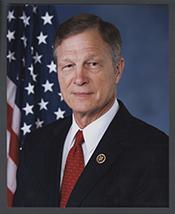
U.S. Representative for Texas’s 36th district
Republican
119th Congress, two-year term
Missed 2.1% of roll calls. Chamber median 1.9%.
The full voting recordCounts roll calls where most Democrats and most Republicans voted differently, leaving out procedural votes.
How we countFrom FEC filings, Voteview roll calls and Congress.gov.
Republican. In Congress since 2015, 6 terms in total.
Following saves Babin to your list, which Chamber & Street keeps on its server, linked to a cookie on this browser and not to your name or email. Email alerts will come with constituent verification.
Bills and resolutions Babin signed on to as a cosponsor. An original cosponsor signed on the day the bill was introduced. Source: govinfo bill status files, last updated Nov 6, 2026.
CHOICE for Veterans Act of 2025
Sponsor Jack Bergman (R). Joined May 7, 2026. 60 cosponsors. H.R. 3132 on Congress.gov
Passed committee
25th Anniversary of 9/11 Commemorative Coin Act
Sponsor Daniel Goldman (D). Joined May 7, 2026. 302 cosponsors. H.R. 1993 on Congress.gov(opens in a new tab)
Passed the House
25th Anniversary of 9/11 Commemorative Coin Act
This bill directs the Department of the Treasury to mint and issue coins to commemorate the 25th anniversary of the September 11, 2001, terrorist attacks on the United States and the establishment of the National September 11 Memorial and Museum at the World Trade Center.
The sale of all coins issued under this bill must include a surcharge to be paid to the National September 11 Memorial and Museum at the World Trade Center to support operations and maintenance. However, if the issuance of this commemorative coin exceeds certain annual limits, no surcharge may be included.
Resolution memorializing law enforcement officers killed in the line of duty.
Sponsor Michael Guest (R). Original cosponsor. 126 cosponsors. H.Res. 1252 on Congress.gov(opens in a new tab)
Passed the House
This resolution expresses support for police officers and other law enforcement personnel.
The resolution further recognizes
• law enforcement officers across the United States in the pursuit of preserving safe and secure communities;
• the need to ensure that such officers have the equipment, training, and resources necessary to protect their health and safety while they are protecting the public; and
• the law enforcement community for acts of sacrifice and heroism.
The resolution expresses condolences and appreciation to the loved ones of each law enforcement officer who has made the ultimate sacrifice in the line of duty.
Save America’s Family Forests Act of 2026
Sponsor Earl Carter (R). Joined Apr 29, 2026. 10 cosponsors. H.R. 8538 on Congress.gov(opens in a new tab)
Introduced
Kayleigh’s Law Act of 2026
Sponsor Abraham Hamadeh (R). Original cosponsor. 21 cosponsors. H.R. 8481 on Congress.gov(opens in a new tab)
Passed the House
Kayleigh’s Law Act of 2026
This bill establishes a federal statutory framework to require federal courts to issue an order prohibiting contact with a victim (i.e., a no-contact order) in the case of a defendant who is convicted of certain violent crimes or sex crimes.
Specifically, in the case of a defendant convicted of a felony offense that is a crime of violence or that involves a sexual act or sexual conduct, on a motion by the victim or federal government, the court must issue a no-contact order.
Under the framework, the no-contact order must be imposed at sentencing and be in effect for the lifetime of the defendant unless it is terminated or suspended in accordance with specified procedures. Additionally, no fee may be assessed or collected from a victim in connection with the issuance of a no-contact order.
National Quantum Initiative Reauthorization Act
Sponsor Randy Weber (R). Original cosponsor. 5 cosponsors. H.R. 8462 on Congress.gov(opens in a new tab)
Passed committee
End H–1B Visa Abuse Act of 2026
Sponsor Elijah Crane (R). Original cosponsor. 14 cosponsors. H.R. 8443 on Congress.gov(opens in a new tab)
Introduced
Preserving Patient Access to Long-Term Care Pharmacies Act
Sponsor Beth Van Duyne (R). Joined Apr 22, 2026. 46 cosponsors. H.R. 5031 on Congress.gov(opens in a new tab)
Introduced
Encouraging military discounts in honor of the 250th anniversary of the United States.
Sponsor Mike Collins (R). Original cosponsor. 9 cosponsors. H.Res. 1205 on Congress.gov(opens in a new tab)
Introduced
Expressing the sense of the House of Representatives that as the United States marks 250 years of independence, establishing a "Veterans Appreciation Month" offers a simple but powerful way for the Nation to recognize the men and women whose service has protected American freedom for generations.
Sponsor Mike Collins (R). Original cosponsor. 13 cosponsors. H.Res. 1204 on Congress.gov(opens in a new tab)
Introduced
Encouraging States to establish "Veterans Tax Relief Weekends" that coincide with Memorial Day, Independence Day, and Veterans Day, providing a practical way for communities across the country to recognize the service of veterans and members of the Armed Forces by providing financial relief to them.
Sponsor Mike Collins (R). Original cosponsor. 10 cosponsors. H.J.Res. 158 on Congress.gov(opens in a new tab)
Introduced
DEPORT Act of 2026
Sponsor Riley Moore (R). Joined Apr 20, 2026. 15 cosponsors. H.R. 8341 on Congress.gov(opens in a new tab)
Introduced
IDA Act of 2026
Sponsor Jefferson Van Drew (R). Joined Apr 16, 2026. 15 cosponsors. H.R. 7931 on Congress.gov(opens in a new tab)
Introduced
National Constitutional Carry Act
Sponsor Thomas Massie (R). Joined Apr 16, 2026. 78 cosponsors. H.R. 645 on Congress.gov(opens in a new tab)
Introduced
Truck Parking Safety Improvement Act
Sponsor Mike Bost (R). Joined Apr 6, 2026. 54 cosponsors. H.R. 1659 on Congress.gov(opens in a new tab)
Introduced
Truck Parking Safety Improvement Act
This bill directs the Department of Transportation (DOT) to provide competitive grants for projects that provide public parking for commercial motor vehicles and improve the safety of commercial motor vehicle drivers. States, metropolitan planning organizations, tribal governments, and local governments are eligible for these grants.
The grants must be used for projects on federal-aid highways or a facility with reasonable access to such a highway or a freight facility.
A grant recipient may not charge a fee to a commercial motor vehicle driver to access a public parking facility that is constructed, opened, maintained, or improved with a grant under this program.
In providing grants, DOT must determine that
• there is a shortage of commercial motor vehicle parking capacity in the project's corridor;
• the eligible entity has consulted motor carriers, commercial motor vehicle drivers, public safety officials, and private providers of commercial motor vehicle parking regarding the project;
• the project will likely increase the availability or utilization of commercial motor vehicle parking, facilitate the efficient movement of freight, or improve highway safety, traffic congestion, and air quality; and
• the eligible entity has demonstrated the ability to provide for the facility's maintenance and operation.
To the maximum extent practicable, DOT must select grant projects that maximize the geographic dispersion of new commercial motor vehicle parking capacity across the United States.
Chloe Cole Act of 2026
Sponsor Robert Onder (R). Joined Apr 2, 2026. 95 cosponsors. H.R. 7651 on Congress.gov(opens in a new tab)
Passed committee
Defend Rural Health Act of 2026
Sponsor David Taylor (R). Joined Apr 2, 2026. 14 cosponsors. H.R. 7409 on Congress.gov(opens in a new tab)
Introduced
Stopping Border Surges Act
Sponsor Andy Biggs (R). Joined Mar 5, 2026. 41 cosponsors. H.R. 116 on Congress.gov(opens in a new tab)
Introduced
Stopping Border Surges Act
This bill modifies immigration law provisions relating to unaccompanied alien minors and to asylum seekers.
The bill requires the Department of Homeland Security (DHS) to repatriate certain unaccompanied, inadmissible alien children, generally those not at risk of being trafficking victims nor having a fear of persecution. Currently, only inadmissible unaccompanied aliens from neighboring countries are subject to repatriation, and DHS has discretion whether to repatriate.
When the Department of Health and Human Services releases an unaccompanied child to an individual, it shall provide DHS with certain information about that individual, including Social Security number and immigration status.
The bill requires a stricter standard to find a credible fear of persecution and imposes additional rules on credible fear interviews.
If an alien is granted asylum because of fear of persecution in a country, the alien shall be deemed to have renounced asylum status by returning to that country, if there has been no change in the country's conditions.
The bill also (1) expands the definition of what constitutes a frivolous asylum application, (2) imposes additional limitations on eligibility for asylum, (3) shortens the deadline for applying for asylum, and (4) extends the time period an alien seeking asylum must wait before receiving employment authorization.
Any individual who knowingly and willfully makes materially false statements or uses fraudulent documents in asylum-related proceedings shall be fined or imprisoned up to 10 years, or both.
Nuclear Family Priority Act
Sponsor Elijah Crane (R). Joined Mar 4, 2026. 48 cosponsors. H.R. 2705 on Congress.gov(opens in a new tab)
Introduced
Nuclear Family Priority Act
This bill imposes limits on various types of family-sponsored immigration visas.
The non-U.S. national (alien under federal law) parents of U.S. citizens shall not qualify for visas for immediate relatives, which are not subject to any direct numerical limits. Currently, the spouses, unmarried children under 21, and parents of citizens are considered immediate relatives.
The bill also creates a nonimmigrant visa for such parents of citizens. Such non-U.S. nationals shall not be eligible for employment or any public benefits.
The bill also reduces the baseline annual cap for family-sponsored visas from 480,000 to 88,000, and revises the methods for calculating the cap. Currently, the 480,000 cap may be adjusted depending on various factors but shall not be less than 226,000.
The bill eliminates preference allocations (visa categories subject to various annual caps) for various family-sponsored visas, including those for the siblings and married children of citizens. The bill provides for a preference allocation for the unmarried children under 21 and spouses of permanent residents, subject to the 88,000 annual cap.
Legal Workforce Act
Sponsor Ken Calvert (R). Joined Mar 4, 2026. 45 cosponsors. H.R. 251 on Congress.gov(opens in a new tab)
Introduced
Legal Workforce Act
This bill directs the Department of Homeland Security (DHS) to create an electronic employment eligibility confirmation system modeled after and to replace the E-Verify system, which allows employers and recruiters to verify the immigration status of individuals. The bill also mandates the use of such a system, where currently only some employers, such as those with federal contracts, are required to use E-Verify.
The bill specifies documents that can establish an individual's identity and employment authorization. During the period starting when a job offer is made until three business days after hiring, the individual must attest to his or her employment authorization, and the employer or recruiter must attest that it has examined the individual's required documents.
Employers shall reverify certain types of employees who were not previously verified using E-Verify.
The Social Security Administration shall notify employees if their Social Security number has been used multiple times in an unusual manner. DHS shall establish programs for blocking and suspending misused numbers.
Employers that are required to use the verification system shall not be liable for any employment-related action based on a good-faith reliance on the system.
The bill establishes a phased-in participation deadline for different sizes and categories of employers, including agricultural employers.
The bill increases civil penalties related to hiring individuals without work authorization. It also preempts state laws relating to hiring and employment eligibility verification, but states may use their authority of business licensing to penalize employers for failing to comply with the bill's provisions.
Fairness for High-Skilled Americans Act of 2025
Sponsor Paul Gosar (R). Joined Mar 4, 2026. 40 cosponsors. H.R. 2315 on Congress.gov(opens in a new tab)
Introduced
Fairness for High-Skilled Americans Act of 2025
This bill eliminates the Optional Practical Training Program or any successor program, unless Congress expressly authorizes such a program. (The program provides an F-1 student visa holder temporary employment authorization before or after completion of the student's studies, or both.)
SAFE for America Act of 2025
Sponsor Mike Collins (R). Joined Mar 4, 2026. 59 cosponsors. H.R. 1241 on Congress.gov(opens in a new tab)
Introduced
Security And Fairness Enhancement for America Act of 2025 or SAFE for America Act of 2025
This bill eliminates the diversity visa program. This program provides up to 55,000 visas annually to individuals from countries with low rates of immigration to the United States.
Gun Owner Registration Information Protection Act
Sponsor Paul Gosar (R). Original cosponsor. 97 cosponsors. H.R. 7678 on Congress.gov(opens in a new tab)
Introduced
Gun Owner Registration Information Protection Act
This bill prohibits federal funding of, or support for, state databases that list (1) firearms lawfully owned or possessed by individuals, or (2) individuals who lawfully own or possess firearms.
Recognizing the 10th anniversary of the first export shipment of liquefied natural gas produced in the lower 48 States.
Sponsor Randy Weber (R). Original cosponsor. 34 cosponsors. H.Res. 1076 on Congress.gov(opens in a new tab)
Introduced
761st Tank Battalion Congressional Gold Medal Act
Sponsor Gary Palmer (R). Joined Feb 24, 2026. 290 cosponsors. H.R. 1628 on Congress.gov(opens in a new tab)
Introduced
761st Tank Battalion Congressional Gold Medal Act
This bill provides for the award of a Congressional Gold Medal to the 761st Tank Battalion in recognition of their role in the success of Allied forces in Europe during World War II and for the example they set as the first Black soldiers to go to war as part of an American armored unit.
Following the award of the gold medal, the gold medal shall be given to the National Museum of African American History and Culture where it shall be available for display and research.