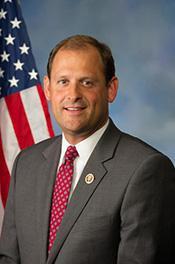
U.S. Representative for Kentucky’s 6th district
Republican
119th Congress, two-year term
Missed 7.1% of roll calls. Chamber median 1.9%.
The full voting recordCounts roll calls where most Democrats and most Republicans voted differently, leaving out procedural votes.
How we countFrom FEC filings, Voteview roll calls and Congress.gov.
Republican. In Congress since 2013, 7 terms in total.
Following saves Barr to your list, which Chamber & Street keeps on its server, linked to a cookie on this browser and not to your name or email. Email alerts will come with constituent verification.
Bills and resolutions Barr signed on to as a cosponsor. An original cosponsor signed on the day the bill was introduced. Source: govinfo bill status files, last updated Nov 6, 2026.
CFPB–IG Reform Act of 2025
Sponsor Daniel Meuser (R). Original cosponsor. 6 cosponsors. H.R. 2513 on Congress.gov
Introduced
Bureau of Consumer Financial Protection-Inspector General Reform Act of 2025 or the CFPB-IG Act of 2025
This bill establishes a separate Office of Inspector General for the Consumer Financial Protection Bureau (CFPB). Currently, such oversight of the CFPB is combined with the Office of Inspector General for the Board of Governors of the Federal Reserve System.
Making the CFPB Accountable to Small Businesses Act of 2025
Sponsor Scott Fitzgerald (R). Joined Mar 31, 2025. 3 cosponsors. H.R. 1606 on Congress.gov(opens in a new tab)
Introduced
Making the CFPB Accountable to Small Businesses Act of 2025
This bill requires the Consumer Financial Protection Bureau (CFPB) to consider the impact of proposed rules on small entities.
In addition, the CFPB, the Environmental Protection Agency, and the Occupational Safety and Health Administration must justify decisions to not adopt certain alternatives to regulations that are applicable to small entities.
Affirming the alliance between the United States and the Republic of Korea.
Sponsor Thomas Suozzi (D). Joined Mar 27, 2025. 68 cosponsors. H.Res. 64 on Congress.gov(opens in a new tab)
Passed committee
This resolution reaffirms the importance of the alliance between the United States and South Korea, particularly with regard to security in the Indo-Pacific. The resolution also celebrates the important contributions of Korean Americans to American society and supports the goals of Korean Culture-Kimchi Day.
Black Vulture Relief Act
Sponsor John Rose (R). Original cosponsor. 26 cosponsors. H.R. 2462 on Congress.gov(opens in a new tab)
Introduced
Black Vulture Relief Act of 2025
This bill allows livestock producers and their employees to take certain actions against black vultures to protect livestock. (Black vultures are protected under the Migratory Bird Treaty Act.)
Specifically, livestock producers and their employees may (1) take (i.e., capture, kill, or disperse, or transport the carcass of) a black vulture that they reasonably believe will cause death, injury, or destruction to livestock; or (2) in the course of taking or attempting to take the black vulture, cause injury to the bird. However, they may not take or attempt to take a black vulture through the use of poison.
Livestock producers and their employees must submit an annual report to the U.S. Fish and Wildlife Service (FWS) on black vultures taken under this bill. The FWS must develop a reporting form and make this reporting form available on its website.
Currently, the FWS has a permit process under the Migratory Bird Treaty Act for the taking of black vultures.
FIND Act
Sponsor Jack Bergman (R). Joined Mar 26, 2025. 154 cosponsors. H.R. 45 on Congress.gov(opens in a new tab)
Introduced
Firearm Industry Non-Discrimination Act or the FIND Act
This bill prohibits the federal government from entering into contracts with an entity that discriminates against firearm trade associations or businesses that deal in firearms, ammunition, or related products.
Specifically, the bill requires a federal agency to include in each contract for the procurement of goods or services awarded by the agency a clause requiring the prime contractor to certify that it (1) has no policy, practice, guidance, or directive that discriminates against a firearm entity or firearm trade association; and (2) will not adopt a policy, practice, guidance, or directive that discriminates against a firearm entity or firearm trade association during the term of the contract.
The bill establishes (1) a similar requirement with respect to subcontracts, and (2) penalties for violations.
The bill makes such prohibition inapplicable to a contract for the procurement of goods or services that is a sole-source contract.
Disapproving the rule submitted by the Bureau of Consumer Financial Protection relating to "Defining Larger Participants of a Market for General-Use Digital Consumer Payment Applications".
Sponsor Mike Flood (R). Joined Mar 26, 2025. 7 cosponsors. H.J.Res. 64 on Congress.gov(opens in a new tab)
Introduced
This joint resolution nullifies the final rule issued by the Consumer Financial Protection Bureau (CFPB) titled Defining Larger Participants of a Market for General-Use Digital Consumer Payment Applications and published on December 10, 2024. The rule defines larger participants in the general-use digital consumer payment application market (i.e., payment apps) that are subject to CFPB supervisory authority. The rule defines larger participants in this market as nonbanks (1) with an annual volume of at least 50 million transactions, and (2) that are not small business concerns.
Transparency in CFPB Cost-Benefit Analysis Act
Sponsor Barry Loudermilk (R). Original cosponsor. 2 cosponsors. H.R. 2331 on Congress.gov(opens in a new tab)
Introduced
Transparency in CFPB Cost-Benefit Analysis Act
This bill sets forth information required to be included in a rulemaking made by the Consumer Financial Protection Bureau (CFPB). Specifically, the CFPB must publish a justification of the proposed rulemaking; a quantitative and qualitative assessment of all anticipated direct and indirect costs and benefits; alternatives to the proposed rulemaking; impacts on small businesses; and any assumptions, data, or studies used in preparing this information.
Expel Illegal Chinese Police Act of 2025
Sponsor Ashley Hinson (R). Joined Mar 25, 2025. 8 cosponsors. H.R. 2127 on Congress.gov(opens in a new tab)
Introduced
Expel Illegal Chinese Police Act of 2025
This bill requires sanctions on certain foreign persons associated with the Chinese Communist Party (CCP) or Chinese law enforcement institutions, including those seeking to establish a Chinese police presence in the United States.
The bill requires the President to impose visa-blocking sanctions on certain non-U.S. nationals (aliens under federal law), including those who are (1) employees of Chinese law enforcement institutions or their immediate family members, or (2) directly associated with a Chinese police or United Front Work Department (UFWD) presence in the United States. (The CCP's UFWD seeks to win support for the CCP from non-CCP groups at home and abroad, with a focus on ethnic-Chinese diaspora communities.)
The President must also impose property-blocking sanctions on foreign individuals or entities that are (1) Chinese law enforcement institutions, their senior leaders, or those acting under the control of such institutions; (2) directly associated with establishing or maintaining a Chinese police presence in the United States; or (3) acting under the control of the UFWD with the intention of covertly monitoring or intimidating those living in the United States.
Additionally, the bill requires the President to prohibit federal agencies from participating in investigations into foreign persons subject to these sanctions unless the investigation is (1) initiated by the U.S. government; or (2) the President determines that such participation is vital to the health, safety, and well-being of U.S. citizens.
Enhanced Iran Sanctions Act of 2025
Sponsor Michael Lawler (R). Joined Mar 25, 2025. 295 cosponsors. H.R. 1422 on Congress.gov(opens in a new tab)
Passed the House
Enhanced Iran Sanctions Act of 2025
This bill imposes sanctions on certain foreign persons (individuals and entities) that are involved in Iran's petroleum sector as well as certain associated persons. The bill also requires or authorizes actions to facilitate the enforcement of sanctions on Iran.
Specifically, the bill requires the President to impose visa- and property-blocking sanctions on any foreign person that, after the bill's enactment, knowingly engages in any transaction related to the processing, export, or sale of oil, condensates, gas, liquefied natural gas, or other petrochemical products in whole or in part from Iran. The President must also impose sanctions on certain foreign persons associated with a sanctioned individual or entity. For example, the President must sanction the subsidiaries and corporate officers of a sanctioned business.
The bill provides certain exceptions to these sanctions, including specifying that sanctions do not apply to the importation of goods or to conducting or facilitating transactions for humanitarian assistance.
The Department of State must establish an interagency working group that shall seek to establish a multilateral contact group to coordinate international efforts to enforce sanctions on Iran.
The bill expands the State Department rewards program to authorize a reward payment to any individual who furnishes information leading to the identification of a person (1) subject to sanctions under this bill, or (2) that has attempted or is attempting to evade sanctions under this bill.
ALIGN Act
Sponsor Jodey Arrington (R). Joined Mar 14, 2025. 34 cosponsors. H.R. 574 on Congress.gov(opens in a new tab)
Introduced
Major Richard Star Act
Sponsor Gus Bilirakis (R). Original cosponsor. 340 cosponsors. H.R. 2102 on Congress.gov(opens in a new tab)
Introduced
Major Richard Star Act
This bill allows a veteran with a combat-related disability to receive retirement pay, without reduction, concurrently with their disability compensation. This includes veterans with a combat-related disability and fewer than 20 years of creditable service. (Currently, veterans who receive combat-related special compensation and retirement pay are subject to an offset in retirement pay for concurrent receipt of such benefits.)
Protect and Serve Act of 2025
Sponsor John Rutherford (R). Joined Mar 14, 2025. 120 cosponsors. H.R. 1551 on Congress.gov(opens in a new tab)
Introduced
TAP Promotion Act
Sponsor Derrick Van Orden (R). Joined Mar 11, 2025. 72 cosponsors. H.R. 1845 on Congress.gov(opens in a new tab)
Introduced
TAP Promotion Act
This bill requires that pre-separation counseling under the Transition Assistance Program include a presentation that promotes the benefits available to veterans from the Department of Veterans Affairs (VA). The bill also requires the VA to annually report on the presentation to (1) identify veterans service organizations that participate, (2) provide the number of members of the Armed Forces who attend, and (3) provide any recommendations for changes to the presentation.
American Innovation and R&D Competitiveness Act of 2025
Sponsor Ron Estes (R). Original cosponsor. 81 cosponsors. H.R. 1990 on Congress.gov(opens in a new tab)
Introduced
Veterans 2nd Amendment Protection Act
Sponsor Mike Bost (R). Joined Mar 10, 2025. 70 cosponsors. H.R. 1041 on Congress.gov(opens in a new tab)
Passed the House
Veterans 2nd Amendment Protection Act
This bill prohibits the Department of Veterans Affairs (VA) from transmitting certain information to the National Instant Criminal Background Check System (NICS) utilized by licensed importers or dealers of firearms.
Specifically, the bill prohibits the VA from transmitting personally identifying information of a veteran or a beneficiary to the NICS solely on the basis that such veteran or beneficiary has an appointed fiduciary to manage their benefits, unless there is an order or finding of a judicial authority that such veteran or beneficiary is a danger to themselves or others.
Anti-CBDC Surveillance State Act
Sponsor Tom Emmer (R). Original cosponsor. 135 cosponsors. H.R. 1919 on Congress.gov(opens in a new tab)
Passed the House
Anti-CBDC Surveillance State Act
This bill prohibits a Federal Reserve bank from offering products or services directly to an individual, maintaining an account on behalf of an individual, or issuing a central bank digital currency (i.e., a digital dollar). Further, the Board of Governors of the Federal Reserve System is prohibited from using a central bank digital currency to implement monetary policy or from testing, studying, creating, or implementing a central bank digital currency, with exceptions as provided by the bill.
Disapproving the rule submitted by the Bureau of Consumer Financial Protection relating to "Prohibition on Creditors and Consumer Reporting Agencies Concerning Medical Information (Regulation V)".
Sponsor Ralph Norman (R). Original cosponsor. 13 cosponsors. H.J.Res. 74 on Congress.gov(opens in a new tab)
Introduced
This joint resolution nullifies the final rule issued by the Consumer Financial Protection Bureau titled Prohibition on Creditors and Consumer Reporting Agencies Concerning Medical Information (Regulation V) and published on January 14, 2025. This rule prohibits the inclusion of medical debt on credit reports and prohibits creditors from considering medical debt when making credit eligibility determinations.
Censuring Representative Al Green of Texas.
Sponsor Troy Nehls (R). Original cosponsor. 37 cosponsors. H.Res. 197 on Congress.gov(opens in a new tab)
Introduced
This resolution censures Representative Al Green.
Agricultural Risk Review Act of 2025
Sponsor Frank Lucas (R). Joined Mar 4, 2025. 20 cosponsors. H.R. 1713 on Congress.gov(opens in a new tab)
Passed the House
Agricultural Risk Review Act of 2025
This bill makes changes to the Committee on Foreign Investment in the United States (CFIUS), including by requiring CFIUS to determine whether a national security review is necessary for reportable agricultural land transactions that are referred by the Department of Agriculture (USDA). (CFIUS oversees the national security risks of certain foreign investment in the United States. CFIUS has the authority to review covered transactions, which include mergers, acquisitions, and takeovers that could result in foreign control of a U.S. business; certain investments in businesses involved in critical technologies, critical infrastructure, or sensitive personal data; and certain real estate transactions.)
Specifically, the bill directs CFIUS to, after receiving notification from USDA, determine (1) whether a reportable agricultural land transaction is a covered transaction, and (2) whether CFIUS should initiate a national security review or take another action with respect to the transaction.
Reportable agricultural land transaction means a transaction (1) that USDA has reason to believe is a covered transaction, based on information from or in cooperation with the intelligence community; (2) that involves the acquisition of an interest in agricultural land by a foreign person of China, North Korea, Russia, or Iran; and (3) with respect to which a foreign person is required to submit a report to USDA regarding their agricultural land transactions.
The bill also expands CFIUS to include the Secretary of Agriculture for covered transactions that involve agricultural land, agricultural biotechnology, or the agriculture industry (e.g., agricultural transportation, storage, and processing).
Financial Reporting Threshold Modernization Act
Sponsor Barry Loudermilk (R). Original cosponsor. 20 cosponsors. H.R. 1799 on Congress.gov(opens in a new tab)
Introduced
Financial Reporting Threshold Modernization Act
This bill increases the threshold amounts for certain reporting by financial institutions, adjusts these amounts periodically for inflation, and requires a review of specified financial forms and reporting requirements.
The bill increases the threshold dollar amounts above which financial institutions are required to file currency-transaction and suspicious-activity reports with the Financial Crimes Enforcement Network (FinCEN). The bill also increases the transaction threshold above which an entity must register with FinCEN as a money services business. Further, these amounts must be updated every five years to reflect the change in the consumer price index.
Treasury must review and report on the effectiveness and efficiency of the forms and requirements regarding domestic coin and currency transactions, foreign currency transactions, and anti-money laundering and combating the financing of terrorism measures, among other matters. Treasury must also make appropriate updates to such forms.
The bill also extends through 2031 the requirement that the director of FinCEN must be made annually available for testimony before congressional committees regarding certain FinCEN issues, including resources needed to implement beneficial ownership reporting requirements.
Stop Fentanyl Money Laundering Act of 2025
Sponsor Andrew Ogles (R). Joined Mar 3, 2025. 9 cosponsors. H.R. 1577 on Congress.gov(opens in a new tab)
Introduced
Stop Fentanyl Money Laundering Act of 2025
This bill expands efforts to prevent money laundering related to international fentanyl and narcotics distribution.
The bill allows the Department of the Treasury to impose restrictions on an entity or activity determined to be of primary money-laundering concern in connection with illicit fentanyl and narcotics trafficking. Specifically, if Treasury determines that a foreign financial institution, class of transaction, or type of account is of such concern, Treasury may require domestic financial institutions and agencies to take special measures, such as reporting certain financial transactions involving that entity or activity.
The Financial Crimes Enforcement Network (FinCEN) must issue advisories to financial institutions about how to identify Chinese money laundering that facilitates the trafficking of fentanyl and other synthetic opioids. FinCEN must also issue guidance to financial institutions for filing suspicious transaction reports related to suspected narcotics trafficking by transnational criminal organizations.
SAFE Act of 2025
Sponsor Vern Buchanan (R). Original cosponsor. 238 cosponsors. H.R. 1661 on Congress.gov(opens in a new tab)
Introduced
Save America's Forgotten Equines Act of 2025 or the SAFE Act of 2025
This bill permanently prohibits the slaughter of equines (e.g., horses and mules) for human consumption. (Current law prohibits the slaughter of dogs and cats for human consumption. This bill extends the prohibition to equines.)
Specifically, this bill prohibits a person from knowingly (1) slaughtering an equine for human consumption; or (2) shipping, transporting, possessing, purchasing, selling, or donating an equine to be slaughtered for human consumption or equine parts for human consumption.
The bill subjects a violator to a fine.
The bill applies to conduct in or affecting interstate or foreign commerce or within the special maritime and territorial jurisdiction of the United States. However, it does not apply to an activity carried out by an Indian for a religious ceremony.
As background, in recent years, the appropriations acts have prohibited the Department of Agriculture (USDA) from using federal funds to inspect horses before they are slaughtered for human consumption. Therefore, there are currently no USDA-inspected horse slaughter facilities in the United States.
Charitable Act
Sponsor Blake Moore (R). Joined Feb 25, 2025. 54 cosponsors. H.R. 801 on Congress.gov(opens in a new tab)
Introduced
Charitable Act
This bill allows an individual taxpayer who does not itemize their tax deductions to claim a tax deduction for charitable contributions and eliminates the tax penalty for overstating charitable contributions. (Some limitations apply).
Under the bill, for tax years beginning in 2026 or 2027, an individual taxpayer who does not itemize their tax deductions may deduct charitable contributions of up to one-third of the standard deduction allowed to such individual. (Under current law, an individual taxpayer generally must itemize their tax deductions to deduct charitable contributions.)
The bill also eliminates the tax penalty for an underpayment of taxes attributable to overstated charitable contributions by taxpayers who do not itemize deductions. (Under current law, taxpayers who claim a deduction under this bill may be assessed a tax penalty in the amount of 50% of the portion of an understatement of tax liability attributable to overstated charitable contributions.)
To amend the Internal Revenue Code of 1986 to extend the temporary increase in limitation on the cover over of distilled spirits taxes to Puerto Rico and the Virgin Islands.
Sponsor Ron Estes (R). Joined Feb 24, 2025. 25 cosponsors. H.R. 1378 on Congress.gov(opens in a new tab)
Introduced
Expressing the sense of the House of Representatives in condemning the Government of the People's Republic of China for its harassment and efforts to intimidate American citizens and other individuals on United States soil with the goal of suppressing speech and narratives the People's Republic of China finds unwelcome.
Sponsor Ami Bera (D). Original cosponsor. 1 cosponsor. H.Res. 130 on Congress.gov(opens in a new tab)
Introduced
This resolution condemns China's efforts to suppress free speech, assembly, and academic freedom in the United States and reaffirms the U.S. commitment to defending the rights of individuals to express themselves freely both domestically and globally. The resolution also calls on U.S. federal and local law enforcement agencies to take swift action against China's attempts to extend its intolerance of dissent into the United States.