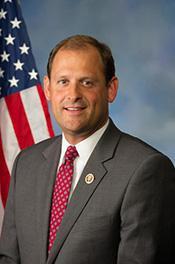
U.S. Representative for Kentucky’s 6th district
Republican
119th Congress, two-year term
Missed 7.1% of roll calls. Chamber median 1.9%.
The full voting recordCounts roll calls where most Democrats and most Republicans voted differently, leaving out procedural votes.
How we countFrom FEC filings, Voteview roll calls and Congress.gov.
Republican. In Congress since 2013, 7 terms in total.
Following saves Barr to your list, which Chamber & Street keeps on its server, linked to a cookie on this browser and not to your name or email. Email alerts will come with constituent verification.
Bills and resolutions Barr signed on to as a cosponsor. An original cosponsor signed on the day the bill was introduced. Source: govinfo bill status files, last updated Nov 6, 2026.
Protection of Women in Olympic and Amateur Sports Act of 2026
Sponsor W. Steube (R). Joined Oct 24, 2025. 73 cosponsors. H.R. 1028 on Congress.gov
Introduced
Protection of Women in Olympic and Amateur Sports Act
This bill requires certified national governing bodies (NGBs) of amateur sports (e.g., USA Gymnastics) to prohibit a person whose sex is male from participating in an amateur athletic competition that is designated for females, women, or girls.
Under the bill, male means an individual who has, had, will have—or would have, but for a developmental or genetic anomaly or historical accident—the reproductive system that at some point produces, transports, and utilizes sperm for fertilization.
American Franchise Act
Sponsor Kevin Hern (R). Joined Oct 21, 2025. 158 cosponsors. H.R. 5267 on Congress.gov(opens in a new tab)
Introduced
Ensuring Lasting Smiles Act
Sponsor Neal Dunn (R). Joined Oct 21, 2025. 222 cosponsors. H.R. 3277 on Congress.gov(opens in a new tab)
Introduced
SAFE for America Act of 2025
Sponsor Mike Collins (R). Joined Oct 14, 2025. 59 cosponsors. H.R. 1241 on Congress.gov(opens in a new tab)
Introduced
Security And Fairness Enhancement for America Act of 2025 or SAFE for America Act of 2025
This bill eliminates the diversity visa program. This program provides up to 55,000 visas annually to individuals from countries with low rates of immigration to the United States.
Nuclear Family Priority Act
Sponsor Elijah Crane (R). Joined Oct 10, 2025. 48 cosponsors. H.R. 2705 on Congress.gov(opens in a new tab)
Introduced
Nuclear Family Priority Act
This bill imposes limits on various types of family-sponsored immigration visas.
The non-U.S. national (alien under federal law) parents of U.S. citizens shall not qualify for visas for immediate relatives, which are not subject to any direct numerical limits. Currently, the spouses, unmarried children under 21, and parents of citizens are considered immediate relatives.
The bill also creates a nonimmigrant visa for such parents of citizens. Such non-U.S. nationals shall not be eligible for employment or any public benefits.
The bill also reduces the baseline annual cap for family-sponsored visas from 480,000 to 88,000, and revises the methods for calculating the cap. Currently, the 480,000 cap may be adjusted depending on various factors but shall not be less than 226,000.
The bill eliminates preference allocations (visa categories subject to various annual caps) for various family-sponsored visas, including those for the siblings and married children of citizens. The bill provides for a preference allocation for the unmarried children under 21 and spouses of permanent residents, subject to the 88,000 annual cap.
Legal Workforce Act
Sponsor Ken Calvert (R). Joined Oct 10, 2025. 45 cosponsors. H.R. 251 on Congress.gov(opens in a new tab)
Introduced
Legal Workforce Act
This bill directs the Department of Homeland Security (DHS) to create an electronic employment eligibility confirmation system modeled after and to replace the E-Verify system, which allows employers and recruiters to verify the immigration status of individuals. The bill also mandates the use of such a system, where currently only some employers, such as those with federal contracts, are required to use E-Verify.
The bill specifies documents that can establish an individual's identity and employment authorization. During the period starting when a job offer is made until three business days after hiring, the individual must attest to his or her employment authorization, and the employer or recruiter must attest that it has examined the individual's required documents.
Employers shall reverify certain types of employees who were not previously verified using E-Verify.
The Social Security Administration shall notify employees if their Social Security number has been used multiple times in an unusual manner. DHS shall establish programs for blocking and suspending misused numbers.
Employers that are required to use the verification system shall not be liable for any employment-related action based on a good-faith reliance on the system.
The bill establishes a phased-in participation deadline for different sizes and categories of employers, including agricultural employers.
The bill increases civil penalties related to hiring individuals without work authorization. It also preempts state laws relating to hiring and employment eligibility verification, but states may use their authority of business licensing to penalize employers for failing to comply with the bill's provisions.
Fairness for High-Skilled Americans Act of 2025
Sponsor Paul Gosar (R). Joined Oct 10, 2025. 40 cosponsors. H.R. 2315 on Congress.gov(opens in a new tab)
Introduced
Fairness for High-Skilled Americans Act of 2025
This bill eliminates the Optional Practical Training Program or any successor program, unless Congress expressly authorizes such a program. (The program provides an F-1 student visa holder temporary employment authorization before or after completion of the student's studies, or both.)
Stopping Border Surges Act
Sponsor Andy Biggs (R). Joined Oct 10, 2025. 41 cosponsors. H.R. 116 on Congress.gov(opens in a new tab)
Introduced
Stopping Border Surges Act
This bill modifies immigration law provisions relating to unaccompanied alien minors and to asylum seekers.
The bill requires the Department of Homeland Security (DHS) to repatriate certain unaccompanied, inadmissible alien children, generally those not at risk of being trafficking victims nor having a fear of persecution. Currently, only inadmissible unaccompanied aliens from neighboring countries are subject to repatriation, and DHS has discretion whether to repatriate.
When the Department of Health and Human Services releases an unaccompanied child to an individual, it shall provide DHS with certain information about that individual, including Social Security number and immigration status.
The bill requires a stricter standard to find a credible fear of persecution and imposes additional rules on credible fear interviews.
If an alien is granted asylum because of fear of persecution in a country, the alien shall be deemed to have renounced asylum status by returning to that country, if there has been no change in the country's conditions.
The bill also (1) expands the definition of what constitutes a frivolous asylum application, (2) imposes additional limitations on eligibility for asylum, (3) shortens the deadline for applying for asylum, and (4) extends the time period an alien seeking asylum must wait before receiving employment authorization.
Any individual who knowingly and willfully makes materially false statements or uses fraudulent documents in asylum-related proceedings shall be fined or imprisoned up to 10 years, or both.
SPEED and Reliability Act of 2025
Sponsor Scott Peters (D). Original cosponsor. 5 cosponsors. H.R. 5600 on Congress.gov(opens in a new tab)
Introduced
Protecting Children from Experimentation Act of 2025
Joined Sep 18, 2025. 18 cosponsors. H.R. 3688 on Congress.gov(opens in a new tab)
Progress not on file
Honoring the life and legacy of Charles Charlie James Kirk.
Sponsor Mike Johnson (R). Original cosponsor. 196 cosponsors. H.Res. 719 on Congress.gov(opens in a new tab)
Passed the House
This resolution (1) condemns the assassination of Charles "Charlie" James Kirk and all forms of political violence; and (2) honors the life, leadership, and legacy of Charlie Kirk.
Honoring Charlie Kirk following his assassination on September 10, 2025, in Orem, Utah.
Sponsor Cory Mills (R). Joined Sep 15, 2025. 61 cosponsors. H.Res. 695 on Congress.gov(opens in a new tab)
Introduced
Stress Testing Accountability and Transparency Act
Sponsor Bill Huizenga (R). Original cosponsor. 2 cosponsors. H.R. 5270 on Congress.gov(opens in a new tab)
Introduced
Stress Testing Accountability and Transparency Act
This bill requires the Federal Reserve Board to make public certain details concerning annual stress tests performed by the board and prohibits certain stress test practices. (Stress tests assess a financial institution’s response to a hypothetical disruptive economic event. The board sets an institution’s capital requirements or stress capital buffer based on the results.)
Specifically, the bill requires the board to issue a rule that establishes the models, assumptions, and methods used by the board to perform annual stress tests on certain nonbank financial companies and large bank holding companies. The board must also issue a rule determining the stress capital buffer requirement for certain companies that have at least two results from periodic stress tests. In addition, the board must disclose annually each scenario to be used in stress testing.
Further, the board is prohibited from materially changing stress test methodologies outside of the rulemaking process. The board must also ensure that stress capital buffer requirements and risk-based capital requirements do not contain capital requirements for the same risks. The board is also prohibited from performing climate-related stress tests.
The Government Accountability Office must report on the effectiveness of the stress tests every three years.
SCORE Act
Sponsor Gus Bilirakis (R). Joined Sep 8, 2025. 21 cosponsors. H.R. 4312 on Congress.gov(opens in a new tab)
Passed committee
Student Compensation and Opportunity through Rights and Endorsements Act or the SCORE Act
This bill provides a framework for the compensation of student athletes for the use of their name, image, or likeness (NIL). This includes addressing certain elements of the court approved agreement to settle the In re College Athlete NIL Litigation (i.e., House settlement).
Specifically, the bill statutorily prohibits institutions, conferences, or interstate intercollegiate athletic associations (e.g., the National Collegiate Athletic Association (NCAA)) from restricting the ability of a student athlete to enter an NIL agreement.
The bill also requires institutions of higher education that generate $20 million or more in annual revenue from the institution's intercollegiate athletics activities to (1) provide counseling and medical benefits to student athletes, and (2) establish and maintain at least 16 varsity sports teams.
Further, the bill authorizes interstate intercollegiate athletic associations to establish rules with respect to athletic eligibility, transfers, recruitment, and the disclosure of NIL agreements.
Under the bill, student athletes may not be considered employees of an institution, conference, or interstate intercollegiate athletic association.
The bill also preempts state laws with respect to compensation, payments, benefits, employment status, eligibility, and academic standards applicable to student athletes.
Compliance with the provisions of this bill is considered lawful under federal and state antitrust laws.
Veterans Appeals Efficiency Act of 2025
Sponsor Mike Bost (R). Joined Sep 2, 2025. 14 cosponsors. H.R. 3835 on Congress.gov(opens in a new tab)
Introduced
Daniel J. Harvey, Jr. and Adam Lambert Improving Servicemember Transition to Reduce Veteran Suicide Act
Sponsor Zachary Nunn (R). Joined Sep 2, 2025. 25 cosponsors. H.R. 2878 on Congress.gov(opens in a new tab)
Introduced
Daniel J. Harvey, Jr. and Adam Lambert Improving Servicemember Transition to Reduce Veteran Suicide Act
This bill requires the Department of Veterans Affairs (VA) and Department of Defense (DOD) to provide additional information and assistance related to mental health care to veterans in the Solid Start program and members of the Armed Forces in the Transition Assistance Program.
Specifically, the bill requires that counseling provided under DOD’s Transition Assistance Program include additional mental health information, including information about the risk of suicide and other potential stressors associated with separation from the Armed Forces.
The bill also expands the activities that must be carried out by the VA under the Solid Start program, which is an outreach program for veterans in their first year of separation from service. Specifically, under the program, the VA must (1) assist eligible veterans who elect to enroll in the VA health care system, and (2) educate veterans about mental health and counseling services available through the Veterans Health Administration.
Honoring the sacrifice of Marine Corps Lance Corporal David L. Espinoza, Marine Corps Sergeant Nicole L. Gee, Marine Corps Staff Sergeant Darin Taylor Hoover, Army Staff Sergeant Ryan Christian Knauss, Marine Corps Corporal Hunter Lopez, Marine Corps Lance Corporal Rylee J. McCollum, Marine Corps Lance Corporal Dylan R. Merola, Marine Corps Lance Corporal Kareem M. Nikoui, Marine Corps Corporal Daegan W. Page, Marine Corps Sergeant Johanny Rosario, Marine Corps Corporal Humberto A. Sanchez, Marine Corps Lance Corporal Jared M. Schmitz, and Navy Petty Officer Third Class Maxton W. Soviak.
Sponsor Max Miller (R). Joined Aug 29, 2025. 23 cosponsors. H.J.Res. 116 on Congress.gov(opens in a new tab)
Introduced
Save Healthcare Workers Act
Sponsor Madeleine Dean (D). Joined Aug 26, 2025. 67 cosponsors. H.R. 3178 on Congress.gov(opens in a new tab)
Introduced
Save Healthcare Workers Act
This bill establishes a new criminal offense for knowingly assaulting hospital personnel during the performance of their official duties in a manner that interferes with their performance of the duties or limits their ability to perform the duties.
Violations are subject to a fine, imprisonment of up to 10 years, or both. Violations that involve dangerous weapons, result in bodily injury, or are committed during a declared public emergency are subject to an enhanced penalty of a fine, imprisonment of up to 20 years, or both.
Additionally, the bill authorizes grants to reduce the incidence of violence at hospitals, including violence or intimidation against hospital personnel in the performance of their duties.
Rural Veterans Transportation to Care Act
Sponsor Marie Perez (D). Joined Aug 26, 2025. 20 cosponsors. H.R. 1733 on Congress.gov(opens in a new tab)
Introduced
Rural Veterans Transportation to Care Act
This bill expands and makes permanent the Department of Veterans Affairs (VA) grant program that provides transportation options to veterans for medical purposes.
First, the bill expands the program to cover transportation for veterans in rural areas, in addition to veterans in highly rural areas (who are already eligible under the program).
The bill also authorizes the VA to award such grants to county veterans service organizations and tribal organizations to assist veterans with transportation for medical care.
Further, the bill increases the maximum grant amount to $60,000. However, if a grant recipient is required to purchase a vehicle to comply with the Americans with Disabilities Act of 1990, such grant amount may be increased to not more than $80,000.
Finally, the bill defines rural and highly rural in the same manner as the terms are given under the Rural-Urban Commuting Areas (RUCA) coding system of the Department of Agriculture. RUCA uses population density and commuting patterns to assign designations.
Delivering On Government Efficiency in Spending Act
Sponsor Aaron Bean (R). Joined Aug 8, 2025. 20 cosponsors. H.R. 4311 on Congress.gov(opens in a new tab)
Introduced
To ensure that Big Cypress National Preserve may not be designated as wilderness or as a component of the National Wilderness Preservation System, and for other purposes.
Sponsor Scott Franklin (R). Joined Aug 8, 2025. 18 cosponsors. H.R. 1192 on Congress.gov(opens in a new tab)
Introduced
This bill prohibits the Big Cypress National Preserve in Florida from being designated as wilderness or as a component of the National Wilderness Preservation System. The National Park Service currently manages Big Cypress National Preserve, which is a freshwater swamp ecosystem of 729,000 acres.
In general, development activities, commercial activities, permanent structures, and roads are prohibited in wilderness areas. In contrast, natural preserves typically allow some development activities, such as hunting or oil and gas exploration.
Living Donor Protection Act of 2025
Sponsor Don Bacon (R). Joined Jul 29, 2025. 168 cosponsors. H.R. 4583 on Congress.gov(opens in a new tab)
Introduced
To amend the Family and Medical Leave Act of 1993 and title 5, United States Code, to clarify that organ donation surgery qualifies as a serious health condition.
Sponsor Don Bacon (R). Joined Jul 29, 2025. 168 cosponsors. H.R. 4582 on Congress.gov(opens in a new tab)
Introduced
Business of Insurance Regulatory Reform Act of 2025
Sponsor Bryan Steil (R). Original cosponsor. 6 cosponsors. H.R. 4735 on Congress.gov(opens in a new tab)
Introduced
No Bailout for Sanctuary Cities Act
Sponsor Nick LaLota (R). Joined Jul 23, 2025. 21 cosponsors. H.R. 32 on Congress.gov(opens in a new tab)
Introduced
No Bailout for Sanctuary Cities Act
This bill makes a state or political subdivision of a state ineligible for any federal funds that the jurisdiction intends to use to benefit non-U.S. nationals (i.e., aliens under federal law) who are unlawfully present if the jurisdiction withholds information about citizenship or immigration status or does not cooperate with immigration detainers.
Specifically, such funds are denied to any jurisdiction that has a law, policy, or practice that prohibits or restricts any government entity from
• maintaining, sending, or receiving information regarding the citizenship or immigration status of any individual;
• exchanging information regarding an individual's citizenship or immigration status with a federal, state, or local government entity;
• complying with a valid immigration detainer from the Department of Homeland Security (DHS); or
• notifying DHS about an individual's release from custody.
The funding restriction does not apply to a law, policy, or practice that only applies to an individual who comes forward as a victim of or a witness to a criminal offense.
DHS must annually provide to specified congressional committees a list of jurisdictions that have failed to comply with a DHS detainer or have failed to notify DHS of an individual’s release.
The funding restriction begins 60 days after the bill's enactment or on the first day of the fiscal year following the bill's enactment, whichever is earlier.