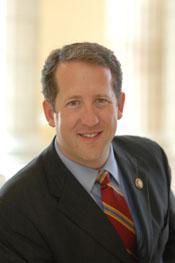
U.S. Representative for Nebraska’s 3rd district
Republican
119th Congress, two-year term
Missed 1.6% of roll calls. Chamber median 1.9%.
The full voting recordCounts roll calls where most Democrats and most Republicans voted differently, leaving out procedural votes.
How we countFrom FEC filings, Voteview roll calls and Congress.gov.
Republican. In Congress since 2007, 10 terms in total.
Following saves Smith to your list, which Chamber & Street keeps on its server, linked to a cookie on this browser and not to your name or email. Email alerts will come with constituent verification.
Bills and resolutions Smith signed on to as a cosponsor. An original cosponsor signed on the day the bill was introduced. Source: govinfo bill status files, last updated Nov 6, 2026.
Protecting the Right to Keep and Bear Arms Act of 2025
Sponsor Michael Cloud (R). Joined Mar 26, 2025. 36 cosponsors. H.R. 2039 on Congress.gov
Introduced
Protecting the Right to Keep and Bear Arms Act of 2025
This bill prohibits (1) the President or the Department of Health and Human Services from declaring emergencies or disasters for the purpose of imposing gun control; and (2) a federal officer or employee, or person operating under color of federal law or receiving federal funds, from banning the possession, manufacture, sale, or transfer of weapons to which the Second Amendment of the Constitution applies, ammunition, or firearm accessories while acting in support of relief from a major disaster or emergency.
Mikaela Naylon Give Kids a Chance Act
Sponsor Michael McCaul (R). Joined Mar 26, 2025. 313 cosponsors. H.R. 1262 on Congress.gov(opens in a new tab)
Passed the House
Give Kids a Chance Act of 2025
This bill expands the Food and Drug Administration’s (FDA’s) authority with respect to research on rare pediatric diseases, including by permitting the FDA to take enforcement action against drug sponsors that fail to satisfy pediatric study requirements and by reauthorizing programs that support pediatric research.
Specifically, the bill
• modifies requirements relating to molecularly targeted pediatric cancer investigations to permit research on new drugs in combination with active ingredients that have already been approved, provided certain conditions are met;
• permits the FDA to take enforcement action against drug sponsors that fail to comply with pediatric study requirements, if such sponsors demonstrated a lack of due diligence in satisfying the requirement;
• renews the FDA’s authority to award priority review vouchers to sponsors of new products intended to treat rare pediatric diseases through September 30, 2029; and
• reauthorizes through FY2027 certain funding for the National Institutes of Health to support priority pediatric research.
The bill also provides statutory authority for the FDA’s interpretation of the orphan drug exclusivity period. The bill specifies, consistent with FDA regulations, that the seven-year market exclusivity period for drugs for rare diseases or conditions (i.e., orphan drugs) prohibits the approval of the same drug for the same approved use or indication with respect to the disease or condition. (In Catalyst Pharmaceuticals, Inc. v. Becerra, a court rejected the FDA’s interpretation and held that orphan drug exclusivity extends to all uses or indications for the disease or condition.)
LEOSA Reform Act
Sponsor Don Bacon (R). Joined Mar 25, 2025. 18 cosponsors. H.R. 2243 on Congress.gov(opens in a new tab)
Passed the House
LEOSA Reform Act of 2025
This bill broadens the authority for certain law enforcement officers to carry concealed firearms across state lines.
Specifically, the bill allows qualified active and retired law enforcement officers to carry concealed firearms and ammunition (including magazines) in school zones; in national parks; on state, local, or private property that is open to the public; and in certain federal facilities that are open to the public.
Further, the bill permits states to reduce the frequency with which retired law enforcement officers must meet certain qualification standards.
Protecting America’s Seniors’ Access to Care Act
Sponsor Michelle Fischbach (R). Joined Mar 25, 2025. 26 cosponsors. H.R. 1303 on Congress.gov(opens in a new tab)
Introduced
Protecting America’s Seniors’ Access to Care Act
This bill prohibits administration, implementation, or enforcement of the rule titled Medicare and Medicaid Programs; Minimum Staffing Standards for Long-Term Care Facilities and Medicaid Institutional Payment Transparency Reporting, which was issued by the Centers for Medicare & Medicaid Services on May 10, 2024.
Specifically, the bill prohibits administration, implementation, or enforcement of provisions that, among other changes, (1) establish minimum staffing standards for nurses in Medicare and Medicaid long-term care facilities, including requiring a nurse to be onsite 24/7 and requiring a minimum of 3.48 total nurse staffing hours per resident per day; and (2) require state Medicaid programs to report on payments to direct care workers and support staff of nursing facilities and intermediate care facilities for individuals with intellectual disabilities.
No Deductions for Marijuana Businesses Act
Sponsor Jodey Arrington (R). Joined Mar 21, 2025. 12 cosponsors. H.R. 1447 on Congress.gov(opens in a new tab)
Introduced
Expressing the sense that Congress and the administration must work together, with urgency, to pursue effective food and agricultural trade policies.
Sponsor Dusty Johnson (R). Original cosponsor. 19 cosponsors. H.Res. 230 on Congress.gov(opens in a new tab)
Introduced
This resolution expresses the sense of Congress that Congress and the Administration must work together to pursue effective food and agricultural trade policies that include specified components. Among others, these components include (1) a renewed commitment to secure market access and maintain global competitiveness for the U.S. food and agriculture industries; and (2) consideration of comprehensive trade agreements, enforcement of existing trade agreements, and elimination of certain nontariff trade barriers.
Expressing support for the designation of March 18, 2025, as "National Agriculture Day" and celebrating the importance of agriculture as one of the most impactful industries in the United States.
Sponsor Mark Alford (R). Original cosponsor. 44 cosponsors. H.Res. 227 on Congress.gov(opens in a new tab)
Introduced
This resolution supports the designation of National Agriculture Day.
To amend the Internal Revenue Code of 1986 to restore the taxable REIT subsidiary asset test.
Sponsor Mike Kelly (R). Original cosponsor. 20 cosponsors. H.R. 2198 on Congress.gov(opens in a new tab)
Introduced
FOCA Act of 2025
Sponsor Clay Higgins (R). Original cosponsor. 107 cosponsors. H.R. 2126 on Congress.gov(opens in a new tab)
Introduced
Fair and Open Competition Act of 2025 or the FOCA Act of 2025
This bill requires that federal contracts for construction projects neither require nor prohibit a bidder, offeror, contractor, or subcontractor from entering into agreements with one or more labor organizations with respect to such projects or related projects.
Under the bill, the controlling documents for federal construction contracts (such as bid specifications and project agreements) may not require or prohibit a bidder, offeror, contractor, or subcontractor from entering into or adhering to such labor agreements. Additionally, the controlling documents may not discriminate against or give preference to a bidder, offeror, contractor, or subcontractor who signs or refuses to sign such a labor agreement.
These requirements also apply to any (1) construction manager acting on behalf of the federal government with respect to such contract, (2) recipient of a federal grant or financial assistance for construction projects or construction manager acting on the recipient's behalf, and (3) party to a federal cooperative agreement for construction projects or construction managers acting on the party's behalf.
An agency may exempt a project from this prohibition to avert an imminent threat to public health or safety or to serve the national security.
Second Chances for Rural Hospitals Act
Sponsor Jodey Arrington (R). Joined Mar 14, 2025. 9 cosponsors. H.R. 1775 on Congress.gov(opens in a new tab)
Introduced
Second Chances for Rural Hospitals Act
This bill allows additional hospitals to qualify as rural emergency hospitals (REHs) under Medicare.
In 2020, Congress established REHs as a new Medicare provider designation for hospitals in rural areas providing emergency department services, observation care, and other outpatient medical and health services for which the annual per patient average length of stay does not exceed 24 hours. These hospitals must have been open as of December 27, 2020, in order to qualify for the new REH designation.
The bill allows hospitals that were open between January 1, 2014, and December 26, 2020, to also qualify for the REH designation, and it provides for a specific payment structure for these hospitals. The bill's changes take effect beginning in 2027.
Prevent Interruptions in Physical Therapy Act of 2025
Sponsor Gus Bilirakis (R). Joined Mar 14, 2025. 63 cosponsors. H.R. 1517 on Congress.gov(opens in a new tab)
Introduced
Prevent Interruptions in Physical Therapy Act of 2025
This bill allows a physical therapist to receive payment under Medicare for services provided to the physical therapist's patients by another physical therapist through a qualifying temporary arrangement, regardless of the geographic area or population served. Currently, physical therapists may only receive payment with respect to such arrangements for services provided in medically underserved, rural, or health professional shortage areas.
FARMLAND Act of 2025
Sponsor Randy Feenstra (R). Joined Mar 11, 2025. 19 cosponsors. H.R. 1920 on Congress.gov(opens in a new tab)
Introduced
Foreign Agricultural Restrictions to Maintain Local Agriculture and National Defense Act of 2025 or the FARMLAND Act of 2025
This bill expands federal authority and oversight over foreign investments in the U.S. agricultural industry.
The bill expands the authority of the Committee on Foreign Investment in the United States (CFIUS) to include the review of land transactions (involving foreign entities) that exceed $5 million or 320 acres of land over the preceding three years. This applies to land that is primarily used for agriculture, the extraction of energy sources, or the extraction of critical precursor materials for biological technology industries, information technology components, or national defense technologies. Further, the bill adds the Secretary of Agriculture and the Commissioner of Food and Drugs to CFIUS membership. As background, CFIUS is an interagency committee that oversees the national security risks of certain foreign direct investment in the U.S. economy, including by reviewing certain real estate transactions.
Further, the bill expands enforcement of the Agricultural Foreign Investment Disclosure Act (AFIDA). The Department of Agriculture (USDA) must appoint a Chief of Operations of Investigative Actions to (1) monitor AFIDA compliance, and (2) conduct investigations on efforts to steal agricultural knowledge and technology and to disrupt the U.S. agricultural base.
The bill prohibits foreign persons who own or operate land from participating in Farm Service Agency programs and establishes penalties for violators.
The bill also requires USDA and the Department of Homeland Security to jointly develop a database of agricultural land owned by foreign persons.
Protecting American Agriculture from Foreign Adversaries Act of 2025
Sponsor Dan Newhouse (R). Joined Mar 11, 2025. 60 cosponsors. H.R. 1576 on Congress.gov(opens in a new tab)
Introduced
Protecting American Agriculture from Foreign Adversaries Act of 2025
This bill makes changes to the Committee on Foreign Investment in the United States (CFIUS), including by requiring CFIUS to determine whether a national security review is necessary for reportable agricultural land transactions that are referred by the Department of Agriculture (USDA). (CFIUS oversees the national security risks of certain foreign investment in the United States. CFIUS has the authority to review covered transactions, which include mergers, acquisitions, and takeovers that could result in foreign control of a U.S. business; certain investments in businesses involved in critical technologies, critical infrastructure, or sensitive personal data; and certain real estate transactions.)
Specifically, the bill directs CFIUS to, after receiving notification from USDA, determine (1) whether a reportable agricultural land transaction is a covered transaction, and (2) whether CFIUS should initiate a national security review or take another action with respect to the transaction.
Reportable agricultural land transaction means a transaction (1) that USDA has reason to believe is a covered transaction; (2) that involves the acquisition of an interest in agricultural land by a foreign person of China, North Korea, Russia, or Iran; and (3) with respect to which a foreign person is required to submit a report to USDA regarding their agricultural land transactions.
The bill also expands the membership of CFIUS to include the Secretary of Agriculture for covered transactions that involve agricultural land, agricultural biotechnology, or the agriculture industry (e.g., agricultural transportation, storage, and processing).
Protect America’s Innovation and Economic Security from CCP Act
Sponsor Lance Gooden (R). Joined Mar 11, 2025. 13 cosponsors. H.R. 1468 on Congress.gov(opens in a new tab)
Passed committee
Protect America’s Innovation and Economic Security from CCP Act
This bill reestablishes an initiative in the National Security Division of the Department of Justice (DOJ) to combat espionage, theft of intellectual property and trade secrets, and threats to critical infrastructure posed by the Chinese government. A similar initiative was launched in 2018 and discontinued in 2022.
Specifically, this bill establishes the CCP (Chinese Communist Party) Initiative and sets forth its objectives, including to curb spying by the Chinese Communist Party on U.S. intellectual property and academic institutions; develop an enforcement strategy for technology transfers by nontraditional collectors (e.g., researchers in labs or at universities) to Chinese individuals and entities or their agents contrary to U.S. interests; and address China-related risks arising from foreign investments in U.S. businesses and real estate.
The bill further specifies that the CCP Initiative must prioritize the identification and prosecution of trade secret theft, hacking, and economic espionage; the protection of critical infrastructure in the United States; and the identification of intellectual property theft from U.S. businesses.
Under the bill, the CCP Initiative terminates six years after enactment.
Providing for congressional disapproval under chapter 8 of title 5, United States Code, of the rule submitted by the Internal Revenue Service relating to Rules for Supervisory Approval of Penalties.
Sponsor Glenn Grothman (R). Joined Mar 11, 2025. 8 cosponsors. H.J.Res. 65 on Congress.gov(opens in a new tab)
Introduced
This joint resolution nullifies the rule titled Rules for Supervisory Approval of Penalties, which was issued by the Internal Revenue Service (IRS) on December 23, 2024. The rule addresses the timing of supervisory approvals required for certain federal tax penalties assessed by the IRS.
Recognizing the importance of stepped-up basis under section 1014 of the Internal Revenue Code of 1986 in preserving family-owned farms and small businesses.
Sponsor Tracey Mann (R). Original cosponsor. 29 cosponsors. H.Res. 206 on Congress.gov(opens in a new tab)
Introduced
This resolution supports preserving the stepped-up basis of certain inherited assets (such as land, equipment, or buildings), opposes any efforts to impose new taxes on family farms or small businesses, and recognizes the importance of generational transfers of farm and family-owned businesses.
As background, the basis for federal tax purposes of certain inherited assets is reset (or stepped up) from the original cost basis to the fair market value of the asset on the date of the previous owner’s death. Thus, any gain or loss on the subsequent sale of an inherited asset generally is calculated based on the asset’s stepped-up basis (and not the original cost basis).
American Innovation and R&D Competitiveness Act of 2025
Sponsor Ron Estes (R). Original cosponsor. 81 cosponsors. H.R. 1990 on Congress.gov(opens in a new tab)
Introduced
Tanning Tax Repeal Act of 2025
Sponsor Carol Miller (R). Joined Mar 10, 2025. 26 cosponsors. H.R. 1940 on Congress.gov(opens in a new tab)
Introduced
Tanning Tax Repeal Act of 2025
This bill repeals the 10% excise tax imposed on the amount paid for indoor tanning services.
Anti-CBDC Surveillance State Act
Sponsor Tom Emmer (R). Original cosponsor. 135 cosponsors. H.R. 1919 on Congress.gov(opens in a new tab)
Passed the House
Anti-CBDC Surveillance State Act
This bill prohibits a Federal Reserve bank from offering products or services directly to an individual, maintaining an account on behalf of an individual, or issuing a central bank digital currency (i.e., a digital dollar). Further, the Board of Governors of the Federal Reserve System is prohibited from using a central bank digital currency to implement monetary policy or from testing, studying, creating, or implementing a central bank digital currency, with exceptions as provided by the bill.
Protecting American Students Act
Sponsor Vern Buchanan (R). Original cosponsor. 8 cosponsors. H.R. 1905 on Congress.gov(opens in a new tab)
Introduced
Saving Gig Economy Taxpayers Act
Sponsor Carol Miller (R). Original cosponsor. 31 cosponsors. H.R. 1882 on Congress.gov(opens in a new tab)
Introduced
United States-Israel Defense Partnership Act of 2025
Sponsor Joe Wilson (R). Joined Mar 5, 2025. 178 cosponsors. H.R. 1229 on Congress.gov(opens in a new tab)
Introduced
United States-Israel Defense Partnership Act of 2025
This bill requires or authorizes certain actions to increase defense-related cooperation between the United States and Israel.
Specifically, the bill requires the Department of Defense (DOD) to
• establish a cooperative program, with the concurrence of Israel's Ministry of Defense (MOD), to develop and deploy advanced technologies for countering unmanned systems that threaten the United States and Israel;
• establish in Israel an office of the Defense Innovation Unit (an organization that focuses on rapidly fielding and scaling commercial technology across the U.S. military); and
• seek to engage Israel's MOD on the ascension of Israel into the national technology and industrial base (currently defined in law as the persons and organizations engaged in research, development, production, integration, services, or information technology activities conducted within the United States, the United Kingdom, Australia, New Zealand, and Canada).
The bill authorizes DOD, upon request of Israel's MOD, to jointly conduct research, development, test, and evaluation (RDT&E) of emerging technologies such as artificial intelligence and robotics to meet defense challenges.
Additionally, the bill extends the authority for DOD to (1) carry out RDT&E on a joint basis with Israel to establish anti-tunnel and counter unmanned aerial systems capabilities through 2028, and (2) transfer defense articles intended for use as reserve stocks for Israel through January 1, 2029.
Protecting Privacy in Purchases Act
Sponsor Riley Moore (R). Joined Mar 4, 2025. 132 cosponsors. H.R. 1181 on Congress.gov(opens in a new tab)
Passed the House
Protecting Privacy in Purchases Act
This bill prohibits payment card networks from using merchant codes that distinguish firearms retailers from general-merchandise retailers or sporting-goods retailers.
The Department of Justice must enforce this bill and report annually on the resulting investigations and cases.
American Innovation Act of 2025
Sponsor Vern Buchanan (R). Original cosponsor. 18 cosponsors. H.R. 1778 on Congress.gov(opens in a new tab)
Introduced
Federal Firearms Licensee Protection Act of 2025
Sponsor John Rutherford (R). Original cosponsor. 145 cosponsors. H.R. 1773 on Congress.gov(opens in a new tab)
Introduced
Federal Firearms Licensee Protection Act of 2025
This bill modifies criminal penalties for an offense involving the theft of a firearm from a licensed importer, manufacturer, or dealer, or from their business premises.
Specifically, the bill does the following:
• increases from 10 to 20 years the maximum prison term, and
• creates a 3- or 5-year mandatory minimum prison term for an offense that occurs during the commission of a burglary or robbery.
An attempt to commit an offense is subject to the same penalties as a substantive offense.