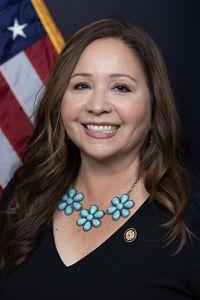
U.S. Representative for Arizona’s 7th district
Democrat
119th Congress, two-year term
Missed 1.3% of roll calls. Chamber median 1.9%.
The full voting recordCounts roll calls where most Democrats and most Republicans voted differently, leaving out procedural votes.
How we countFrom FEC filings, Voteview roll calls and Congress.gov.
Democrat. In Congress since 2025, 1 term in total.
Following saves Grijalva to your list, which Chamber & Street keeps on its server, linked to a cookie on this browser and not to your name or email. Email alerts will come with constituent verification.
Bills and resolutions Grijalva signed on to as a cosponsor. An original cosponsor signed on the day the bill was introduced. Source: govinfo bill status files, last updated Nov 6, 2026.
Stronger Communities through Better Transit Act
Sponsor Henry Johnson (D). Joined Nov 20, 2025. 150 cosponsors. H.R. 3449 on Congress.gov
Introduced
Stronger Communities through Better Transit Act
This bill requires the Department of Transportation (DOT) to establish a grant program to support operating projects for public transportation and related service improvements, particularly in underserved communities and areas of persistent poverty.
Specifically, the bill requires DOT to allocate funding under the program for urbanized areas, states, and Indian tribes that are recipients of funds under either the Federal Transit Administration's (FTA's) Urbanized Area Formula Funding program or Formula Grants for Rural Areas program. Eligible recipients may use funding for operating costs associated with projects that improve public transportation service for transit-dependent populations and support increased transit ridership (e.g., service expansion, information technology enhancements, and workforce development). DOT must apportion the funding so that recipients receive funds that are proportional to their share of operating costs.
The bill also provides for an increased federal cost share for operating assistance for projects or programs carried out in areas of persistent poverty or underserved communities.
DOT must set up a multimodal access measurement interface for public agencies to aid transit agencies in determining and reporting on access to jobs and essential services.
A grant recipient must (1) report specific information to the FTA for inclusion in the National Transit Database, and (2) survey transit riders and non-riding residents regarding transit service improvements.
Further, the bill expands the purposes of the public transportation programs to include supporting public transportation's role in combating climate change through growing/retaining transit ridership.
Water Affordability, Transparency, Equity, and Reliability Act of 2025
Sponsor Bonnie Watson Coleman (D). Joined Nov 20, 2025. 90 cosponsors. H.R. 3376 on Congress.gov(opens in a new tab)
Introduced
Medicare for All Act
Sponsor Pramila Jayapal (D). Joined Nov 20, 2025. 118 cosponsors. H.R. 3069 on Congress.gov(opens in a new tab)
Introduced
Medicare for All Act
This bill establishes a national health insurance program that is administered by the Department of Health and Human Services (HHS).
Among other requirements, the program must (1) cover all U.S. residents; (2) provide for automatic enrollment of individuals upon birth or residency in the United States; and (3) cover items and services that are medically necessary or appropriate to maintain health or to diagnose, treat, or rehabilitate a health condition, including hospital services, prescription drugs, mental health and substance abuse treatment, dental and vision services, long-term care, gender affirming care, and reproductive care, including contraception and abortions.
The bill prohibits cost-sharing (e.g., deductibles, coinsurance, and copayments) and other charges for covered services. Additionally, private health insurers and employers may only offer coverage that is supplemental to, and not duplicative of, benefits provided under the program.
Health insurance exchanges and specified federal health programs terminate upon program implementation. However, the program does not affect coverage provided through the Department of Veterans Affairs or the Indian Health Service.
The bill also establishes a series of implementing provisions relating to (1) health care provider participation; (2) HHS administration; and (3) payments and costs, including the requirement that HHS negotiate prices for prescription drugs.
Individuals who are age 18 or younger, age 55 or older, or already enrolled in Medicare may enroll in the program starting one year after enactment of this bill; other individuals may buy into the program at this time. The program must be fully implemented two years after enactment.
Raise the Wage Act of 2025
Sponsor Robert Scott (D). Joined Nov 20, 2025. 177 cosponsors. H.R. 2743 on Congress.gov(opens in a new tab)
Introduced
Richard L. Trumka Protecting the Right to Organize Act of 2025
Sponsor Robert Scott (D). Joined Nov 20, 2025. 217 cosponsors. H.R. 20 on Congress.gov(opens in a new tab)
Introduced
Social Security Expansion Act
Sponsor Val Hoyle (D). Joined Nov 20, 2025. 41 cosponsors. H.R. 1700 on Congress.gov(opens in a new tab)
Introduced
Social Security Expansion Act
This bill increases Social Security benefits, expands Social Security payroll taxes, and makes other changes to the Social Security program.
Specifically, the bill changes the way Social Security benefits are calculated by increasing the primary insurance amount applicable to average monthly earnings that fall below a specified amount, and increasing bend points for individuals who become eligible for Social Security after 2025. (Bend points are dollar amounts at which earnings are segmented for the purpose of calculating an individual’s primary insurance amount. The share of an individual’s earnings that are replaced by Social Security decreases at each escalating bend point.)
The bill also revises the method of calculating cost-of-living adjustments to account for the spending of individuals over the age of 62 and establishes a new minimum benefit for certain low earners. Further, the bill permits full-time students who are the children of deceased or disabled workers to collect Social Security or railroad retirement child’s benefits until they reach age 22.
With respect to taxes, the bill extends payroll taxes on wages, salaries, and self-employment earnings to income above $250,000. (In 2025, the maximum amount subject to Social Security payroll tax is $176,100.) The bill also increases the net investment income tax and subjects active trade or business income to this tax.
Finally, the bill combines the existing Federal Old-Age and Survivors Insurance Trust Fund and the Federal Disability Insurance Trust Fund into a single Social Security Trust Fund.
American Dream and Promise Act of 2025
Sponsor Sylvia Garcia (D). Joined Nov 20, 2025. 221 cosponsors. H.R. 1589 on Congress.gov(opens in a new tab)
Introduced
American Dream and Promise Act of 2025
This bill provides certain non-U.S. nationals (aliens under federal law) with a path to receive permanent resident status and contains other immigration-related provisions.
The Department of Homeland Security (DHS) or the Department of Justice (DOJ) shall provide conditional permanent resident status for 10 years to a qualifying individual who entered the United States as a minor and (1) is deportable or inadmissible, (2) has deferred enforced departure (DED) status or temporary protected status (TPS), or (3) is the child of certain classes of nonimmigrants. The bill imposes various qualifying requirements, such as the individual being continuously physically present in the United States since January 1, 2021, passing a background check, and being enrolled in or having completed certain educational programs.
DHS shall remove the conditions placed on permanent resident status granted under this bill if the individual applies and meets certain requirements, such as completing certain programs at an educational institution, serving in the military, or being employed.
Furthermore, DHS or DOJ shall provide lawful permanent resident status to certain individuals who had TPS, were eligible for TPS, or were eligible for DED status on certain dates. Such individuals must meet certain requirements and apply for such status within three years of this bill's enactment.
This bill also repeals a restriction that bars a state from providing higher education benefits to undocumented individuals unless those benefits are available to all U.S. nationals without regard to residency in the state.
Equality Act
Sponsor Mark Takano (D). Joined Nov 20, 2025. 218 cosponsors. H.R. 15 on Congress.gov(opens in a new tab)
Introduced
Equality Act
This bill prohibits discrimination based on sex, sexual orientation, or gender identity with respect to businesses, employment, housing, federally funded programs, and other settings.
Specifically, the bill expands Title II and Title VI of the Civil Rights Act of 1964 to prohibit public accommodations and federally funded programs, respectively, from discriminating based on sex, sexual orientation, or gender identity. It also includes stores, transit services, recreational facilities, and establishments that provide health care, accounting, or legal services as public accommodations under Title II.
The bill also expands Title IV (desegregation of public schools) and Title VII (employment discrimination) to specifically include sexual orientation and gender identity. (The Supreme Court held in Bostock v. Clayton County that Title VII's prohibition of employment discrimination based on sex also prohibits employment discrimination based on sexual orientation or gender identity.)
The bill similarly expands the Fair Housing Act (discrimination in public and private housing) to include sexual orientation and gender identity. It also prohibits discrimination based on sexual orientation or gender identity by creditors and with respect to jury selection.
The bill defines sex for purposes of the aforementioned provisions to include sex stereotypes, pregnancy, childbirth, sexual orientation, gender identity, and sex characteristics.
QUIET Act
Sponsor Eric Sorensen (D). Joined Nov 20, 2025. 28 cosponsors. H.R. 1027 on Congress.gov(opens in a new tab)
Introduced
Quashing Unwanted and Interruptive Electronic Telecommunications Act or the QUIET Act
This bill establishes a disclosure requirement for robocalls that use artificial intelligence (AI) to emulate a human being and increases forfeiture and fine amounts for certain violations of the Telephone Consumer Protection Act (TCPA). (The TCPA prohibits certain telemarketing calls made without the recipient’s consent and using specified automated technologies.)
Specifically, any robocall that uses AI to emulate a human being must include a disclosure at the beginning of the message indicating that AI is being used. Under the bill, robocalls are defined as calls made or text messages sent (1) using automatic dialing technology, or (2) using an artificially generated message or an artificial or prerecorded voice. Calls or texts that are made or sent using equipment that requires substantial human intervention are excluded.
Further, the bill doubles the maximum forfeiture penalty and criminal fine that may be imposed for certain violations of the TCPA involving the use of AI to impersonate an individual or entity with the intent to defraud, cause harm, or wrongfully obtain anything of value. This provision applies to violations that occur after the bill’s enactment.
Expressing the sense of the House of Representatives that the Congress should enact the Older Americans Bill of Rights to establish that older Americans should have the right to live with dignity and with independence.
Sponsor Janice Schakowsky (D). Joined Nov 19, 2025. 31 cosponsors. H.Res. 465 on Congress.gov(opens in a new tab)
Introduced
National Guard Proper Use Act
Sponsor Andrea Salinas (D). Joined Nov 19, 2025. 32 cosponsors. H.R. 5604 on Congress.gov(opens in a new tab)
Introduced
National Guard Proper Use Act
This bill prohibits, in accordance with the Posse Comitatus Act, members of the Armed Forces and members of the National Guard from being ordered to enforce immigration laws. Generally, the Posse Comitatus Act prohibits the use of the military for civil law enforcement purposes.
MORE Act
Sponsor Jerrold Nadler (D). Joined Nov 19, 2025. 74 cosponsors. H.R. 5068 on Congress.gov(opens in a new tab)
Introduced
Marijuana Opportunity Reinvestment and Expungement Act or the MORE Act
This bill decriminalizes marijuana.
Specifically, it removes marijuana from the list of scheduled substances under the Controlled Substances Act and eliminates criminal penalties for an individual who manufactures, distributes, or possesses marijuana.
The bill replaces statutory references to marijuana and marihuana with cannabis.
The bill also makes changes related to the economic impact of decriminalization, including the following:
• requires the Bureau of Labor Statistics to regularly publish demographic data on cannabis business owners and employees,
• establishes a trust fund to support various programs and services for individuals and businesses in communities impacted by the war on drugs,
• imposes an excise tax on cannabis products produced in or imported into the United States and an occupational tax on cannabis production facilities and export warehouses, and
• makes Small Business Administration loans and services available to entities that are cannabis-related legitimate businesses or service providers.
The bill also makes changes to other federal programs and legal processes to account for decriminalization, including the following:
• prohibits the denial of federal public benefits to a person on the basis of certain cannabis-related conduct or convictions,
• prohibits the denial of benefits and protections under immigration laws on the basis of an event (e.g., conduct or conviction) relating to possession or use of cannabis that is no longer prohibited under the bill, and
• establishes a process to expunge convictions and conduct sentencing review hearings related to federal cannabis offenses.
FEMA Critical Staffing Act
Sponsor Greg Casar (D). Joined Nov 19, 2025. 13 cosponsors. H.R. 4992 on Congress.gov(opens in a new tab)
Introduced
Protecting Health Care and Lowering Costs Act of 2025
Sponsor Adam Gray (D). Joined Nov 19, 2025. 142 cosponsors. H.R. 4849 on Congress.gov(opens in a new tab)
Introduced
Protecting Health Care and Lowering Costs Act 2025
This bill makes permanent temporary provisions that generally expand eligibility for and increase the amount of the premium tax credit. This bill also repeals multiple Medicaid, Medicare, and health-related tax provisions enacted by the One Big Beautiful Bill Act (OBBBA).
Currently, eligible taxpayers may claim the premium tax credit, which applies toward the cost of obtaining health insurance through health insurance exchanges. To qualify, a taxpayer’s household income must meet or exceed 100% of the federal poverty level (FPL) and, after 2025, may not exceed 400% of the FPL (maximum income limit). For 2021-2025, the maximum income limit is eliminated, which generally expands eligibility for the premium tax credit.
Further, under current law, the amount of the premium tax credit is partially based on the taxpayer’s household income multiplied by the applicable percentage. The applicable percentage varies depending on which of six income ranges (adjusted for inflation after 2025) the taxpayer’s household income falls within. For 2021-2025, the applicable percentages are lowered and the adjustment of the applicable percentages for inflation is eliminated, which generally increases the amount of the premium tax credit.
The bill permanently eliminates the 400% maximum income limit, lowers the applicable percentages, and eliminates the inflation adjustment for the applicable percentages.
Finally, the bill repeals multiple Medicaid, Medicare, and health-related tax provisions enacted by the OBBBA, including
• certain Medicare and Medicare eligibility and verification requirements,
• the reduced window for retroactive Medicaid coverage, and
• premium tax credit verification requirements.
Gun Violence Prevention Research Act of 2025
Sponsor Marilyn Strickland (D). Joined Nov 19, 2025. 54 cosponsors. H.R. 4821 on Congress.gov(opens in a new tab)
Introduced
Gun Violence Prevention Research Act of 2025
This bill authorizes the Centers for Disease Control and Prevention to conduct or support research on firearms safety or gun violence prevention.
Housing Is a Human Right Act of 2025
Sponsor Pramila Jayapal (D). Joined Nov 19, 2025. 30 cosponsors. H.R. 4457 on Congress.gov(opens in a new tab)
Introduced
Asunción Valdivia Heat Illness, Injury, and Fatality Prevention Act of 2025
Sponsor Judy Chu (D). Joined Nov 19, 2025. 146 cosponsors. H.R. 4443 on Congress.gov(opens in a new tab)
Introduced
Expanding Access to Mental Health Services in Schools Act of 2025
Sponsor Rosa DeLauro (D). Joined Nov 19, 2025. 130 cosponsors. H.R. 4253 on Congress.gov(opens in a new tab)
Introduced
No Secret Police Act of 2025
Sponsor Daniel Goldman (D). Joined Nov 19, 2025. 130 cosponsors. H.R. 4176 on Congress.gov(opens in a new tab)
Introduced
My Body, My Data Act of 2025
Sponsor Sara Jacobs (D). Joined Nov 19, 2025. 101 cosponsors. H.R. 3916 on Congress.gov(opens in a new tab)
Introduced
College for All Act of 2025
Sponsor Pramila Jayapal (D). Joined Nov 19, 2025. 78 cosponsors. H.R. 3543 on Congress.gov(opens in a new tab)
Introduced
College for All Act of 2025
This bill establishes measures to expand access to higher education, including by eliminating tuition and required fees for eligible students, revising the Federal Pell Grant program, and reauthorizing certain programs to assist students from disadvantaged backgrounds.
Specifically, the bill provides funding to enable states and tribal colleges and universities, through a federal-state partnership, to eliminate tuition and required fees for (1) all students at community colleges and two-year tribal colleges and universities, and (2) working- and middle-class students at four-year public institutions of higher education and tribal colleges and universities.
The bill provides funding to enable private, nonprofit historically Black colleges and universities and minority-serving institutions to eliminate tuition and required fees for eligible students.
The bill permanently reauthorizes and otherwise revises the Federal Pell Grant program by
• providing funding to increase the maximum award for each eligible student,
• increasing the duration limit for the use of Pell Grants,
• allowing students to use their awards to cover living and nontuition expenses, and
• expanding eligibility to Dreamer students (i.e., students who have been granted Deferred Action for Childhood Arrivals status and who entered the United States before the age of 16) and students with other immigration statuses.
Further, the bill requires the Department of Education to award grants to eligible states and tribal colleges and universities for improving student outcomes.
The bill reauthorizes through FY2035 the Federal TRIO Programs and reauthorizes through FY2029 the Gaining Early Awareness and Readiness for Undergraduate Programs.
Children Don't Belong on Tobacco Farms Act
Sponsor Rosa DeLauro (D). Joined Nov 19, 2025. 64 cosponsors. H.R. 3335 on Congress.gov(opens in a new tab)
Introduced
PREP Act
Sponsor Donald Beyer (D). Joined Nov 19, 2025. 21 cosponsors. H.R. 3094 on Congress.gov(opens in a new tab)
Introduced
REHIRE Act
Sponsor Donald Beyer (D). Joined Nov 19, 2025. 26 cosponsors. H.R. 3093 on Congress.gov(opens in a new tab)
Introduced
Arts Education for All Act
Sponsor Suzanne Bonamici (D). Joined Nov 19, 2025. 43 cosponsors. H.R. 2485 on Congress.gov(opens in a new tab)
Introduced
Arts Education for All Act
This bill expands arts education and programming for children in early education, K-12 students, and juveniles and adults in the criminal justice system.
Specifically, the bill allows Child Care and Development Block Grant funding to be used for additional activities, including arts programming.
Additionally, the bill addresses arts programming in elementary and secondary schools by
• directing each state educational agency to include information on arts programming in its state plan, including how it will integrate arts education instruction into the curriculum and increase the number of arts teachers in schools;
• requiring state report cards to include information on arts courses;
• requiring local educational agency (LEA) plans to describe how the LEA will encourage the use of arts education to improve student achievement; and
• allowing certain funds to be used for professional development for arts teachers.
The bill directs the National Center for Education Research to carry out research on the use of arts and arts education in elementary and secondary schools, including in low-performing schools. Further, the National Center for Education Statistics must compile data on arts education.
The National Assessment of Educational Progress must include a specified arts assessment.
The bill requires a state's juvenile justice and delinquency plan to describe how the state will coordinate services and activities for juvenile justice and delinquency prevention with arts agencies and arts organizations. Additionally, grants for adult offender reentry demonstration projects may be used for facilitating arts education.