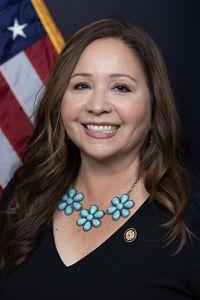
U.S. Representative for Arizona’s 7th district
Democrat
119th Congress, two-year term
Missed 1.3% of roll calls. Chamber median 1.9%.
The full voting recordCounts roll calls where most Democrats and most Republicans voted differently, leaving out procedural votes.
How we countFrom FEC filings, Voteview roll calls and Congress.gov.
Democrat. In Congress since 2025, 1 term in total.
Following saves Grijalva to your list, which Chamber & Street keeps on its server, linked to a cookie on this browser and not to your name or email. Email alerts will come with constituent verification.
Bills and resolutions Grijalva signed on to as a cosponsor. An original cosponsor signed on the day the bill was introduced. Source: govinfo bill status files, last updated Nov 6, 2026.
National Plan for Epilepsy Act
Sponsor Jim Costa (D). Joined Feb 3, 2026. 101 cosponsors. H.R. 1189 on Congress.gov
Introduced
National Plan for Epilepsy Act
This bill requires the Department of Health and Human Services (HHS) to establish a national plan, form an advisory council, and take other actions to address epilepsy. The requirements sunset on December 31, 2035.
Specifically, the bill requires HHS to carry out a National Plan for Epilepsy to prevent, diagnose, treat, and cure epilepsy. In carrying out the plan, HHS must implement activities such as coordinating research and services across all federal agencies and soliciting public comments.
Also, HHS must establish an Advisory Council on Epilepsy Research, Care, and Services. The advisory council must report to HHS and Congress every two years with an evaluation of federally funded efforts.
Additionally, HHS must annually report to Congress with recommended actions based on its assessments of the nation’s progress on epilepsy.
Safe Schools Improvement Act
Sponsor Linda Sánchez (D). Joined Feb 2, 2026. 218 cosponsors. H.R. 1810 on Congress.gov(opens in a new tab)
Introduced
Safe Schools Improvement Act
This bill requires states to direct their local educational agencies (LEAs) to establish policies that prevent and prohibit bullying and harassment of elementary and secondary school students. In particular, these policies must prohibit bullying and harassment based on race, color, national origin, disability, religion, or sex. Sex includes sexual orientation, gender identity, and sex characteristics (including intersex traits).
Further, LEAs must provide (1) students, parents, and educational professionals with annual notice of the conduct prohibited in their disciplinary policies; (2) students and parents with grievance procedures that target such conduct; and (3) the public with annual data on the incidence and frequency of that conduct at the school and LEA level.
The Department of Education must conduct and report on an independent biennial evaluation of programs and policies to combat bullying and harassment in elementary and secondary schools. The National Center for Education Statistics must collect state data to determine the incidence and frequency of the conduct prohibited by LEA disciplinary policies.
Digital Literacy and Equity Act of 2026
Sponsor Shri Thanedar (D). Original cosponsor. 1 cosponsor. H.R. 7302 on Congress.gov(opens in a new tab)
Introduced
International Human Rights Defense Act of 2025
Sponsor Robert Garcia (D). Joined Jan 30, 2026. 155 cosponsors. H.R. 6056 on Congress.gov(opens in a new tab)
Introduced
Tyler Clementi Higher Education Anti-Harassment Act of 2025
Sponsor Mark Pocan (D). Joined Jan 27, 2026. 174 cosponsors. H.R. 5486 on Congress.gov(opens in a new tab)
Introduced
Expanding Access to School Meals Act of 2025
Sponsor Josh Gottheimer (D). Joined Jan 27, 2026. 48 cosponsors. H.R. 2680 on Congress.gov(opens in a new tab)
Introduced
Expanding Access to School Meals Act of 2025
This bill increases student access to free school lunches and breakfasts under the National School Lunch Program and School Breakfast Program of the Department of Agriculture (USDA).
Specifically, the bill expands program eligibility to include students in households with income at or below 224% of the federal poverty level. (Currently, students in households with income at or below 130% are eligible.) The bill also eliminates the reduced price school lunch and breakfast programs and prohibits USDA from providing reimbursements for reduced price programs.
States may use Medicaid participation data to directly certify students for free school meals. (Direct certification allows schools to approve meals without the need for a separate application for children who receive assistance under other programs.) Under current law, states may apply to participate in a USDA demonstration project to directly certify children for free and reduced price meals based on household income data acquired through Medicaid.
Further, the bill increases the number of free meals a school in a high-poverty area may be reimbursed for at the free-meal rate under the Community Eligibility Provision. (This provision allows eligible schools, groups of schools, and school districts to offer free meals at no cost to all enrolled students without collecting separate applications.) Specifically, the bill increases from 1.6% to 2.5% the reimbursement multiplier, which is used to calculate how many meals USDA will reimburse the school for at the free meal rate.
Protecting Students with Disabilities Act
Sponsor John Mannion (D). Joined Jan 27, 2026. 39 cosponsors. H.R. 2333 on Congress.gov(opens in a new tab)
Introduced
Protecting Students with Disabilities Act
This bill prohibits the use of appropriated funds to eliminate the Department of Education's (ED's) oversight of the Individuals with Disabilities Education Act (IDEA). (The IDEA authorizes grant programs that support special education and early intervention services for children with disabilities. Currently, the IDEA is administered by the Office of Special Education Programs in the Office of Special Education and Rehabilitative Services in ED.)
Specifically, the bill prohibits the use of appropriated funds to eliminate, consolidate, or otherwise restructure any office within ED that administers or enforces programs under the IDEA.
Further, appropriated funds may not be used to (1) terminate, reassign, or alter the responsibilities of any personnel of any such office; or (2) contract with, or delegate to, any entity outside of ED to administer or enforce IDEA programs.
(On March 20, 2025, President Donald Trump signed an executive order titled Improving Education Outcomes by Empowering Parents, States, and Communities, calling for the closure of ED and giving authority over education to the states. Further, the Trump Administration has announced plans to transfer ED's oversight of services for students with disabilities to the Department of Health and Human Services.)
To end detention and electronic monitoring, and redirect funding to community-based wrap-around services.
Sponsor Delia Ramirez (D). Joined Jan 23, 2026. 16 cosponsors. H.R. 7190 on Congress.gov(opens in a new tab)
Introduced
Smithsonian National Museum of the American Latino Act
Sponsor Nicole Malliotakis (R). Joined Jan 20, 2026. 130 cosponsors. H.R. 1330 on Congress.gov(opens in a new tab)
Introduced
Impeaching Kristi Lynn Arnold Noem, Secretary of Homeland Security, for high crimes and misdemeanors.
Sponsor Robin Kelly (D). Joined Jan 16, 2026. 187 cosponsors. H.Res. 996 on Congress.gov(opens in a new tab)
Introduced
DHS Use of Force Oversight Act
Sponsor Delia Ramirez (D). Joined Jan 16, 2026. 29 cosponsors. H.R. 7119 on Congress.gov(opens in a new tab)
Introduced
Preparing And Retaining All (PARA) Educators Act
Sponsor Lucy McBath (D). Joined Jan 16, 2026. 67 cosponsors. H.R. 5476 on Congress.gov(opens in a new tab)
Introduced
Stop Body Camera Paywalls Act
Sponsor Rashida Tlaib (D). Original cosponsor. 16 cosponsors. H.R. 7125 on Congress.gov(opens in a new tab)
Introduced
DEFIANCE Act of 2025
Sponsor Alexandria Ocasio-Cortez (D). Joined Jan 15, 2026. 69 cosponsors. H.R. 3562 on Congress.gov(opens in a new tab)
Introduced
Disrupt Explicit Forged Images And Non-Consensual Edits Act of 2025 or the DEFIANCE Act of 2025
This bill expands civil remedies for the nonconsensual disclosure of intimate images (i.e., nonconsensual pornography). The bill also establishes a new federal civil action for nonconsensual conduct involving intimate digital forgeries (i.e., deepfakes). The term intimate digital forgery means any intimate visual depiction of an identifiable individual created using software, machine learning, artificial intelligence, or other computer-generated or technological means that looks authentic.
With respect to the nonconsensual disclosure of intimate images, current law allows an identifiable individual to recover civil remedies, including litigation costs, damages, and injunctive relief. This bill increases the available damages by allowing the individual to recover punitive damages and by including, as part of actual damages, profits of the defendant that are attributable to the conduct at issue.
The bill also allows an identifiable individual who is the subject of an intimate digital forgery to file a federal civil action against anyone who knowingly discloses, produces or possesses with intent to disclose, or solicits and receives the intimate digital forgery without the individual's consent. Under the bill, the identifiable individual may recover the same expanded civil remedies that are available for the nonconsensual disclosure of intimate images.
Finally, the bill establishes a 10-year statute of limitations for filing civil actions involving nonconsensual intimate digital forgeries or nonconsensual disclosure of intimate images. The statute begins to run when the individual discovers the violation or turns 18, whichever is later.
S.T.O.P. Illicit Vapes Act
Sponsor Herbert Conaway (D). Joined Jan 14, 2026. 10 cosponsors. H.R. 6845 on Congress.gov(opens in a new tab)
Introduced
Tobacco TRACE Act
Sponsor Herbert Conaway (D). Joined Jan 14, 2026. 5 cosponsors. H.R. 6844 on Congress.gov(opens in a new tab)
Introduced
Pay Paraprofessionals and Support Staff Act
Sponsor Jesús García (D). Original cosponsor. 25 cosponsors. H.R. 7032 on Congress.gov(opens in a new tab)
Introduced
Essential Caregivers Act of 2025
Sponsor Claudia Tenney (R). Joined Jan 13, 2026. 160 cosponsors. H.R. 6766 on Congress.gov(opens in a new tab)
Introduced
Essential Caregivers Act of 2025
This bill prohibits certain health care facilities from limiting the access of essential caregivers to residents of those facilities, including during designated emergency periods.
Specifically, the bill generally prohibits Medicare skilled nursing facilities, Medicaid nursing facilities, Medicaid intermediate care facilities, and associated inpatient rehabilitation facilities from restricting the access of essential caregivers to residents of the facilities, including during emergency periods in which visitation rights are otherwise restricted. During emergency periods, facilities may restrict access for an initial period of up to seven days and for one additional maximum seven-day period (if the additional period is approved by the state health department). Facilities may restrict access for a total of 7 days (or 14 days with the approval of the state health department) during an emergency period.
Essential caregivers must agree to comply with any safety protocols set by the facility, which may be no more stringent for caregivers compared to those for staff. Caregivers who fail to comply with these requirements may be denied access, subject to an appeals process.
CONNECT for Health Act of 2025
Sponsor Mike Thompson (D). Joined Jan 13, 2026. 248 cosponsors. H.R. 4206 on Congress.gov(opens in a new tab)
Introduced
Pecos Watershed Protection Act
Sponsor Teresa Leger Fernandez (D). Joined Jan 13, 2026. 5 cosponsors. H.R. 2727 on Congress.gov(opens in a new tab)
Introduced
Establishing the ratification of the Equal Rights Amendment.
Sponsor Ayanna Pressley (D). Joined Jan 13, 2026. 221 cosponsors. H.J.Res. 80 on Congress.gov(opens in a new tab)
Introduced
This joint resolution provides that the Equal Rights Amendment, which prohibits discrimination on the basis of sex, was ratified by three-fourths of the states and is therefore a valid constitutional amendment, regardless of any time limit that was in the original proposal.
The Equal Rights Amendment was originally proposed to the states in 1972. The original proposal included a deadline for ratification of March 22, 1979; Congress subsequently extended the deadline to June 30, 1982. Although the requisite 38 states have ratified the amendment, three of these states did so after the deadlines, and five states subsequently rescinded their ratifications. The status of the amendment has been the subject of litigation.
Loan Equity for Advanced Professionals Act
Sponsor Timothy Kennedy (D). Joined Jan 12, 2026. 77 cosponsors. H.R. 6574 on Congress.gov(opens in a new tab)
Introduced
Washington, D.C. Admission Act
Sponsor Eleanor Norton (D). Joined Jan 12, 2026. 209 cosponsors. H.R. 51 on Congress.gov(opens in a new tab)
Introduced
Washington, D.C. Admission Act
This bill provides for the establishment of the State of Washington, Douglass Commonwealth, and its admission into the United States.
The state is composed of most of the territory of the District of Columbia (DC), excluding a specified area that encompasses the U.S. Capitol, the White House, the U.S. Supreme Court building, federal monuments, and federal office buildings adjacent to the National Mall and the U.S. Capitol. The excluded territory shall be known as the Capital and serve as the seat of the government of the United States, as provided for in Article I of the Constitution. The state may not impose taxes on federal property except as Congress permits.
The bill provides for the DC Mayor to issue a proclamation for the first elections to Congress of two Senators and one Representative of the state. The bill eliminates the office of Delegate to the House of Representatives.
The bill applies current DC laws to the state. DC judicial proceedings and contractual obligations shall continue under the state’s authority. The bill also provides for specified federal obligations to transfer to the state upon its certification that it has funds and laws in place to assume the obligations. These include maintaining a retirement fund for judges and operating public defender services.
The bill establishes a commission that is generally comprised of members who are appointed by DC and federal government officials to advise on an orderly transition to statehood.
Break the Cycle of Violence Act
Sponsor Steven Horsford (D). Joined Jan 9, 2026. 121 cosponsors. H.R. 4103 on Congress.gov(opens in a new tab)
Introduced
Break the Cycle of Violence Act
This bill establishes federal grant programs and related entities to support violence intervention initiatives.
Specifically, the bill directs the Department of Health and Human Services (HHS) to award grants for coordinated community violence intervention initiatives in communities disproportionately impacted by homicides and community violence. HHS must also establish several related entities, including
• an Office of Community Violence Intervention to administer programs and activities related to violence intervention;
• the Community Violence Intervention Advisory Committee to advise and assist the office and HHS; and
• the National Community Violence Response Center to provide training and technical assistance, coordinate research, and develop data collection policies.
Additionally, the bill directs the Department of Labor to award grants for job training and workforce programs in communities disproportionately affected by gun violence to connect youth ages 16 to 24 to in-demand occupations.
Restoring Trust in Public Safety Act
Sponsor Jill Tokuda (D). Joined Jan 8, 2026. 16 cosponsors. H.R. 6769 on Congress.gov(opens in a new tab)
Introduced